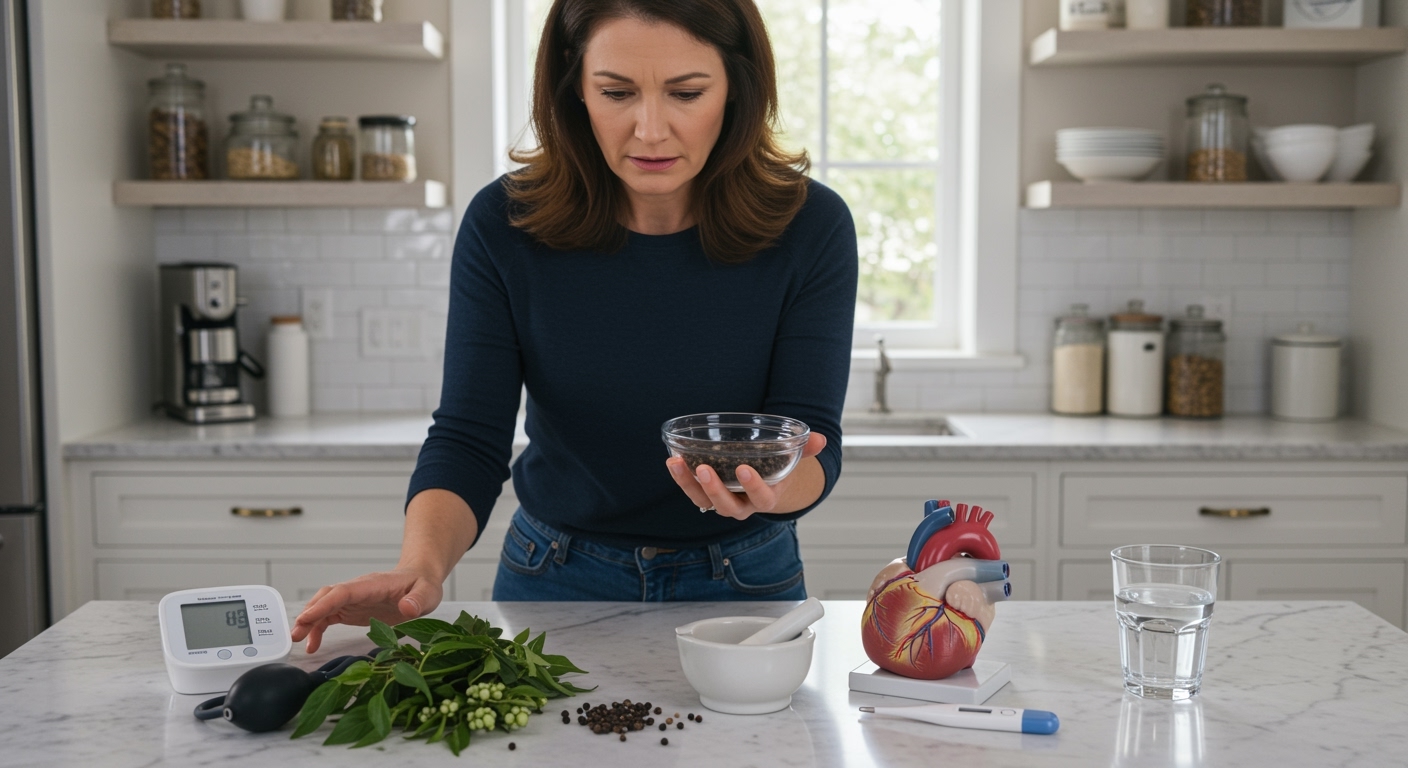
✪ Key Takeaway: Black pepper can lower blood pressure, so people with hypotension should use it cautiously and monitor their response carefully.
Introduction
You reach for the pepper shaker without thinking twice because it sits on every dinner table across the world.
But if you struggle with low blood pressure, that innocent sprinkle might be doing more than just adding flavor to your meal.
Hi, I am Abdur, your nutrition coach and today I am going to explain whether black pepper is safe for people with hypotension and what you need to know before using it.
Does Black Pepper Actually Lower Blood Pressure?
Research shows that black pepper contains a compound called piperine that can reduce blood pressure levels in your body.
A study published in scientific journals found that piperine causes vasodilation, which means it relaxes and widens your blood vessels.
When your blood vessels widen, the pressure inside them naturally drops because blood flows more easily through a larger space.
This effect happens because piperine blocks calcium channels in your blood vessel walls, preventing them from contracting tightly.
For someone with normal or high blood pressure, this mechanism provides health benefits and helps protect against cardiovascular disease.
But for someone already dealing with hypotension, this same mechanism can push your blood pressure even lower into dangerous territory.
✪ Fact: Piperine makes up about three to nine percent of black pepper by weight, making it a concentrated active compound.
What Happens When Your Blood Pressure Drops Too Low?
When blood pressure falls below normal levels, your brain and other vital organs do not receive enough oxygen-rich blood to function properly.
You might experience dizziness, lightheadedness, or feel like you are about to faint when you stand up quickly.
Some people report blurred vision, confusion, or difficulty concentrating because their brain is not getting adequate blood flow.
Fatigue becomes overwhelming because your muscles and tissues are starved for the oxygen they need to produce energy.
In severe cases, extremely low blood pressure can cause you to lose consciousness or go into shock, which requires immediate medical attention.
Adding black pepper to your diet when you already have these symptoms could make your condition worse and increase your risk of falling or injury.
✪ Note: Blood pressure below ninety over sixty is generally considered low, though symptoms matter more than numbers alone.
How Much Black Pepper Creates a Problem?
The amount of black pepper that affects blood pressure varies significantly from person to person based on individual sensitivity.
Most studies use concentrated piperine extracts rather than whole black pepper, making it difficult to translate findings into everyday cooking amounts.
A typical sprinkle of black pepper on your food contains roughly twenty to fifty milligrams of piperine, which is relatively small.
However, if you consume black pepper multiple times throughout the day in various dishes, the cumulative effect can become significant.
People who use black pepper supplements or take it in concentrated forms for supposed health benefits face much higher risks.
The safest approach is to start with very small amounts and monitor how your body responds before increasing your intake.
Pay attention to symptoms like increased dizziness or fatigue after meals containing black pepper, as these signal your body is reacting negatively.
✪ Pro Tip: Keep a food diary tracking your black pepper intake and blood pressure readings to identify your personal tolerance level.
Can You Ever Use Black Pepper With Low Blood Pressure?
Complete avoidance of black pepper is not always necessary if your hypotension is mild and well-managed through other lifestyle factors.
You can use tiny amounts occasionally for flavor without causing dramatic drops in your blood pressure readings.
The key is understanding that black pepper should never be a major component of your diet when you have circulation issues.
Consider using alternative spices like turmeric, ginger, or garlic that provide flavor without the same blood pressure lowering effects.
Always consume black pepper with food rather than on an empty stomach, as this slows down absorption and reduces the immediate impact.
If you take medications for any condition, check with your doctor because black pepper can interact with various drugs and change how they work.
✪ Note: Black pepper increases the absorption of many medications by up to two thousand percent, which can create unexpected side effects.
What Should You Do Instead to Stay Safe?
Focus on dietary strategies that naturally support healthy blood pressure levels without relying on potentially problematic spices.
Increase your salt intake slightly under medical supervision, as sodium helps your body retain fluid and maintain blood volume.
Drink plenty of water throughout the day because proper hydration is essential for maintaining adequate blood pressure.
Eat smaller, more frequent meals instead of large ones because big meals can cause blood to pool in your digestive system.
Include foods rich in vitamin B12 and folate, as deficiencies in these nutrients can contribute to low blood pressure.
Wear compression stockings if your doctor recommends them, as they help push blood from your legs back toward your heart.
Stand up slowly from sitting or lying positions to give your body time to adjust and prevent sudden drops in blood pressure.
✪ Pro Tip: Cross your legs while standing and tense your leg muscles to quickly raise blood pressure when you feel dizzy.
The Bottom Line
Black pepper can lower your blood pressure through its active compound piperine, making it a potential concern for people with hypotension.
Your health always comes before convenience or flavor preferences, so prioritize what your body needs over what your taste buds want.
I would love to hear about your experience with black pepper and low blood pressure, so please share your thoughts or questions in the comment section below.
References
At NutritionCrown, we use quality and credible sources to ensure our content is accurate and trustworthy. Below are the sources referenced in writing this article: