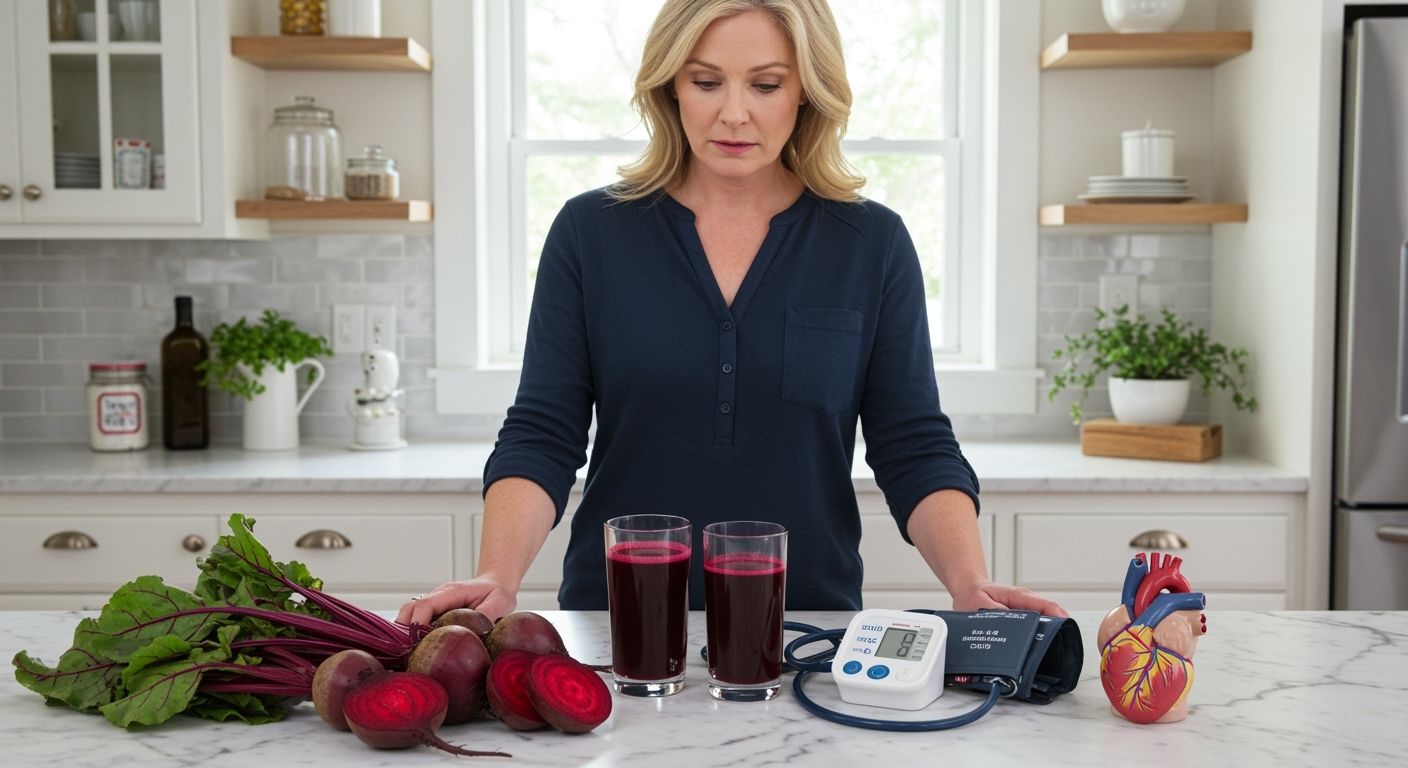
✪ Key Takeaway: Beets lower blood pressure and may worsen hypotension, so avoid them if your readings are already low.
Introduction
You have heard that beets are heart-healthy and can manage blood pressure naturally.
But what happens when your blood pressure is already too low and you start eating beets regularly?
Hi, I am Abdur, your nutrition coach and today I am going to explain whether beets help or harm people with low blood pressure and what the science actually says about this popular root vegetable.
What Do Beets Actually Do to Your Blood Pressure?
Beets contain high amounts of dietary nitrates that your body converts into nitric oxide.
Nitric oxide is a molecule that relaxes and widens your blood vessels, a process called vasodilation.
When your blood vessels widen, blood flows more easily and the pressure against vessel walls decreases.
This mechanism works perfectly for people with high blood pressure because it brings their readings down to healthier levels.
Research shows that drinking beet juice can lower systolic blood pressure by 4-10 mmHg within just a few hours.
But this same effect becomes problematic for people whose blood pressure is already low.
✪ Fact: One cup of beet juice contains approximately 250-300 mg of nitrates, enough to significantly affect blood pressure within 2-3 hours.
Can Beets Make Low Blood Pressure Worse?
Yes, beets can make low blood pressure worse because they do not discriminate between high and low readings.
The nitrates in beets will lower your blood pressure regardless of your starting point.
If your systolic pressure is already below 90 mmHg or diastolic below 60 mmHg, eating beets regularly can push it even lower.
This can trigger symptoms like dizziness, lightheadedness, fatigue, blurred vision, and even fainting.
Your brain needs adequate blood flow to function properly, and when pressure drops too low, oxygen delivery decreases.
People with chronic hypotension should avoid concentrated forms of beets like juice or supplements that deliver high nitrate doses quickly.
✪ Note: If you experience dizziness or weakness after consuming beets, check your blood pressure and avoid them in the future.
Are There Any Benefits of Beets for Low Blood Pressure?
The short answer is no, beets offer no specific benefits for low blood pressure management.
While beets are nutritious and contain vitamins, minerals, fiber, and antioxidants, these benefits do not outweigh the risks for hypotensive individuals.
You can get the same nutrients from other vegetables that do not affect blood pressure negatively.
Carrots, sweet potatoes, spinach, and bell peppers provide similar nutritional value without the nitrate-induced blood pressure drop.
Some people argue that beets improve blood flow and oxygen delivery to tissues, which sounds beneficial.
However, this benefit only applies when blood pressure is within normal or high ranges, not when it is already too low.
The improved circulation from beets comes at the cost of reduced pressure, which defeats the purpose for hypotensive individuals.
✪ Pro Tip: Focus on foods that naturally support healthy blood pressure like salty snacks, licorice root tea, and adequate hydration instead of beets.
What Should You Eat Instead if You Have Low Blood Pressure?
People with low blood pressure need to focus on different dietary strategies than those with high blood pressure.
First, increase your salt intake moderately because sodium helps retain fluid and raises blood volume.
Second, drink plenty of water throughout the day because dehydration worsens hypotension significantly.
Third, eat smaller, more frequent meals because large meals can cause blood to pool in your digestive system and drop pressure further.
Fourth, consider foods rich in vitamin B12 and folate because deficiencies in these nutrients can contribute to low blood pressure.
Fifth, avoid alcohol because it dehydrates you and dilates blood vessels, both of which lower pressure.
Foods like eggs, lean meats, whole grains, nuts, and dairy products support healthy blood pressure without the risks associated with beets.
✪ Fact: Drinking 2-3 liters of water daily can help maintain blood volume and prevent hypotension-related symptoms like dizziness and fatigue.
How Much Beet Is Too Much for Someone With Low Blood Pressure?
There is no safe amount of beets for people with chronic low blood pressure.
Even small amounts like half a cup of cooked beets contain enough nitrates to trigger a drop in blood pressure.
Beet juice is especially problematic because it delivers concentrated nitrates rapidly into your bloodstream.
One glass of beet juice can contain the nitrate equivalent of eating several whole beets at once.
If you accidentally consume beets and feel symptoms, lie down with your legs elevated and drink water with a pinch of salt.
The effects of beet nitrates typically last 6-8 hours, so symptoms should gradually improve as your body processes them.
Always check ingredient lists on packaged foods because beets and beet juice appear in unexpected products like veggie burgers, smoothies, and health bars.
✪ Note: Beet supplements marketed for athletic performance contain extremely high nitrate doses and should be completely avoided by hypotensive individuals.
The Bottom Line
Beets are powerful blood pressure reducers that work against you when your readings are already too low.
Just because a food is healthy for most people does not mean it is healthy for your specific condition, and beets perfectly illustrate this principle.
I would love to hear your experiences with beets and blood pressure in the comments below, and feel free to share any questions you have about managing hypotension through diet.
References
At NutritionCrown, we use quality and credible sources to ensure our content is accurate and trustworthy. Below are the sources referenced in writing this article:
- Healthline: 9 Impressive Health Benefits of Beets
- GoodRx: Does Beetroot Lower Blood Pressure?
- PubMed Central: The Nitrate-Nitrite-Nitric Oxide Pathway in Physiology and Therapeutics
- British Heart Foundation: Can Beetroot Juice Lower Blood Pressure?