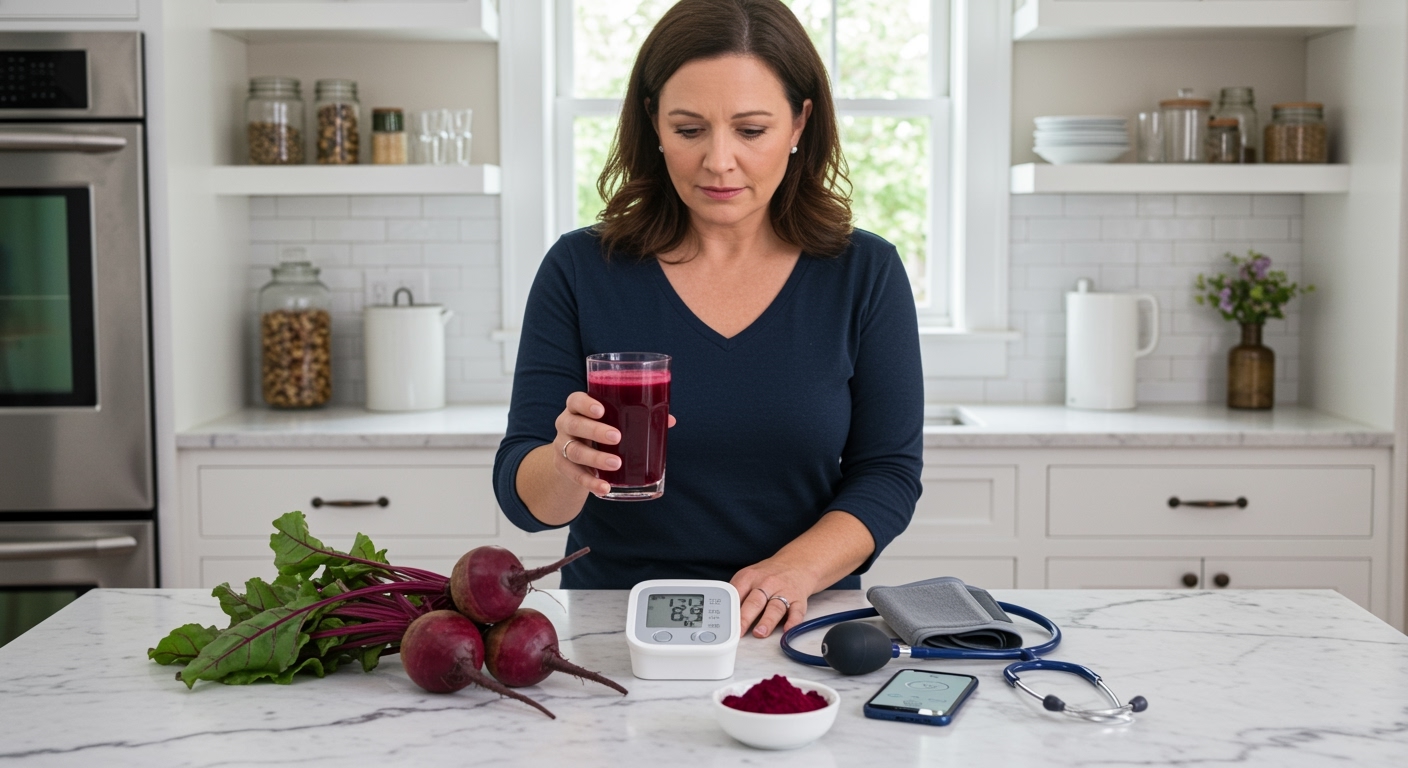
✪ Key Takeaway: Beetroot juice lowers blood pressure, making it dangerous for hypotension sufferers who need higher readings.
Introduction
You have probably heard that beetroot juice is a miracle drink for heart health and blood pressure management.
But if you are dealing with low blood pressure, you might be wondering whether this popular health drink will help you or make things worse.
Hi, I am Abdur, your nutrition coach, and today I am going to explain exactly how beetroot juice affects low blood pressure and whether you should include it in your diet.
What Does Beetroot Juice Actually Do To Your Blood Pressure?
Beetroot juice contains high levels of dietary nitrates, which are natural compounds found in many vegetables.
When you consume these nitrates, your body converts them into nitric oxide through a process that starts in your mouth with bacteria on your tongue.
Nitric oxide is a powerful molecule that signals your blood vessels to relax and widen, a process called vasodilation.
When your blood vessels widen, blood flows more easily through them, which naturally reduces blood pressure.
Multiple research studies have confirmed that drinking beetroot juice can lower both systolic and diastolic blood pressure within just a few hours.
This effect typically peaks around three to six hours after consumption and can last for up to 24 hours depending on the amount consumed.
✪ Fact: Just 250 milliliters of beetroot juice can lower blood pressure by approximately 4 to 10 millimeters of mercury within hours.
Why Is Lowering Blood Pressure A Problem For Hypotension?
If you already have low blood pressure, also called hypotension, your readings are typically below 90/60 millimeters of mercury.
People with hypotension often experience symptoms like dizziness, fatigue, blurred vision, nausea, and fainting spells because their organs are not receiving adequate blood flow.
When you drink beetroot juice, it will lower your blood pressure even further, which can worsen these uncomfortable symptoms.
Your brain needs consistent blood flow to function properly, and when blood pressure drops too low, you might feel lightheaded or confused.
In severe cases, extremely low blood pressure can lead to shock, a life-threatening condition where organs begin to fail due to insufficient blood supply.
This is why anything that further reduces blood pressure, including beetroot juice, should be avoided if you are dealing with hypotension.
✪ Note: Always check your blood pressure readings before trying any food or drink known to affect cardiovascular function.
Are There Any Situations Where Beetroot Juice Might Help Low Blood Pressure?
The short answer is no, beetroot juice will not help raise your low blood pressure because its primary mechanism is to lower it.
Some people mistakenly believe that beetroot juice improves circulation, which might help with hypotension, but improved circulation does not mean higher blood pressure.
Better circulation means blood flows more efficiently through relaxed blood vessels, which actually contributes to lower pressure readings.
If you have low blood pressure caused by dehydration or nutrient deficiencies, beetroot juice might provide some minerals and fluids, but the blood pressure-lowering effect will still outweigh any benefits.
There is no scientific evidence suggesting that beetroot juice can selectively raise blood pressure in people with hypotension while lowering it in those with hypertension.
Your body does not work that way, and the nitric oxide pathway functions the same regardless of your baseline blood pressure.
✪ Pro Tip: Focus on foods that support healthy blood pressure regulation rather than those specifically designed to lower it.
What Should You Eat Instead If You Have Low Blood Pressure?
If you are dealing with low blood pressure, your dietary strategy should focus on maintaining adequate blood volume and supporting proper circulation.
Increasing your salt intake moderately can help because sodium causes your body to retain more water, which increases blood volume and raises blood pressure.
Drinking plenty of water throughout the day is essential because dehydration is one of the most common causes of low blood pressure.
Eating smaller, more frequent meals can prevent the postprandial hypotension that some people experience after large meals when blood rushes to the digestive system.
Foods rich in vitamin B12 and folate support healthy red blood cell production, which is important for maintaining adequate blood pressure and preventing anemia-related hypotension.
Some people find that drinking caffeinated beverages like coffee or tea provides a temporary boost in blood pressure, though this effect varies from person to person.
Always work with your healthcare provider to identify the underlying cause of your low blood pressure and develop a personalized nutrition plan that addresses your specific needs.
✪ Note: Never increase salt intake dramatically without medical supervision, especially if you have kidney problems or other health conditions.
Can You Ever Drink Beetroot Juice If You Have Low Blood Pressure?
The safest approach is to avoid beetroot juice entirely if you have been diagnosed with hypotension or experience symptoms of low blood pressure.
If you really want to include beets in your diet for their other nutritional benefits, eating cooked beets in small amounts might be safer than drinking concentrated juice.
Cooking reduces the nitrate content somewhat, and eating whole beets means you consume less nitrate overall compared to drinking a large glass of juice.
Always monitor your blood pressure before and after trying any new food, especially those known to affect cardiovascular function.
If you notice increased dizziness, fatigue, or other symptoms after consuming beets or beetroot juice, stop immediately and consult your healthcare provider.
Remember that your health and safety should always take priority over following popular health trends that might not be appropriate for your specific condition.
✪ Pro Tip: Keep a blood pressure log to track how different foods and drinks affect your readings throughout the day.
The Bottom Line
Beetroot juice is not good for low blood pressure because it will lower your readings even further and potentially worsen your symptoms.
Health advice that works for one condition can be dangerous for another, which is why understanding your body matters more than following trends.
I would love to hear your thoughts and experiences in the comments below, so please share any questions or feedback you might have about managing low blood pressure through nutrition.
References
At NutritionCrown, we use quality and credible sources to ensure our content is accurate and trustworthy. Below are the sources referenced in writing this article:
- Frontiers in Physiology: Inorganic Nitrate and Beetroot Juice Supplementation Reduces Blood Pressure in Adults
- PubMed Central: Effects of Beetroot Juice Supplementation on Cardiorespiratory Endurance
- British Heart Foundation: Can Beetroot Juice Lower Blood Pressure
- American Heart Association: Give Me a Beet: Why This Root Vegetable Should Be on Your Plate