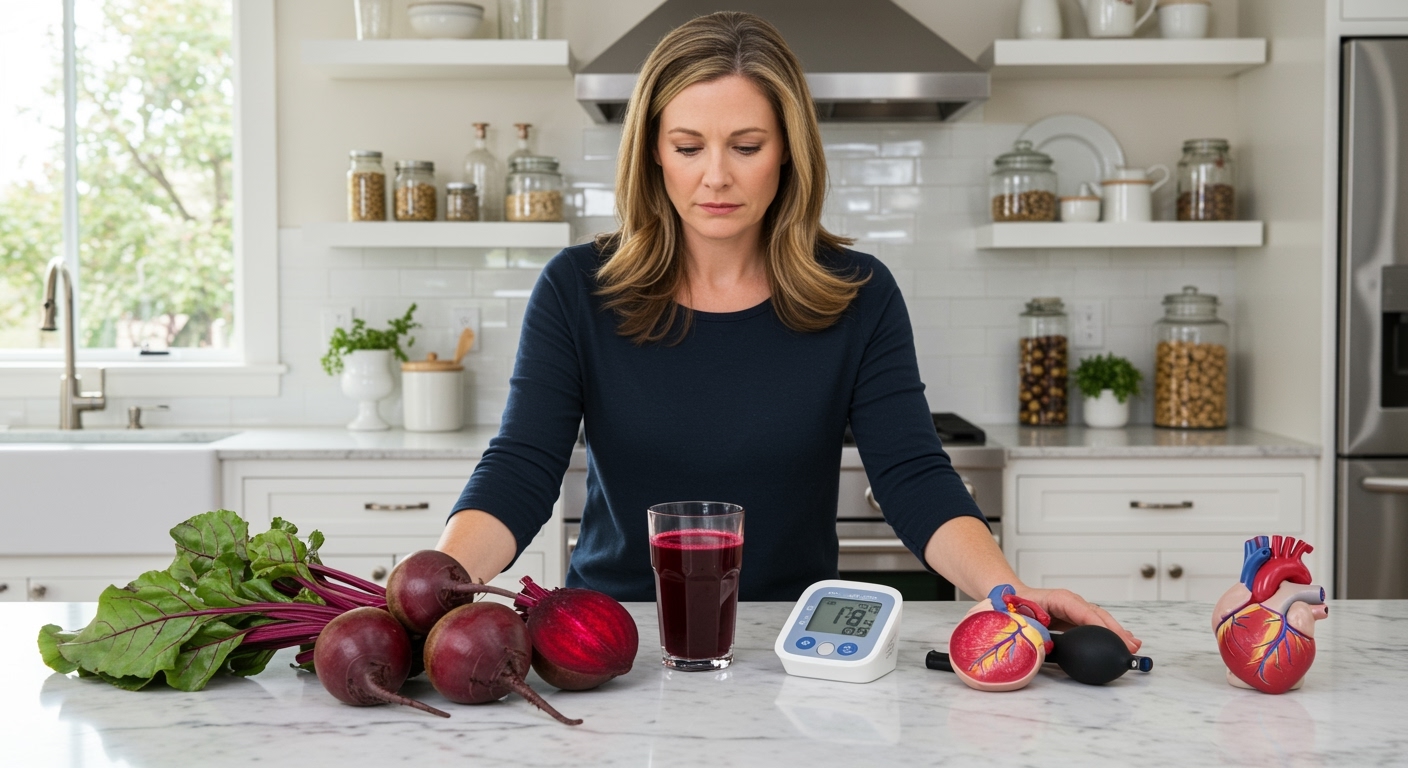
✪ Key Takeaway: Beetroot lowers blood pressure, so it can worsen hypotension and cause dangerous symptoms.
Introduction
You have probably heard that beetroot is a superfood for heart health and blood pressure.
But if you are dealing with low blood pressure, you might be wondering whether this popular vegetable will actually help you or make things worse.
Hi, I am Abdur, your nutrition coach, and today I am going to explain exactly how beetroot affects low blood pressure and whether you should include it in your diet.
How Does Beetroot Actually Affect Blood Pressure?
Beetroot contains high amounts of dietary nitrates, which are natural compounds found in many vegetables.
When you eat beetroot, your body converts these nitrates into nitric oxide through a series of chemical reactions.
Nitric oxide is a powerful molecule that signals your blood vessels to relax and widen.
This widening process, called vasodilation, reduces resistance in your arteries and allows blood to flow more easily.
As a result, your blood pressure drops because your heart does not need to work as hard to pump blood through relaxed vessels.
Multiple studies have confirmed that beetroot juice can lower both systolic and diastolic blood pressure in people with normal or high readings.
This effect typically begins within a few hours of consumption and can last for several hours.
✪ Fact: Just 250 milliliters of beetroot juice can lower blood pressure by approximately 8 millimeters of mercury within hours.
Why Would Beetroot Be Dangerous For Low Blood Pressure?
If you already have low blood pressure, also called hypotension, your readings are typically below 90/60 millimeters of mercury.
Your body is already struggling to maintain adequate blood flow to your brain, heart, and other vital organs.
When you consume beetroot, the blood pressure-lowering effect does not discriminate between high, normal, or low baseline readings.
The nitric oxide produced from beetroot will still cause your blood vessels to dilate, pushing your already low pressure even lower.
This can lead to symptoms like dizziness, lightheadedness, fainting, blurred vision, fatigue, nausea, and confusion.
In severe cases, extremely low blood pressure can cause shock, a life-threatening condition where organs do not receive enough oxygen-rich blood.
The risk becomes even higher if you are taking medications that also lower blood pressure or if you consume large amounts of beetroot juice regularly.
✪ Note: People with hypotension should avoid concentrated beetroot juice and large servings of raw or cooked beetroot.
What Does The Research Say About Beetroot And Hypotension?
Most scientific studies on beetroot have focused on people with high blood pressure or normal readings.
Research consistently shows that beetroot supplementation reduces blood pressure in hypertensive individuals by improving endothelial function and increasing nitric oxide availability.
However, there is very limited research specifically examining beetroot consumption in people with diagnosed hypotension.
The few case reports and clinical observations available suggest that beetroot can worsen symptoms in hypotensive individuals.
One important study published in Frontiers in Physiology demonstrated that dietary nitrates from beetroot significantly lower blood pressure through nitric oxide pathways.
Another review in the British Heart Foundation journal confirmed that beetroot juice consistently reduces blood pressure in various populations.
While these findings are excellent news for people with hypertension, they serve as a clear warning for those with low blood pressure.
✪ Pro Tip: Always check your blood pressure readings before and after trying any new food known to affect cardiovascular function.
Can You Ever Eat Beetroot If You Have Low Blood Pressure?
The answer depends on how low your blood pressure actually is and whether you experience symptoms.
Some people have naturally low blood pressure without any symptoms, a condition called asymptomatic hypotension.
If you fall into this category and feel perfectly fine, you might tolerate small amounts of beetroot without problems.
However, if you experience dizziness, fatigue, or other symptoms of low blood pressure, you should avoid beetroot entirely.
If you still want to include beetroot in your diet, start with very small portions like a few thin slices in a salad.
Monitor your symptoms carefully and check your blood pressure before and after consumption to see how your body responds.
Never consume concentrated beetroot juice or supplements if you have hypotension, as these contain much higher levels of nitrates than whole beetroot.
✪ Note: Cooking beetroot does not significantly reduce its nitrate content, so cooked beetroot will still lower blood pressure.
What Should You Eat Instead To Support Healthy Blood Pressure?
If you have low blood pressure, your dietary strategy should focus on foods that help maintain or slightly raise your readings.
Increasing your salt intake moderately can help your body retain more fluid and increase blood volume.
Foods rich in vitamin B12 like eggs, dairy products, meat, and fortified cereals support healthy red blood cell production.
Adequate hydration is crucial because dehydration can worsen hypotension by reducing blood volume.
Small, frequent meals help prevent the blood pressure drops that sometimes occur after eating large meals, a condition called postprandial hypotension.
Foods containing natural caffeine like coffee or tea can temporarily raise blood pressure through vasoconstriction.
Always work with your healthcare provider to develop a nutrition plan tailored to your specific blood pressure patterns and overall health status.
✪ Pro Tip: Wearing compression stockings and elevating the head of your bed can complement dietary strategies for managing low blood pressure.
The Bottom Line
Beetroot is not good for low blood pressure because it contains nitrates that lower blood pressure even further through nitric oxide production.
What helps one person can harm another, so always match your food choices to your actual health needs, not popular trends.
I would love to hear your thoughts and experiences with beetroot or managing low blood pressure, so please share your questions or feedback in the comment section below.
References
At NutritionCrown, we use quality and credible sources to ensure our content is accurate and trustworthy. Below are the sources referenced in writing this article:
- Frontiers in Physiology: Inorganic Nitrate and Beetroot Juice Supplementation Reduces Blood Pressure in Adults
- British Heart Foundation: Can Beetroot Juice Lower Blood Pressure
- PMC: Effects of Beetroot Juice Supplementation on Cardiorespiratory Endurance
- Novant Health: Beet Supplements May Not Live Up to the Hype