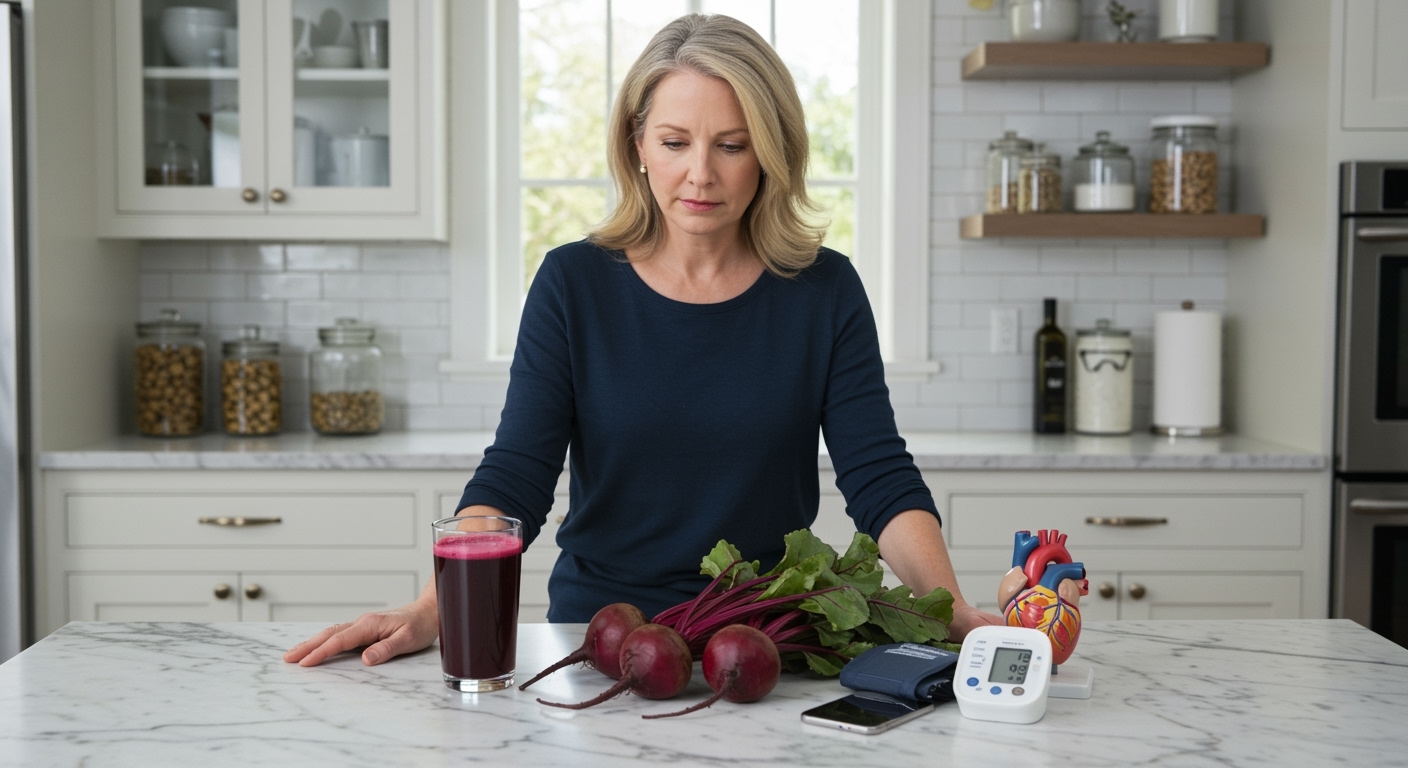
✪ Key Takeaway: Beet juice lowers blood pressure, so it can worsen hypotension and cause dizziness, fatigue, and fainting.
Introduction
You have probably heard that beet juice is a miracle drink for blood pressure problems.
But here is the catch: most people do not realize that beet juice lowers blood pressure, which means it can make low blood pressure even worse instead of fixing it.
Hi, I am Abdur, your nutrition coach and today I am going to explain exactly why beet juice might be dangerous for you if you already struggle with hypotension and what happens inside your body when you drink it.
How Does Beet Juice Actually Affect Your Blood Pressure?
Beet juice contains high amounts of dietary nitrates, which are natural compounds found in many vegetables.
When you drink beet juice, your body converts these nitrates into nitric oxide through a series of chemical reactions.
Nitric oxide is a powerful molecule that signals your blood vessels to relax and widen.
This process is called vasodilation, and it directly reduces the pressure inside your arteries.
For people with high blood pressure, this effect is beneficial because it helps bring their readings down to healthier levels.
But for someone with already low blood pressure, this same mechanism can push your readings even lower into dangerous territory.
Research shows that beet juice can lower systolic blood pressure by 4 to 10 mmHg within just a few hours of consumption.
✪ Fact: A single glass of beet juice contains about 250 to 400 milligrams of nitrates, which is enough to significantly impact blood pressure.
What Symptoms Might You Experience If You Drink Beet Juice With Low Blood Pressure?
When your blood pressure drops too low, your brain and other vital organs do not receive enough oxygen-rich blood.
The first symptom most people notice is dizziness or lightheadedness, especially when standing up quickly.
You might also experience extreme fatigue that makes even simple tasks feel exhausting.
Some people report feeling confused or having difficulty concentrating because their brain is not getting adequate blood flow.
In more severe cases, drinking beet juice with low blood pressure can cause fainting or loss of consciousness.
You may also notice blurred vision, nausea, or a rapid but weak pulse as your body tries to compensate for the drop.
These symptoms can appear within two to three hours after drinking beet juice and may last for several hours depending on how much you consumed.
✪ Note: If you experience chest pain, shortness of breath, or prolonged confusion after drinking beet juice, seek immediate medical attention.
Are There Any Situations Where Beet Juice Might Be Safe With Low Blood Pressure?
The answer depends on how low your blood pressure actually is and what is causing it.
If your low blood pressure is mild and you do not experience any symptoms, a very small amount of beet juice might be tolerable.
However, this is not something you should experiment with on your own without medical guidance.
Some people have low blood pressure readings but their body has adapted to function normally at those levels.
In such cases, the blood pressure lowering effect of beet juice might not cause noticeable problems.
But if you already struggle with symptoms like dizziness or fatigue, adding beet juice will almost certainly make things worse.
The safest approach is to avoid beet juice entirely if you have been diagnosed with hypotension or if you regularly experience symptoms of low blood pressure.
✪ Pro Tip: Always monitor your blood pressure at home for a week before and after introducing any new food or drink that affects cardiovascular function.
What Should You Drink Instead If You Have Low Blood Pressure?
Instead of beet juice, focus on beverages that can help raise or stabilize your blood pressure naturally.
Plain water is essential because dehydration is one of the most common causes of low blood pressure.
Drinking eight to ten glasses of water daily helps maintain adequate blood volume, which supports healthy pressure levels.
Coffee or tea with caffeine can provide a temporary boost by constricting blood vessels and increasing heart rate.
Electrolyte drinks that contain sodium can also help because salt causes your body to retain water, which increases blood volume.
Milk and fortified plant-based alternatives provide protein and minerals that support overall cardiovascular health without lowering pressure.
The key is choosing drinks that either maintain or slightly elevate your blood pressure rather than ones that actively lower it like beet juice does.
✪ Pro Tip: Add a pinch of salt to your water or meals if your doctor has confirmed that increasing sodium intake is safe for your specific condition.
Can You Still Get The Nutritional Benefits Of Beets Without Lowering Your Blood Pressure?
Beets are packed with valuable nutrients like folate, vitamin C, potassium, and fiber that support overall health.
The good news is that cooking beets significantly reduces their nitrate content compared to raw beets or beet juice.
When you boil or roast beets, some of the nitrates break down or leach into the cooking water.
This means you can enjoy cooked beets in small portions without experiencing the dramatic blood pressure drop that comes from drinking concentrated beet juice.
Start with a small serving, perhaps half a cup of cooked beets, and monitor how your body responds over the next few hours.
If you do not experience any negative symptoms, you can gradually include cooked beets in your diet occasionally.
Just remember that even cooked beets contain some nitrates, so moderation is crucial when you have low blood pressure.
✪ Note: Pickled beets often contain added salt, which might actually help stabilize low blood pressure better than fresh or roasted varieties.
The Bottom Line
Beet juice is not good for low blood pressure because it actively lowers blood pressure through nitrate conversion to nitric oxide, which can worsen hypotension symptoms and create dangerous health situations.
When you have low blood pressure, your body needs support to maintain adequate circulation, not substances that push your readings even lower into risky territory.
I would love to hear about your experiences with blood pressure management or any questions you might have about foods that affect your cardiovascular health, so please share your thoughts in the comments below.
References
At NutritionCrown, we use quality and credible sources to ensure our content is accurate and trustworthy. Below are the sources referenced in writing this article:
- Medical News Today: Beetroot juice: Benefits, nutrition, and side effects
- British Heart Foundation: Can beetroot juice lower blood pressure?
- WebMD: Beet – Uses, Side Effects, and More
- American Heart Association: Give me a beet: Why this root vegetable should be on your plate