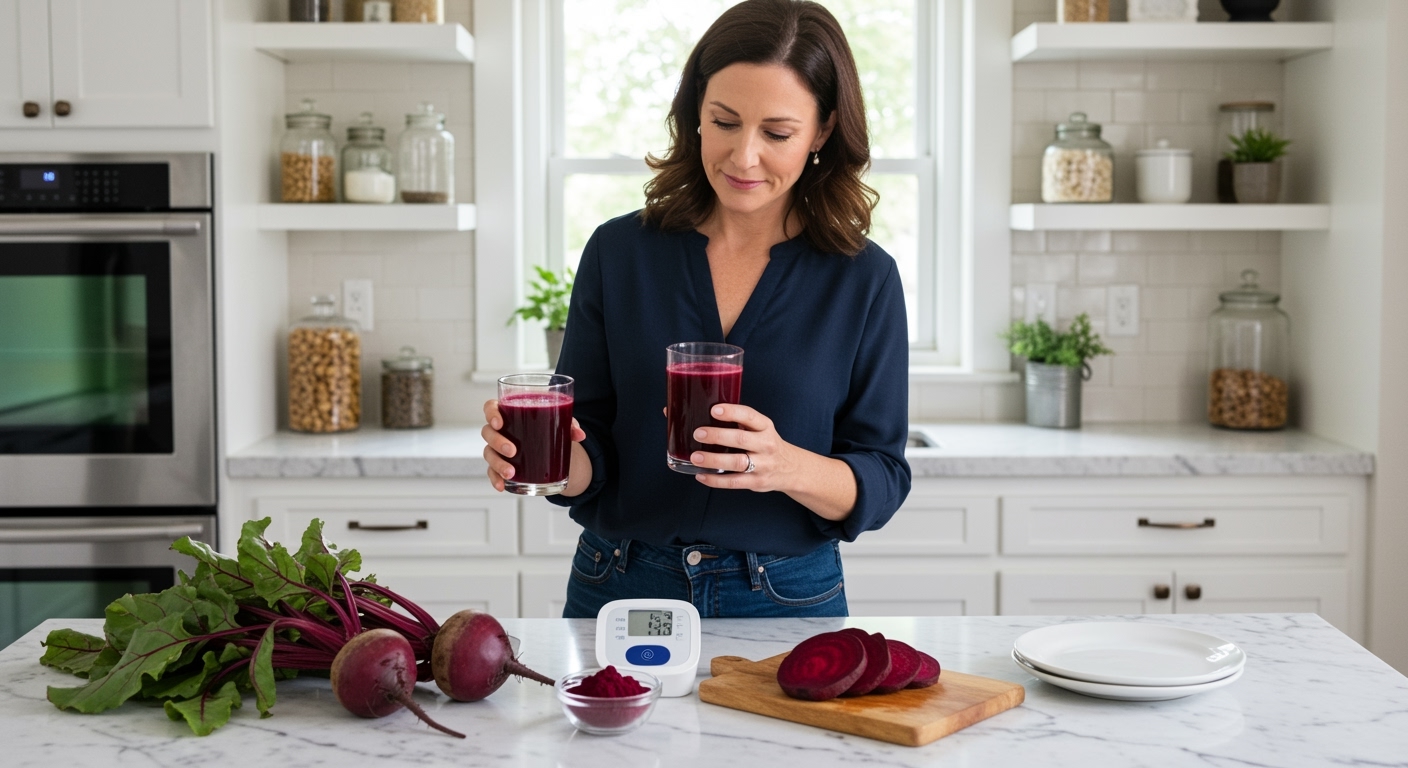
✪ Key Takeaway: Beet juice lowers blood pressure, so people with hypotension should avoid it or consume it cautiously under medical supervision.
Introduction
You have heard that beet juice is a natural remedy for high blood pressure.
But what happens when your blood pressure is already sitting on the lower side?
You might be wondering if this popular health drink could make your condition worse or if there is a safe way to enjoy its benefits without dropping your numbers too low.
Hi, I am Abdur, your nutrition coach and today I am going to explain exactly how beet juice affects blood pressure, why it works the way it does, and whether you should drink it when dealing with hypotension.
How Does Beet Juice Actually Lower Blood Pressure?
Beet juice contains high levels of dietary nitrates, which are natural compounds found in many vegetables.
When you drink beet juice, bacteria in your mouth convert these nitrates into nitrite.
Your body then transforms nitrite into nitric oxide, a molecule that relaxes and widens your blood vessels.
This process is called vasodilation, and it reduces the resistance your blood faces as it flows through your arteries.
When blood vessels are wider, your heart does not have to work as hard to pump blood, which naturally lowers your blood pressure.
Research shows that drinking just 250 milliliters of beet juice can reduce systolic blood pressure by 4 to 10 millimeters of mercury within hours.
This effect is powerful and consistent, which is exactly why people with low blood pressure need to be careful.
✪ Fact: A single serving of beet juice can lower blood pressure for up to 24 hours after consumption.
What Happens When You Drink Beet Juice With Already Low Blood Pressure?
If your blood pressure is already below normal, drinking beet juice can push it even lower.
Normal blood pressure sits around 120 over 80 millimeters of mercury, while hypotension is typically defined as readings below 90 over 60.
When your blood pressure drops too low, your brain and other vital organs may not receive enough oxygen-rich blood.
This can trigger symptoms like dizziness, lightheadedness, blurred vision, fatigue, nausea, and even fainting.
Some people experience cold, clammy skin or rapid, shallow breathing when their blood pressure drops suddenly.
In severe cases, extremely low blood pressure can lead to shock, a life-threatening condition that requires immediate medical attention.
The nitrate-induced vasodilation from beet juice does not discriminate between high and low blood pressure, it simply lowers whatever your current reading is.
✪ Note: Always check your blood pressure regularly if you have hypotension and plan to consume beet juice.
Are There Any Safe Ways To Consume Beets With Low Blood Pressure?
You do not have to completely avoid beets just because you have low blood pressure.
The key is understanding that whole cooked beets contain significantly less concentrated nitrates compared to raw beet juice.
When you cook beets, some of the nitrates break down or leach into the cooking water, reducing their blood pressure-lowering effect.
Eating a small serving of cooked beets as part of a balanced meal is generally safer than drinking concentrated beet juice.
You can also combine beets with foods that naturally support healthy blood pressure, like foods containing sodium in moderate amounts.
Start with very small portions, perhaps half a small beet, and monitor how your body responds over several hours.
Never consume beet juice or large amounts of raw beets on an empty stomach if you have hypotension, as this can cause a rapid drop in blood pressure.
✪ Pro Tip: Pair small amounts of cooked beets with protein and healthy fats to slow nitrate absorption and minimize blood pressure changes.
Who Should Definitely Avoid Beet Juice?
People with chronic hypotension should avoid beet juice entirely unless their doctor specifically approves it.
If you take medications that lower blood pressure, adding beet juice creates a dangerous additive effect that can drop your numbers too low.
Anyone with a history of fainting spells or orthostatic hypotension, where blood pressure drops when standing up, should stay away from beet juice.
Pregnant women with low blood pressure need to be especially cautious because sudden drops can affect blood flow to the placenta.
People with kidney disease should also avoid beet juice because the high oxalate content can contribute to kidney stone formation.
If you have any cardiovascular condition or take multiple medications, always consult your healthcare provider before adding beet juice to your diet.
Your individual health situation matters more than any general recommendation you read online.
✪ Note: Beet juice can interact with medications for heart conditions, erectile dysfunction, and blood pressure management.
What Does The Research Say About Beets And Blood Pressure?
Multiple studies confirm that beet juice effectively lowers blood pressure in people with hypertension.
A 2019 study published in Frontiers in Physiology found that beetroot juice significantly reduced both systolic and diastolic blood pressure in older adults.
Recent research from 2025 showed that beetroot juice works by reshaping oral bacteria, which enhances the conversion of nitrates to nitric oxide.
However, none of these studies specifically tested beet juice on people with low blood pressure.
The mechanism of action remains the same regardless of your starting blood pressure, meaning the vasodilation effect will occur.
Scientists have not established a safe dosage of beet juice for people with hypotension because the research simply does not exist yet.
This lack of evidence is exactly why caution is necessary when you have low blood pressure and consider drinking beet juice.
✪ Fact: The blood pressure-lowering effect of beet juice peaks around two to three hours after consumption.
The Bottom Line
Beet juice is a powerful natural remedy for high blood pressure, but it can be dangerous for people with hypotension.
Your blood pressure numbers matter more than any superfood trend, and you should always prioritize safety over following popular health advice that does not fit your individual situation.
If you have low blood pressure and want to share your experience or ask questions about managing your diet safely, please leave a comment below because I read and respond to every single one.
References
At NutritionCrown, we use quality and credible sources to ensure our content is accurate and trustworthy. Below are the sources referenced in writing this article:
- News Medical: Beetroot juice lowers blood pressure in older adults by reshaping oral bacteria
- Frontiers in Physiology: Dietary Nitrate Supplementation and Exercise Performance
- GoodRx: Does Beetroot Lower Blood Pressure?
- British Heart Foundation: Can beetroot juice lower blood pressure?