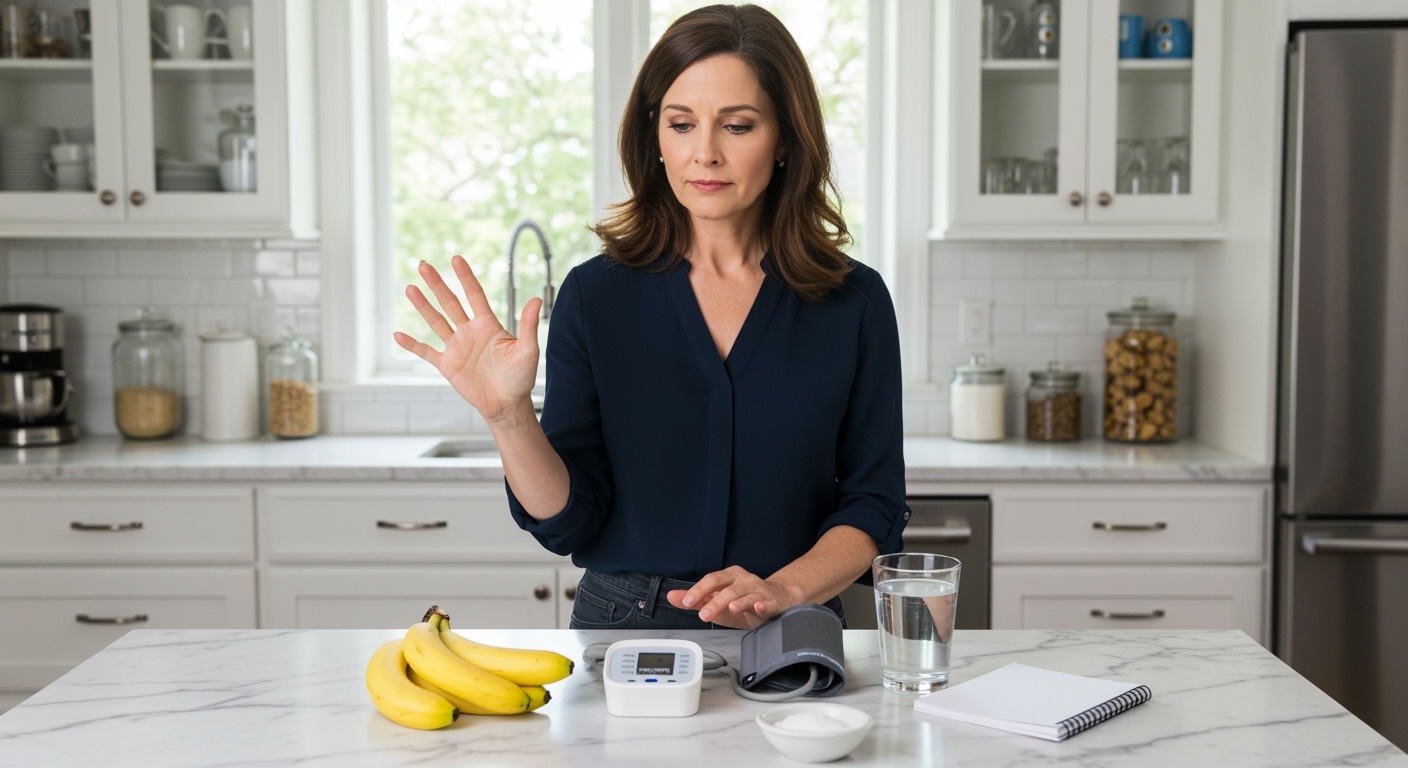
✪ Key Takeaway: Bananas may not help low blood pressure and could potentially worsen it due to their high potassium content.
Introduction
You have probably heard countless times that bananas are great for your blood pressure.
But here is the problem: most of that advice targets people with high blood pressure, not low.
If you are dealing with hypotension or low blood pressure, you might be wondering whether this popular fruit can actually help raise your numbers or if it might make things worse. Hi, I am Abdur, your nutrition coach, and today I am going to explain exactly how bananas affect low blood pressure and what you should really be eating instead.
What Makes Bananas So Popular For Blood Pressure?
Bananas have earned their reputation as a blood pressure friendly food primarily because of one nutrient: potassium.
A medium banana contains about 422 milligrams of potassium, which is roughly 9 percent of your daily needs.
Potassium works in your body by helping your kidneys remove excess sodium through urine.
This process helps relax blood vessel walls, which reduces the pressure inside your arteries.
Research published by the American Heart Association shows that increased potassium intake can significantly lower blood pressure in people with hypertension.
But notice the key word there: hypertension, which means high blood pressure, not low.
The mechanism that makes bananas helpful for high blood pressure is exactly what makes them potentially problematic for low blood pressure.
✪ Fact: Most blood pressure advice online targets hypertension, leaving people with hypotension confused about what foods actually help them.
Why Might Bananas Worsen Low Blood Pressure?
When you already have low blood pressure, eating foods high in potassium can potentially drop your numbers even further.
Your body maintains blood pressure through a delicate balance between sodium and potassium.
Sodium helps your body retain water, which increases blood volume and raises blood pressure.
Potassium does the opposite by promoting sodium excretion and relaxing blood vessels.
If you consume too much potassium relative to sodium, especially when you already have hypotension, you might experience dizziness, weakness, or fainting.
This does not mean bananas are dangerous or that you should avoid them completely.
It simply means they are not the strategic food choice when your goal is to raise low blood pressure.
✪ Note: The same nutrient that helps lower high blood pressure can potentially worsen low blood pressure through the exact same mechanism.
What Should You Eat Instead For Low Blood Pressure?
If you are dealing with hypotension, your dietary strategy should be completely different from someone with hypertension.
You need foods that help increase blood volume and support healthy blood pressure elevation.
Foods with moderate sodium content become your allies rather than enemies.
Think about adding pickles, olives, cottage cheese, or a small amount of salt to your meals.
Staying properly hydrated is absolutely critical because dehydration reduces blood volume and drops blood pressure.
Small, frequent meals help prevent the postprandial hypotension that happens when blood rushes to your digestive system after eating.
Foods rich in vitamin B12 and folate support red blood cell production, which helps maintain adequate blood volume and pressure.
✪ Pro Tip: Keep a food and symptom journal to identify which foods help you feel better and which ones trigger dizziness or weakness.
Can You Still Eat Bananas If You Have Low Blood Pressure?
The answer is yes, but with smart timing and portion control.
Bananas provide valuable nutrients like vitamin B6, vitamin C, and fiber that support overall health.
The key is not making them your primary fruit choice when you are specifically trying to manage low blood pressure.
Consider eating half a banana instead of a whole one, and pair it with foods that contain sodium or protein.
For example, spread some peanut butter with added salt on your banana slices.
Avoid eating bananas on an empty stomach first thing in the morning when your blood pressure is typically at its lowest point.
Listen to your body and notice if you feel lightheaded or weak after eating bananas, which would signal you should reduce your intake.
✪ Pro Tip: Timing matters more than you think when managing low blood pressure through diet and meal planning.
What Other Factors Affect Low Blood Pressure Besides Diet?
While food choices matter, low blood pressure is rarely caused by diet alone.
Dehydration is one of the most common and easily fixable causes of hypotension.
Certain medications, especially those for high blood pressure or depression, can drop your numbers too low.
Endocrine problems like thyroid disorders or adrenal insufficiency can cause persistently low blood pressure.
Nutritional deficiencies, particularly vitamin B12 and folate, reduce red blood cell production and lower blood pressure.
Prolonged bed rest or sudden position changes can trigger orthostatic hypotension, where blood pressure drops when you stand up.
If you experience persistent symptoms like dizziness, fainting, blurred vision, or fatigue, you need to see a healthcare provider rather than just adjusting your diet.
✪ Note: Low blood pressure that causes symptoms always deserves medical evaluation to rule out underlying health conditions.
The Bottom Line
Bananas are not the answer for low blood pressure, and they might actually make your symptoms worse if consumed in large amounts. The right food for one blood pressure problem becomes the wrong food for the opposite problem, which is why understanding your specific condition matters more than following generic health advice. I would love to hear about your experience with low blood pressure and what dietary changes have helped you feel better, so please share your thoughts in the comments below.
References
At NutritionCrown, we use quality and credible sources to ensure our content is accurate and trustworthy. Below are the sources referenced in writing this article:
- American Heart Association: How Potassium Can Help Control High Blood Pressure
- Cleveland Clinic: Benefits of Bananas
- MDVIP: New Study Suggests Potassium Helps Lower Blood Pressure
- National Center for Biotechnology Information: Potassium Intake and Blood Pressure