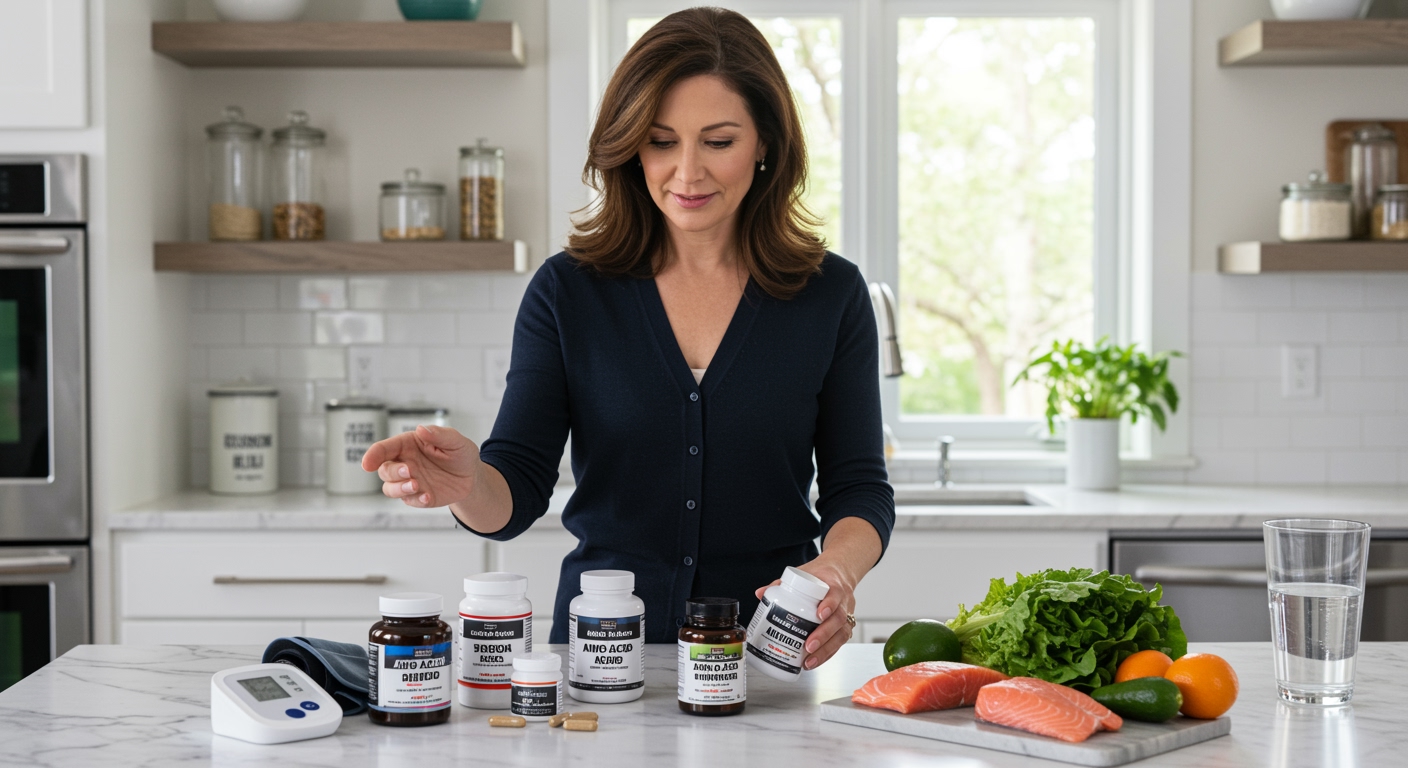
✪ Key Takeaway: Amino acids can influence blood pressure, but hypotension patients should consult doctors before supplementing.
Introduction
Your blood pressure drops below 90/60 mmHg and you feel dizzy, weak, and exhausted every single day.
You might wonder if amino acid supplements could help raise your blood pressure naturally and give you more energy.
Hi, I’m Abdur, your nutrition coach and today I’m going to explain whether hypotension patients should take amino acids and how these protein building blocks affect your cardiovascular system.
What Are Amino Acids and How Do They Work?
Amino acids are the building blocks of proteins that your body uses for countless functions including blood vessel health and circulation.
Your body produces some amino acids naturally while others must come from food or supplements.
These compounds help create neurotransmitters that control your nervous system and influence how your blood vessels contract or relax.
When amino acids enter your bloodstream, they can affect the production of nitric oxide, a molecule that helps blood vessels dilate.
Some amino acids like arginine and citrulline specifically support vascular function by promoting healthy blood flow throughout your body.
Understanding how these compounds work helps you make informed decisions about supplementation for your specific health needs.
✪ Fact: Your body contains over 500 different amino acids, but only 20 are used to build proteins.
Can Amino Acids Raise Blood Pressure?
Research shows that certain amino acids can indeed influence blood pressure, but the effects vary depending on which ones you take.
Tyrosine is an amino acid that helps produce dopamine and norepinephrine, neurotransmitters that can increase heart rate and blood pressure.
Studies indicate that tyrosine supplementation may help people with orthostatic hypotension, a condition where blood pressure drops when standing up.
However, other amino acids like arginine typically lower blood pressure by increasing nitric oxide production and promoting blood vessel relaxation.
The amino acid taurine also tends to have blood pressure lowering effects through its influence on calcium channels in blood vessel walls.
This means that not all amino acids will help with hypotension, and some might actually make your low blood pressure worse.
✪ Pro Tip: Keep a blood pressure log when trying any new supplement to track your individual response.
Which Amino Acids Might Help Hypotension?
Tyrosine stands out as the most promising amino acid for people with low blood pressure because it supports the production of stress hormones.
Your adrenal glands use tyrosine to make epinephrine and norepinephrine, which naturally raise blood pressure and heart rate during times of stress.
Some research suggests that phenylalanine, another amino acid, might also help by converting to tyrosine in your body.
Branched-chain amino acids like leucine, isoleucine, and valine may indirectly support blood pressure by improving overall cardiovascular function.
However, you should avoid amino acids like arginine, citrulline, and taurine if you have hypotension because they typically lower blood pressure further.
The key is choosing amino acids that support your sympathetic nervous system rather than those that promote blood vessel dilation.
✪ Note: Individual responses to amino acids vary greatly based on your unique physiology and health status.
What Are the Risks and Side Effects?
Taking amino acid supplements when you have hypotension carries several potential risks that you need to understand before starting.
High doses of tyrosine can cause headaches, nausea, and anxiety, especially if you take them on an empty stomach.
Some people experience heart palpitations or irregular heartbeat when taking amino acids that affect neurotransmitter production.
Amino acid supplements can interact with medications you might be taking for other health conditions, potentially causing dangerous complications.
Taking the wrong amino acids could make your hypotension worse, leading to more frequent dizzy spells and fainting episodes.
Long-term use of high-dose amino acid supplements may also disrupt your body’s natural amino acid balance and affect protein synthesis.
✪ Pro Tip: Start with food sources of amino acids before considering supplements for safer, more balanced intake.
Should You Get Amino Acids From Food Instead?
Getting amino acids from whole food sources is generally safer and more effective than taking isolated supplements for hypotension management.
Foods rich in tyrosine include lean meats, fish, eggs, dairy products, nuts, and seeds, which provide balanced nutrition along with amino acids.
These protein-rich foods also contain other nutrients like B vitamins and minerals that support healthy blood pressure regulation naturally.
Eating regular meals with adequate protein helps maintain steady blood sugar levels, which is crucial for people with hypotension.
Food sources provide amino acids in the right proportions that your body can use efficiently without overwhelming your system.
Plus, getting amino acids from food eliminates the risk of taking excessive doses that could cause side effects or interactions with medications.
✪ Fact: A 3-ounce serving of chicken breast provides about 1,000 mg of tyrosine naturally.
The Bottom Line
Amino acids can influence blood pressure, but hypotension patients should approach supplementation with extreme caution and medical supervision.
Your health is too precious to gamble with unproven supplements when safer, food-based solutions exist.
I would love to hear about your experience with hypotension management or any questions you have about amino acids and blood pressure in the comments below.
References
At NutritionCrown, we use quality and credible sources to ensure our content is accurate and trustworthy. Below are the sources referenced in creating this article:
- PMC: Amino Acids and Cardiovascular Health
- Oxford Academic: Cardiovascular Research on Amino Acids
- PMC: Amino Acid Supplementation Effects
- Mayo Clinic: L-Arginine and Blood Pressure
- MedicineNet: Benefits and Risks of Amino Acid Supplements