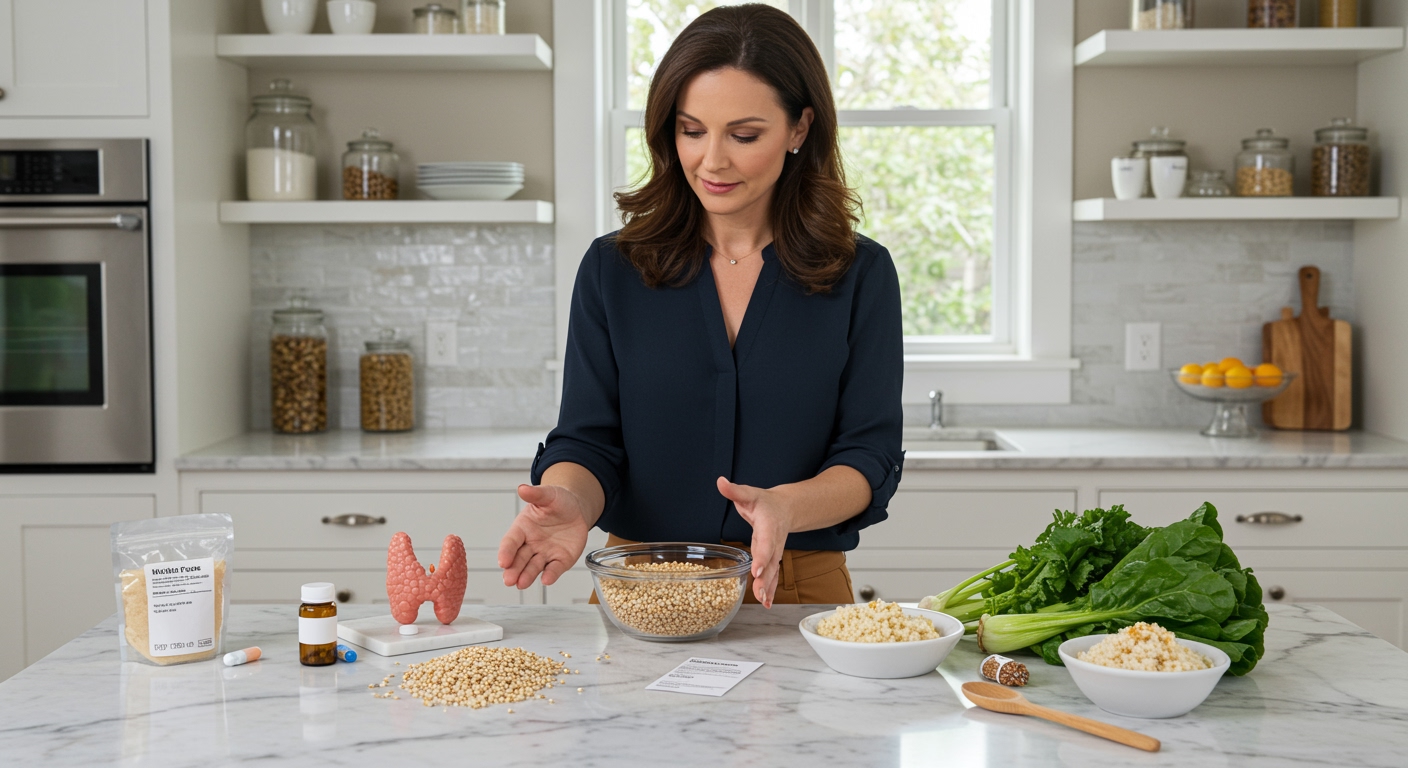
✪ Key Takeaway: L-lysine supports thyroid hormone production by helping your body absorb minerals needed for thyroid function, though it works best alongside other nutrients.
Introduction
You probably never thought about L-lysine when your doctor diagnosed you with hypothyroidism.
Most people focus on iodine, selenium, and thyroid medications while completely overlooking this essential amino acid that quietly influences how your body manages thyroid hormones.
Hi, I am Abdur, your nutrition coach, and today I am going to explain exactly how L-lysine connects to your thyroid health and whether you should actually care about it.
What Exactly Does L-Lysine Do In Your Body?
L-lysine is an essential amino acid that your body cannot produce on its own.
You must get it from food sources like meat, fish, eggs, dairy products, and legumes.
This amino acid plays multiple roles including building proteins, producing enzymes, and helping your body absorb calcium from your digestive system.
Research shows that lysine also supports collagen formation, which keeps your skin, bones, and connective tissues strong.
Your immune system relies on lysine to produce antibodies that fight off infections and viruses.
Without adequate lysine intake, your body struggles to perform these basic functions that keep you healthy and energized throughout the day.
✪ Fact: Your body needs about 30 milligrams of lysine per kilogram of body weight daily, which equals roughly 2 grams for most adults.
How Does L-Lysine Connect To Thyroid Function?
The connection between lysine and your thyroid happens through several indirect pathways.
First, lysine helps your body absorb zinc and iron, two minerals that are absolutely critical for thyroid hormone production.
Your thyroid gland uses an enzyme called thyroid peroxidase to create T3 and T4 hormones, and this enzyme depends heavily on iron to function properly.
Zinc plays a different but equally important role by helping convert the inactive T4 hormone into the active T3 hormone that your cells actually use.
Studies indicate that people with hypothyroidism often have lower levels of both zinc and iron in their blood.
When you consume enough lysine, you improve your body’s ability to absorb and utilize these essential minerals from your diet.
This creates a supportive environment where your thyroid can function more efficiently even when dealing with autoimmune conditions like Hashimoto thyroiditis.
✪ Pro Tip: Combine lysine-rich foods with vitamin C sources like bell peppers or citrus fruits to maximize iron absorption for better thyroid support.
Can L-Lysine Actually Improve Your Hypothyroidism Symptoms?
The honest answer is that lysine alone will not fix your hypothyroidism.
No single nutrient or amino acid can replace proper medical treatment when your thyroid is underactive.
However, ensuring adequate lysine intake can support your overall thyroid health as part of a comprehensive nutrition strategy.
Some practitioners report that patients with both lysine deficiency and hypothyroidism experience better energy levels when they increase their protein intake.
This improvement likely comes from better mineral absorption rather than lysine directly affecting your thyroid gland.
Think of lysine as a supporting player rather than the star of your thyroid health team.
Your medication, stress management, sleep quality, and overall diet quality matter far more than any single amino acid ever could.
✪ Note: Never stop or adjust your thyroid medication based on dietary changes without consulting your healthcare provider first.
Which Foods Give You The Most L-Lysine?
Animal-based protein sources contain the highest amounts of lysine per serving.
Chicken breast provides about 3 grams of lysine per 100-gram serving, making it one of the most efficient sources available.
Fish like salmon, tuna, and cod deliver similar amounts while also providing omega-3 fatty acids that reduce inflammation.
Eggs, particularly the whites, pack roughly 900 milligrams of lysine per large egg.
Dairy products like cheese, yogurt, and milk offer decent lysine content along with calcium and other nutrients.
Plant-based eaters can get lysine from legumes like lentils, chickpeas, and black beans, though these contain less lysine per serving than animal proteins.
Quinoa stands out among grains because it contains more lysine than rice, wheat, or oats, making it valuable for people who limit animal products.
✪ Pro Tip: Eat a variety of protein sources throughout the week rather than relying on just one or two foods to meet your lysine needs.
Should You Take L-Lysine Supplements For Hypothyroidism?
Most people get enough lysine from their regular diet without needing supplements.
Lysine deficiency is actually quite rare in developed countries where people consume adequate protein.
The only groups who might benefit from lysine supplements are strict vegans who eat limited legumes or people with severe digestive issues that prevent proper nutrient absorption.
Taking lysine supplements when you already get enough from food will not provide additional thyroid benefits.
Your body simply excretes the excess through urine, making the supplement a waste of money.
Some people take lysine supplements for cold sores or other conditions unrelated to thyroid function, which is a different discussion altogether.
If you suspect you might be deficient in lysine, get your blood work checked and discuss your diet with a qualified nutrition professional before spending money on supplements you probably do not need.
✪ Fact: High-dose lysine supplements can interfere with arginine absorption, potentially affecting blood pressure and cardiovascular health in some individuals.
The Bottom Line
L-lysine supports your thyroid health indirectly by improving mineral absorption, but it is not a magic solution for hypothyroidism.
Good health comes from consistent daily choices, not from chasing individual nutrients in isolation.
I would love to hear your thoughts on this topic, so please share your questions or experiences with thyroid nutrition in the comments below.
References
At NutritionCrown, we use quality and credible sources to ensure our content is accurate and trustworthy. Below are the sources referenced in writing this article:
- True Life Medicine: L-Lysine and Hypothyroidism
- Weston A. Price Foundation: Why We Need a High Lysine Diet
- Thyroid Pharmacist: Benefits of Amino Acids for Hashimoto’s
- Nutritionist Resource: Amino Acids and Thyroid Function