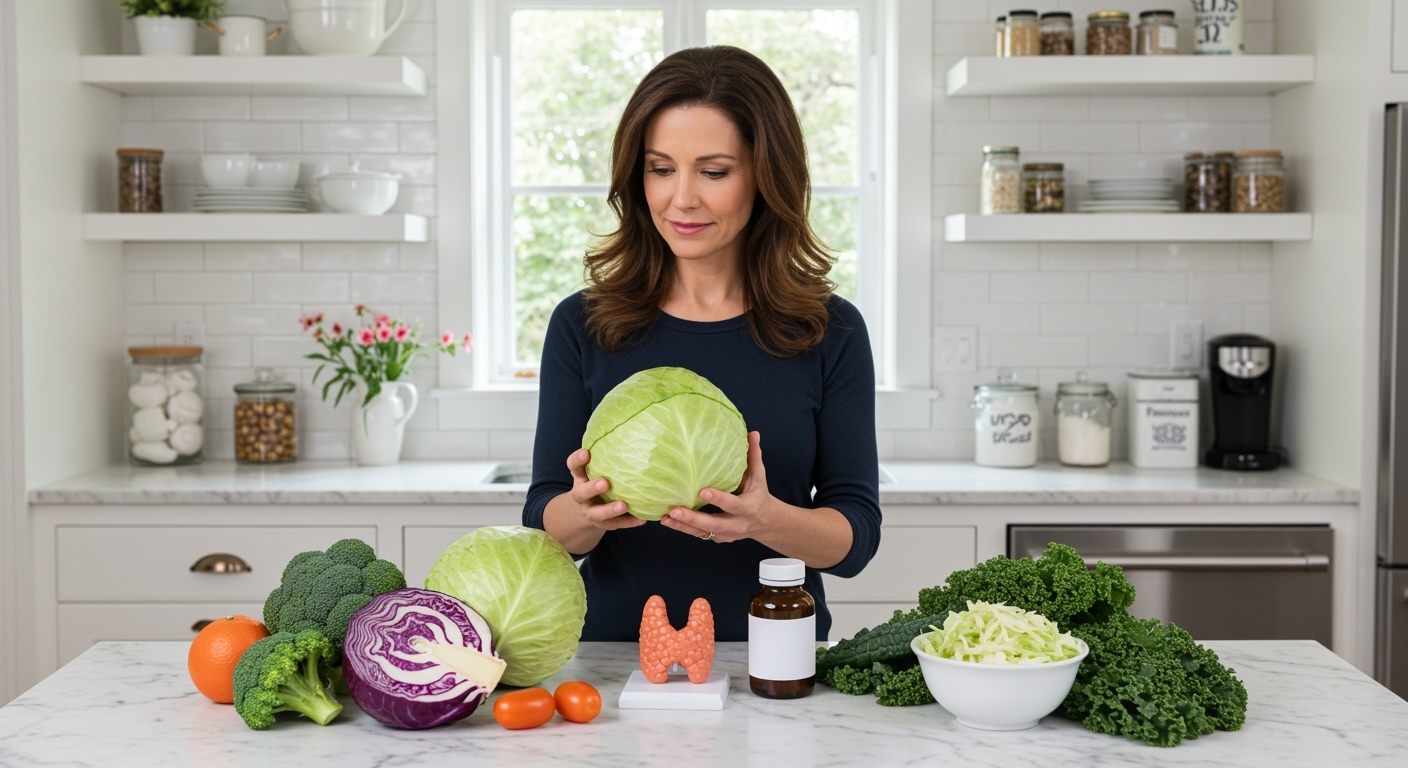
✪ Key Takeaway: Cabbage is safe for hypothyroidism when cooked and eaten in normal amounts, but raw excessive consumption may interfere with thyroid function.
Introduction
You stand in the grocery store staring at a beautiful head of cabbage wondering if this vegetable will harm your thyroid.
You might be asking this question because someone told you that cabbage contains goitrogens that block thyroid hormone production.
Hi, I am Abdur, your nutrition coach and today I am going to explain the complete truth about cabbage and hypothyroidism so you can make informed decisions about your diet.
What Exactly Are Goitrogens In Cabbage?
Goitrogens are naturally occurring compounds in certain foods that can interfere with thyroid hormone production.
Cabbage belongs to the cruciferous vegetable family that contains these compounds called glucosinolates.
When you chew raw cabbage, these glucosinolates break down into substances that can block iodine uptake by your thyroid gland.
Your thyroid needs iodine to produce thyroid hormones T3 and T4 that regulate your metabolism.
However, the goitrogenic effect only becomes a real problem under very specific conditions that most people never experience.
Research shows that cooking significantly reduces the goitrogenic compounds in cabbage by up to 90 percent.
The real issue arises only when someone eats large amounts of raw cabbage while also having severe iodine deficiency.
✪ Fact: Cooking cabbage for just 30 minutes destroys nearly all goitrogenic compounds while preserving most nutrients.
Does Cabbage Actually Worsen Hypothyroidism?
The fear around cabbage and hypothyroidism comes from outdated animal studies and extreme case reports.
Most studies showing thyroid problems involved feeding animals massive amounts of raw cabbage equivalent to eating several heads daily.
No normal person eats that much cabbage, especially not in its raw form every single day.
Clinical evidence shows that people with well-managed hypothyroidism can safely eat cooked cabbage without any negative effects.
Your thyroid medication provides the hormones your body needs regardless of moderate cabbage consumption.
The British Thyroid Foundation states that normal dietary amounts of goitrogenic foods do not interfere with thyroid function or medication.
The real danger comes from avoiding nutrient-rich vegetables like cabbage based on exaggerated fears rather than scientific evidence.
✪ Pro Tip: Focus on cooking your cabbage through steaming, boiling, or stir-frying to maximize safety and nutrient absorption.
How Much Cabbage Is Actually Safe?
Portion size and preparation method determine whether cabbage becomes a problem for your thyroid health.
Eating one to two cups of cooked cabbage several times per week poses absolutely no risk to people with hypothyroidism.
The issue only arises when someone consumes excessive amounts of raw cabbage daily while having inadequate iodine intake.
Most people get enough iodine from iodized salt, dairy products, seafood, and eggs to protect their thyroid function.
If you take thyroid medication, you should maintain consistent vegetable intake rather than dramatically changing your diet.
Sudden large increases in goitrogenic foods might require medication adjustment, but normal consumption causes no problems.
The key is eating cabbage as part of a varied diet rather than making it your primary vegetable every single day.
✪ Note: If you notice any thyroid symptoms changing after adding cabbage, discuss it with your doctor during your next checkup.
What About Other Cruciferous Vegetables?
Cabbage is not the only vegetable that contains goitrogens that worry people with thyroid conditions.
Broccoli, cauliflower, kale, Brussels sprouts, and bok choy all belong to the same cruciferous family.
These vegetables offer incredible health benefits including cancer-fighting compounds, fiber, vitamins, and antioxidants.
Avoiding all cruciferous vegetables means missing out on some of the most nutritious foods available.
The same cooking principle applies to all these vegetables reducing goitrogenic activity by 60 to 90 percent.
Research published in medical journals shows no evidence that normal consumption of cooked cruciferous vegetables worsens hypothyroidism.
The benefits of eating these vegetables far outweigh the theoretical risks for people taking thyroid medication and getting adequate iodine.
✪ Pro Tip: Rotate different vegetables throughout the week instead of eating the same cruciferous vegetable every single day.
When Should You Actually Avoid Cabbage?
There are specific situations where limiting cabbage makes sense for your thyroid health.
If you have severe iodine deficiency confirmed by blood tests, you should limit raw cruciferous vegetables temporarily.
People with uncontrolled hypothyroidism who are not yet on proper medication should be more cautious with large amounts.
If you are drinking large amounts of raw cabbage juice or following extreme detox diets, you might experience problems.
Anyone experiencing worsening thyroid symptoms should discuss their entire diet with their healthcare provider.
However, these situations represent rare exceptions rather than the rule for most people with well-managed hypothyroidism.
The vast majority of people can safely enjoy cooked cabbage as part of a balanced diet without any thyroid complications.
✪ Fact: Cleveland Clinic confirms that people on thyroid medication can eat cruciferous vegetables without concern when cooked properly.
The Bottom Line
Cabbage is safe for hypothyroidism when you cook it properly and eat it in reasonable amounts.
Fear of healthy vegetables causes more harm than the vegetables themselves ever could.
I would love to hear your thoughts or questions about cabbage and thyroid health in the comments below.
References
At NutritionCrown, we use quality and credible sources to ensure our content is accurate and trustworthy. Below are the sources referenced in writing this article:
- British Thyroid Foundation: Diets and Supplements for Thyroid Disorders
- Cleveland Clinic: Thyroid Issues: What You Need to Know About Diet and Supplements
- Mayo Clinic: Mayo Clinic Q and A: Hypothyroidism, Spinach and Kale
- NutritionFacts.org: Can Goitrogens in Soy and Cruciferous Vegetables Interfere with Thyroid Function
- PubMed: Dietary Goitrogens and Thyroid Function