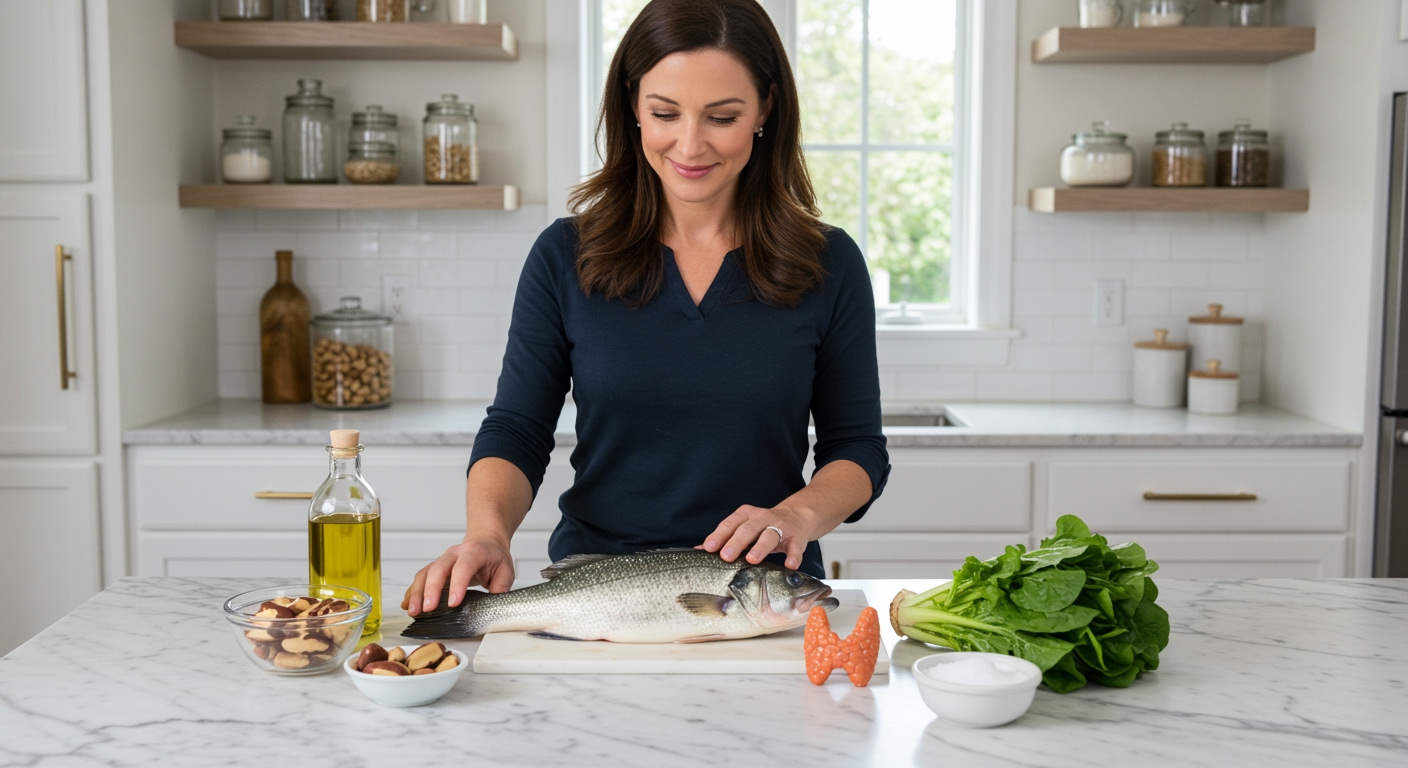
✪ Key Takeaway: Bass fish supports hypothyroidism through selenium, omega-3 fatty acids, and quality protein that aid thyroid hormone production.
Introduction
You stand in front of the fish counter wondering if bass will help or harm your struggling thyroid.
You might be asking this question because your doctor mentioned eating more fish, or perhaps you read somewhere that certain seafood supports thyroid function and you want to know if bass makes the cut.
Hi, I’m Abdur, your nutrition coach, and today I’m going to explain exactly how bass fish affects your thyroid health and whether it deserves a regular spot on your plate.
What Makes Bass Different From Other Fish For Thyroid Health?
Bass contains selenium, a mineral that your thyroid absolutely needs to convert inactive T4 hormone into active T3 hormone.
Without adequate selenium, your thyroid medication might not work as effectively as it should.
A three-ounce serving of bass provides approximately 40 micrograms of selenium, which covers about 73 percent of your daily requirement.
Bass also delivers high-quality protein without excessive mercury levels that plague larger predatory fish like swordfish or king mackerel.
The protein in bass supplies all essential amino acids your body needs to build thyroid hormones and maintain overall metabolic function.
Compared to farm-raised tilapia or catfish, wild-caught bass offers a better omega-3 to omega-6 ratio, which helps reduce inflammation that can worsen hypothyroidism symptoms.
This balance matters because chronic inflammation interferes with thyroid hormone receptors and makes your cells less responsive to the hormones your body produces.
✪ Fact: Selenium deficiency can reduce thyroid hormone production by up to 40 percent even when iodine intake is adequate.
Does The Type Of Bass Matter For Hypothyroidism?
Striped bass, largemouth bass, and sea bass all provide thyroid-supporting nutrients, but their nutritional profiles differ slightly.
Sea bass typically contains higher levels of omega-3 fatty acids compared to freshwater varieties because of its marine diet rich in algae and smaller fish.
Striped bass offers a middle ground with moderate omega-3 content and excellent selenium levels that support the enzyme deiodinase, which converts T4 to T3.
Largemouth bass from freshwater sources provides good protein but lower omega-3 content, making it less ideal if you’re specifically targeting inflammation reduction.
Wild-caught bass generally contains more nutrients than farm-raised versions because wild fish consume a varied natural diet.
Farm-raised bass often receives feed that’s higher in omega-6 fatty acids, which can promote inflammation rather than reduce it.
If you have access to both, choose wild-caught sea bass or striped bass for maximum thyroid benefits.
✪ Pro Tip: Check the country of origin on farm-raised bass, as European farms typically use better feed quality than some Asian operations.
How Much Bass Should You Eat With Hypothyroidism?
Eating bass two to three times per week provides consistent selenium and omega-3 support without risking mercury accumulation.
Each serving should be about three to four ounces, roughly the size of your palm or a deck of cards.
This frequency ensures you get enough thyroid-supporting nutrients while leaving room for other protein sources like chicken, eggs, and legumes.
Eating bass every single day isn’t necessary and might limit the variety of nutrients you get from rotating different protein sources.
Your thyroid needs more than just selenium and omega-3s, it also requires zinc, iron, vitamin D, and B vitamins found in various foods.
If you’re taking thyroid medication like levothyroxine, eat your bass meal at least four hours away from your medication dose.
This timing prevents any potential interference with medication absorption, though fish itself doesn’t typically cause problems like calcium or iron supplements do.
✪ Note: Pregnant women with hypothyroidism should limit bass to twice weekly due to potential mercury concerns during fetal development.
What Cooking Method Preserves The Thyroid Benefits Of Bass?
Baking, steaming, or grilling bass at moderate temperatures preserves its omega-3 fatty acids better than deep frying.
High-heat cooking methods like frying can oxidize the beneficial fats and reduce their anti-inflammatory properties.
When you bake bass at 350 to 375 degrees Fahrenheit for 15 to 20 minutes, you maintain most of its nutritional value.
Steaming is even gentler and keeps the fish moist while preserving both selenium and protein quality.
Avoid breading and frying your bass because the added refined carbohydrates and inflammatory oils counteract the thyroid benefits.
Season your bass with herbs like rosemary, thyme, or dill instead of heavy sauces that add unnecessary calories and sodium.
Pair your cooked bass with vegetables like roasted Brussels sprouts or sautéed spinach to create a complete thyroid-friendly meal.
✪ Pro Tip: Add a squeeze of lemon juice after cooking to enhance selenium absorption and add fresh flavor without extra calories.
Can Bass Replace Thyroid Medication Or Supplements?
Bass supports thyroid function but cannot replace prescribed thyroid medication like levothyroxine or liothyronine.
Your medication provides synthetic hormones that your underactive thyroid cannot produce in sufficient quantities.
Food like bass provides raw materials and cofactors that help your body use thyroid hormones more effectively.
Think of medication as the foundation and nutrition as the support system that makes everything work better together.
Some people with mild hypothyroidism might reduce their medication needs over time with proper nutrition, but this must happen under medical supervision with regular blood tests.
Never adjust your thyroid medication dose based on dietary changes alone without consulting your doctor.
Bass can potentially reduce your need for selenium supplements if you eat it regularly, but again, check with your healthcare provider before stopping any supplements you currently take.
✪ Note: Most people with hypothyroidism need lifelong medication regardless of diet quality, and that’s perfectly normal and manageable.
The Bottom Line
Bass fish genuinely supports thyroid health through selenium, omega-3 fatty acids, and quality protein that work together to optimize hormone production and reduce inflammation.
Good nutrition builds the foundation, but thyroid medication remains the cornerstone of hypothyroidism management, and both work best when combined with consistent lifestyle habits.
I’d love to hear your experience with adding bass or other fish to your diet, so drop a comment below sharing what’s worked for you or any questions you might have about thyroid-friendly eating.
References
At NutritionCrown, we use quality and credible sources to ensure our content is accurate and trustworthy. Below are the sources referenced in writing this article:
- PMC: Selenium and Thyroid Function
- Mayo Clinic: Hypothyroidism Symptoms and Causes
- Cleveland Clinic: Hypothyroidism Overview
- NIDDK: Hypothyroidism Information