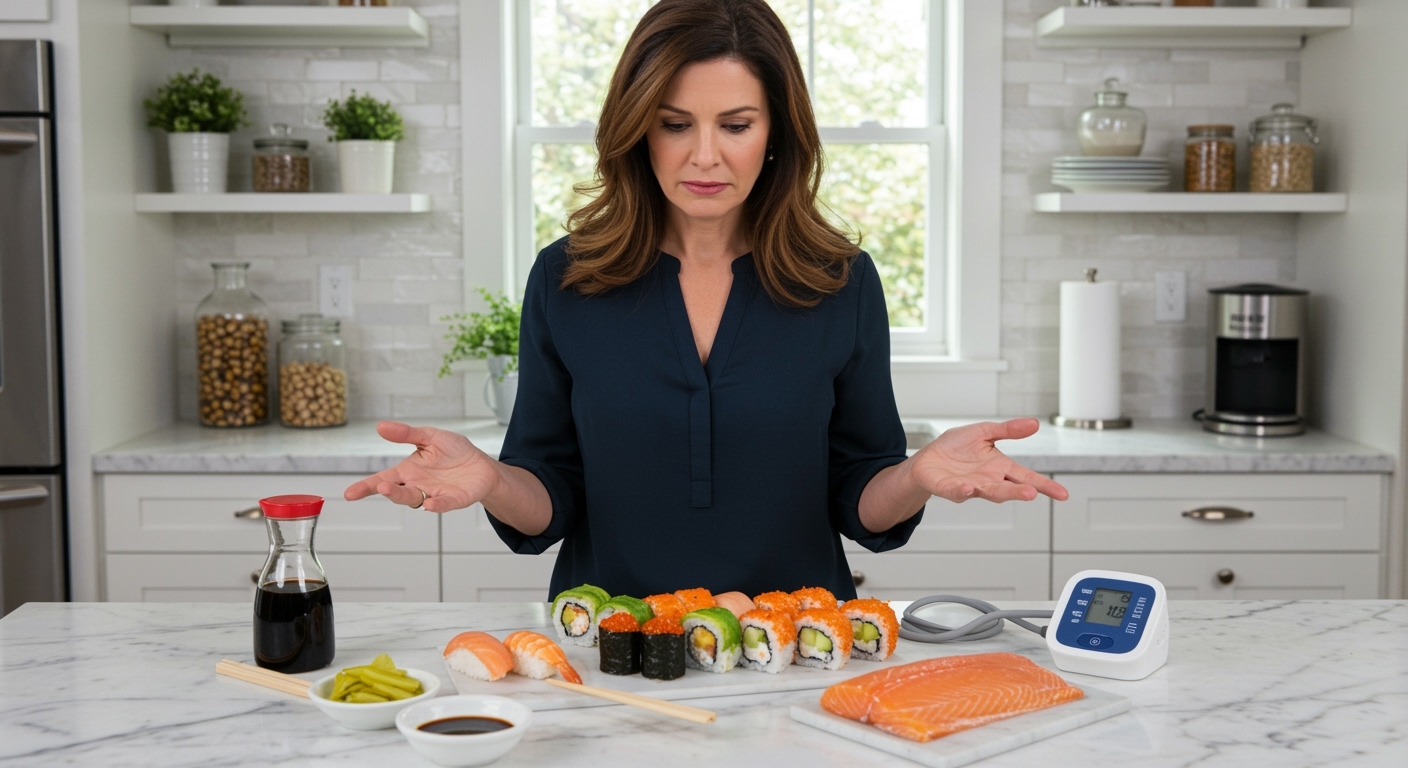
✪ Key Takeaway: Sushi can be good for high blood pressure only when you choose low-sodium options and skip the soy sauce.
Introduction
You walk into your favorite sushi restaurant feeling proud of your healthy choice.
But then you wonder if all that soy sauce and rice might be secretly raising your blood pressure while you think you are eating clean.
Hi, I am Abdur, your nutrition coach and today I am going to explain exactly how sushi affects your blood pressure and which types you should choose or avoid.
What Makes Sushi Seem Like a Healthy Choice?
Sushi appears healthy because it contains raw fish that provides omega-3 fatty acids.
These omega-3 fats help reduce inflammation in your blood vessels and may lower blood pressure naturally.
Fish like salmon, tuna, and mackerel contain high amounts of these beneficial fats that support heart health.
The seaweed wrap called nori also brings minerals like potassium and magnesium to your plate.
Potassium helps your body flush out excess sodium, which directly impacts blood pressure control.
The vegetables in sushi rolls add fiber and antioxidants without adding many calories.
This combination of lean protein, healthy fats, and vegetables makes sushi look like the perfect meal for managing blood pressure.
✪ Fact: One tablespoon of regular soy sauce contains about 900 milligrams of sodium, which is nearly 40 percent of your daily limit.
Where Does the Hidden Sodium Come From?
The biggest problem with sushi is not the fish or rice but the soy sauce you dip it in.
Most people use far more soy sauce than they realize because they keep dipping throughout the meal.
Just two tablespoons of soy sauce can push you close to your entire daily sodium limit of 2,300 milligrams.
The rice preparation also adds hidden sodium because chefs mix salt and sugar into the rice for flavor.
Imitation crab meat, used in California rolls and other popular options, contains high amounts of sodium as a preservative.
Pickled ginger and tempura batter both add more sodium that quickly accumulates across your meal.
When you add up all these sources, a typical sushi meal can deliver 2,000 to 3,000 milligrams of sodium in one sitting.
✪ Pro Tip: Ask for low-sodium soy sauce and use it sparingly by brushing it lightly on your sushi instead of dunking the entire piece.
How Does Excess Sodium Affect Your Blood Pressure?
Sodium makes your body hold onto extra water to dilute the salt concentration in your bloodstream.
This extra fluid increases the total volume of blood flowing through your vessels.
Your heart must work harder to pump this increased volume, which raises the pressure against your artery walls.
Over time, this constant high pressure damages the delicate lining of your blood vessels.
The damage creates inflammation and makes your arteries stiffer and less flexible.
Stiff arteries cannot expand and contract properly, which keeps your blood pressure elevated even when you rest.
This cycle continues until you reduce your sodium intake and give your cardiovascular system a chance to recover.
✪ Note: People with high blood pressure are often more sensitive to sodium, meaning even small amounts can cause significant spikes in their readings.
Which Types of Sushi Are Better for Blood Pressure?
Choose sashimi instead of rolls because it contains only raw fish without rice or added ingredients.
This option gives you all the omega-3 benefits without the sodium from seasoned rice.
Nigiri with fatty fish like salmon or mackerel provides good fats and protein with minimal sodium when eaten without soy sauce.
Avoid rolls with imitation crab, tempura, or spicy mayo because these ingredients add unnecessary sodium and unhealthy fats.
Simple cucumber rolls or avocado rolls work well because they contain vegetables and healthy fats without processed ingredients.
Skip the pickled ginger and focus on wasabi for flavor because it contains almost no sodium.
Order a side of steamed edamame without salt for extra protein and fiber that supports blood pressure management.
✪ Pro Tip: Request that your sushi chef prepare your rolls without adding salt to the rice, which can cut sodium content significantly.
Can You Make Sushi Work in a Blood Pressure Management Plan?
Yes, you can enjoy sushi while managing blood pressure if you make smart choices and control portions.
Limit yourself to six to eight pieces per meal and skip the soy sauce entirely or use just a few drops.
Choose restaurants that offer brown rice options because the extra fiber helps regulate blood sugar and supports heart health.
Pair your sushi with a side salad with ginger dressing to add volume and nutrients without adding sodium.
Drink plenty of water during and after your meal to help your body flush out excess sodium.
Make sushi an occasional treat rather than a regular meal because even the best choices contain more sodium than home-cooked options.
Track your blood pressure readings after eating sushi to see how your body responds and adjust your choices accordingly.
✪ Fact: Studies show that people who eat fish rich in omega-3 fatty acids at least twice weekly have lower blood pressure than those who rarely eat fish.
The Bottom Line
Sushi can support your blood pressure goals when you choose wisely and control your sodium intake carefully.
The healthiest food becomes harmful when preparation methods add ingredients that work against your goals, so always check how your food is made.
Share your favorite low-sodium sushi choices or any questions you have about eating out while managing blood pressure in the comments below.
References
At NutritionCrown, we use quality and credible sources to ensure our content is accurate and trustworthy. Below are the sources referenced in writing this article:
- PMC: Omega-3 Fatty Acids and Blood Pressure
- Healthline: Is Sushi Healthy?
- WebMD: Best and Worst Sushi for Your Health