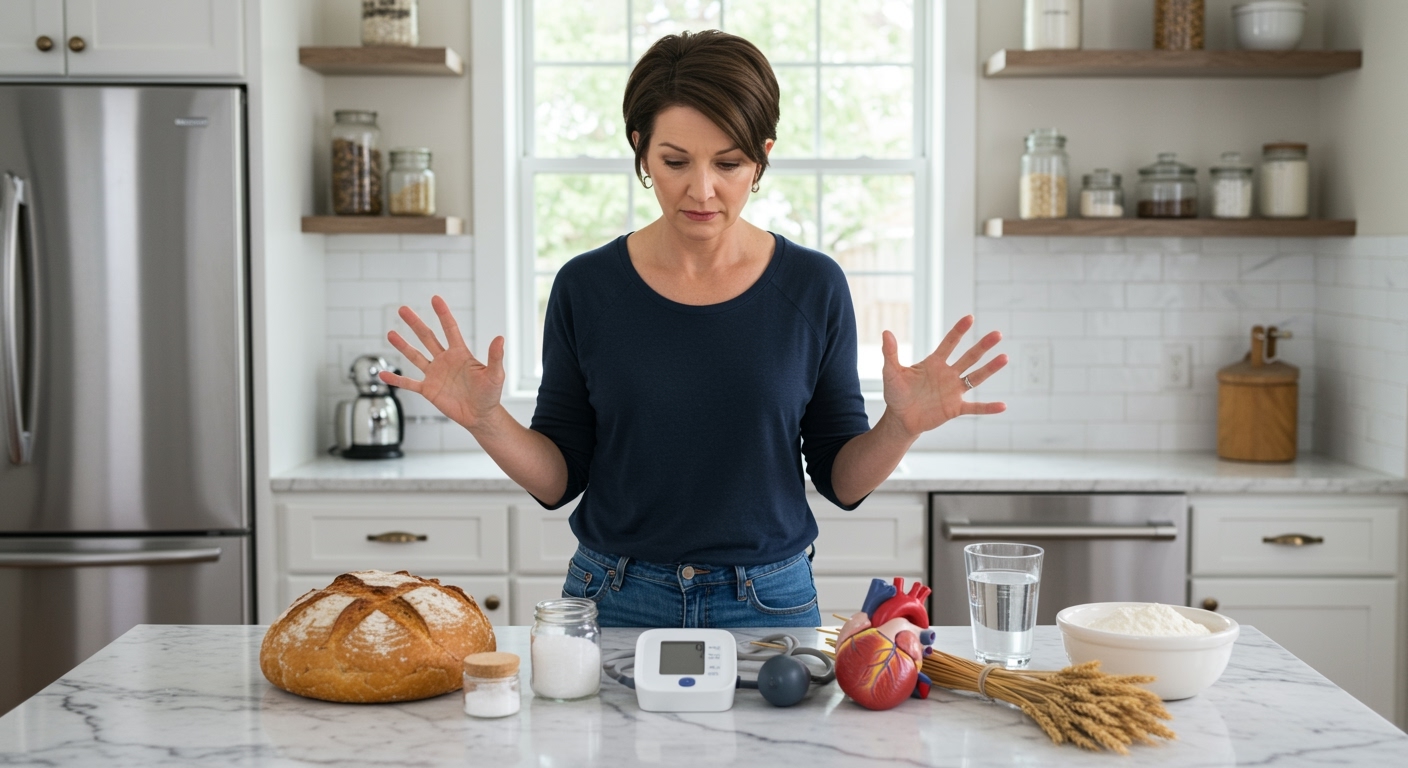
✪ Key Takeaway: Sourdough bread can be safe for high blood pressure if you choose low-sodium versions and control portion sizes carefully.
Introduction
You stand in the bakery aisle staring at that beautiful loaf of sourdough bread wondering if one slice will send your blood pressure through the roof.
The confusion makes perfect sense because everywhere you look someone tells you bread is bad for blood pressure while others praise sourdough as a health food miracle.
Hi, I am Abdur, your nutrition coach and today I am going to explain exactly how sourdough bread affects your blood pressure and whether you can safely enjoy it without worry.
What Makes Sourdough Different From Regular Bread?
Sourdough bread uses a natural fermentation process that sets it apart from every other bread on the shelf.
Wild yeast and bacteria work together over many hours to break down the flour and create that distinctive tangy flavor you recognize immediately.
This fermentation process changes the bread structure in ways that affect how your body processes it.
Regular bread uses commercial yeast that works quickly and skips the long fermentation period entirely.
The bacteria in sourdough produce lactic acid which gives the bread its sour taste and creates a slightly acidic environment.
This acidic environment breaks down compounds called phytates that normally block your body from absorbing important minerals like magnesium and potassium.
These minerals play crucial roles in regulating blood pressure by helping blood vessels relax and maintaining proper fluid balance throughout your body.
✪ Fact: Traditional sourdough fermentation can take anywhere from 12 to 48 hours compared to just 2 hours for regular bread.
Does Sourdough Bread Contain Too Much Sodium?
The sodium content in sourdough bread varies dramatically depending on the baker and recipe used.
A typical slice of commercial sourdough contains between 150 to 250 milligrams of sodium which adds up quickly when you eat multiple slices.
People with high blood pressure should limit their total daily sodium intake to less than 2,300 milligrams or ideally around 1,500 milligrams.
Two slices of regular sourdough bread can provide nearly one-third of your entire daily sodium allowance before you add any toppings or spreads.
The problem gets worse because most people do not realize how much hidden sodium lurks in their bread.
Sodium helps bread dough develop proper texture and flavor but bakers often add more than necessary for these purposes.
You can find low-sodium sourdough options that contain 100 milligrams or less per slice if you check labels carefully or make your own at home.
✪ Pro Tip: Always flip the bread package over and check the sodium content per slice on the nutrition label before buying any bread.
How Does Sourdough Affect Blood Sugar And Blood Pressure?
Sourdough bread has a lower glycemic index compared to regular white bread which means it raises blood sugar more slowly.
The fermentation process breaks down starches into simpler forms that your body digests at a steadier pace.
This slower digestion prevents the rapid blood sugar spikes that trigger insulin surges and contribute to inflammation in your blood vessels.
Chronic inflammation damages the delicate lining of your arteries and makes them stiffer over time.
Stiff arteries cannot expand and contract properly which forces your heart to pump harder and raises your blood pressure readings.
Research shows that foods with lower glycemic indexes help maintain better cardiovascular health over the long term.
The organic acids produced during sourdough fermentation may also slow down how quickly glucose enters your bloodstream after eating.
✪ Fact: Sourdough bread typically has a glycemic index of 53 compared to 75 for regular white bread on a scale where pure glucose equals 100.
Can The Fermentation Process Actually Lower Blood Pressure?
The bacteria in sourdough produce compounds during fermentation that may have blood pressure lowering effects.
Some studies suggest these bacterial strains create peptides that work similarly to ACE inhibitor medications by blocking an enzyme that narrows blood vessels.
ACE stands for angiotensin-converting enzyme which your body uses to produce a hormone called angiotensin II that constricts blood vessels.
When blood vessels constrict your heart must work harder to push blood through them which increases pressure against artery walls.
The bioactive peptides in fermented sourdough may help keep blood vessels relaxed and open.
However the research on this topic remains limited and scientists need more human studies to confirm these potential benefits.
You should never rely on sourdough bread alone to manage your blood pressure or replace your prescribed medications without consulting your doctor first.
✪ Note: The potential blood pressure benefits from fermented foods require consistent long-term consumption and work best as part of an overall healthy eating pattern.
What Should You Look For When Buying Sourdough Bread?
The ingredient list tells you everything you need to know about whether a sourdough bread will help or hurt your blood pressure.
True sourdough should list only flour, water, salt, and sourdough starter as ingredients without any added yeast or preservatives.
Many commercial breads labeled as sourdough actually use regular yeast and just add sourdough flavoring to trick your taste buds.
These fake sourdough breads miss out on all the fermentation benefits that make real sourdough different.
Check the sodium content per slice and aim for options with 140 milligrams or less to keep your daily sodium intake under control.
Whole grain sourdough provides more fiber, minerals, and nutrients compared to white sourdough made from refined flour.
The fiber content helps slow digestion even further and supports healthy blood pressure by feeding beneficial gut bacteria that produce helpful compounds.
✪ Pro Tip: Look for sourdough bread that feels heavy for its size and has an open crumb structure with irregular holes throughout the slice.
The Bottom Line
Sourdough bread can fit safely into a blood pressure friendly diet when you choose low-sodium versions and watch your portion sizes carefully.
The best bread for your blood pressure is the one you check before you eat because knowing what goes into your body gives you power over your health.
I would love to hear your thoughts and experiences with sourdough bread in the comments below so we can learn from each other and build a healthier community together.
References
At NutritionCrown, we use quality and credible sources to ensure our content is accurate and trustworthy. Below are the sources referenced in writing this article:
- Healthline: Sourdough Bread: Nutrients, Benefits, and Recipe
- The Independent: Sourdough Bread Could Help Lower Blood Pressure, Study Finds
- RESPeRATE: Bread and Hypertension: Everything You Need to Know
- National Center for Biotechnology Information: Effect of Sourdough Fermentation on Stabilisation of Blood Glucose