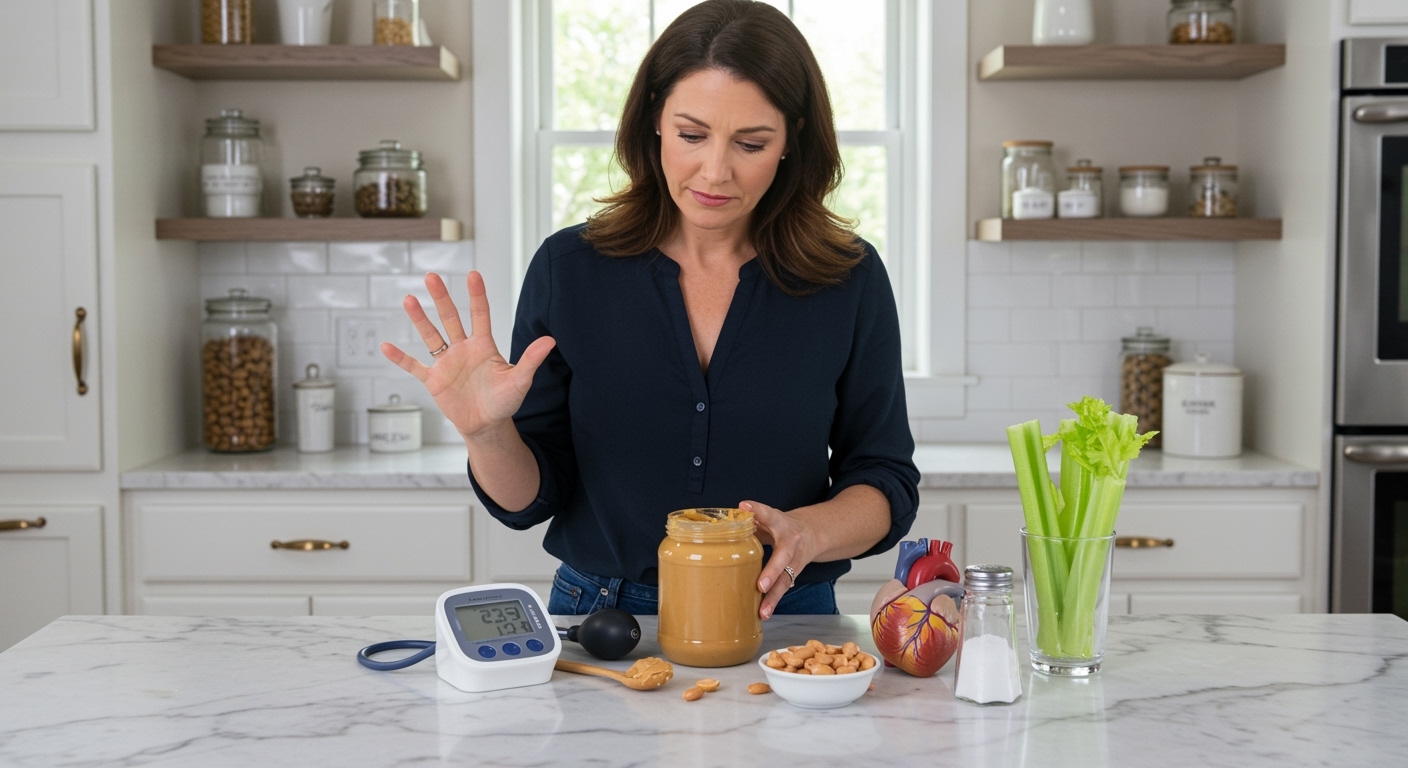
✪ Key Takeaway: Peanut butter is safe for high blood pressure only when you choose unsalted versions and control portion sizes carefully.
Introduction
You stand in the grocery aisle staring at rows of peanut butter jars wondering if this creamy spread will spike your blood pressure.
You might be asking this question because your doctor told you to watch your sodium intake and you heard peanut butter contains salt.
Hi, I am Abdur, your nutrition coach and today I am going to explain exactly how peanut butter affects your blood pressure and which types you should choose or avoid.
Does Peanut Butter Actually Raise Blood Pressure?
The answer depends entirely on which type of peanut butter you eat.
Regular commercial peanut butter contains added salt that can push your blood pressure higher when consumed frequently.
Most popular brands add between 120 to 250 milligrams of sodium per serving which seems small but adds up quickly throughout your day.
Your body retains extra water when you consume too much sodium and this increases the volume of blood flowing through your arteries.
This extra volume forces your heart to work harder and creates more pressure against your artery walls.
Natural peanut butter without added salt contains only about 5 milligrams of sodium per serving which poses no threat to your blood pressure.
The magnesium and potassium naturally present in peanuts actually help your blood vessels relax and may lower blood pressure slightly.
✪ Pro Tip: Always flip the jar and read the ingredient list because some brands labeled as natural still sneak in salt.
What Makes Some Peanut Butter Dangerous For Your Heart?
The danger comes from three hidden ingredients that manufacturers add to improve taste and texture.
First is added sodium which I already mentioned but the amount varies wildly between brands from 65 milligrams to over 250 milligrams per two tablespoons.
Second is hydrogenated oils which some companies use to prevent the natural oil separation that occurs in real peanut butter.
These hydrogenated oils contain trans fats that damage your artery walls and increase inflammation throughout your cardiovascular system.
Third is added sugar which does not directly raise blood pressure but contributes to weight gain and insulin resistance over time.
Insulin resistance makes your body hold onto more sodium which then raises your blood pressure through the mechanism I explained earlier.
Some reduced-fat versions actually contain more sugar and sodium than regular versions because manufacturers need to compensate for the lost flavor from removing fat.
✪ Fact: The DASH diet recommended for high blood pressure includes unsalted nuts and nut butters as beneficial foods for heart health.
How Much Peanut Butter Can You Safely Eat?
Two tablespoons represents the standard serving size and provides about 190 calories along with 16 grams of fat.
This amount fits perfectly into a blood pressure friendly diet when you choose unsalted natural versions.
The problem starts when people eat directly from the jar and consume four to six tablespoons without realizing it.
Even unsalted peanut butter becomes problematic at these amounts because the high calorie density leads to weight gain over weeks and months.
Excess body weight forces your heart to pump blood through more tissue which elevates your blood pressure readings.
I recommend measuring your portion with an actual tablespoon rather than eyeballing it because most people underestimate their serving size by 50 to 100 percent.
You can enjoy peanut butter daily if you stick to the proper portion and balance it with vegetables, fruits, and whole grains throughout your meals.
✪ Note: Spreading peanut butter on celery sticks instead of bread saves calories and adds potassium which helps lower blood pressure naturally.
Which Type Should You Buy At The Store?
Look for jars that list only one ingredient on the label which should say peanuts or roasted peanuts.
Some acceptable versions include two ingredients with the second being a small amount of salt but you should skip these if your blood pressure runs high.
The oil separation you see on top of natural peanut butter proves that no stabilizers or hydrogenated oils were added during processing.
Simply stir the oil back into the peanut paste and store the jar upside down in your refrigerator to prevent future separation.
Avoid any jar that mentions partially hydrogenated oils, fully hydrogenated oils, palm oil, or any form of added sweetener in the ingredients.
Organic versions cost more but offer no additional benefit for blood pressure management compared to conventional natural peanut butter.
The key factor remains the absence of added salt regardless of whether the peanuts were grown organically or conventionally.
✪ Pro Tip: Store natural peanut butter in the fridge after opening to prevent the healthy fats from going rancid within a few weeks.
Can Peanut Butter Actually Help Lower Blood Pressure?
Yes, unsalted peanut butter contains several nutrients that support healthy blood pressure levels.
Two tablespoons provide about 240 milligrams of potassium which helps your kidneys flush out excess sodium through your urine.
This same serving delivers roughly 50 milligrams of magnesium which relaxes the smooth muscle cells in your artery walls.
When your arteries relax they offer less resistance to blood flow and this naturally brings your pressure readings down.
Peanut butter also contains healthy unsaturated fats that improve the flexibility of your blood vessel walls over time.
Research shows that people who eat nuts and nut butters regularly have lower rates of heart disease and better blood pressure control than those who avoid these foods.
The protein and fiber in peanut butter help stabilize your blood sugar which prevents the insulin spikes that contribute to sodium retention and high blood pressure.
✪ Fact: Studies show that including unsalted nuts in your diet can reduce systolic blood pressure by 2 to 5 points over several weeks.
The Bottom Line
Peanut butter is completely safe for high blood pressure when you choose unsalted natural versions and stick to proper portions of two tablespoons.
The ingredient list tells you everything you need to know about whether a food helps or harms your health so make checking labels your automatic habit before buying anything.
I would love to hear your thoughts in the comments below about your favorite ways to enjoy peanut butter or any questions you have about managing blood pressure through food choices.
References
At NutritionCrown, we use quality and credible sources to ensure our content is accurate and trustworthy. Below are the sources referenced in writing this article:
- National Heart, Lung, and Blood Institute: Your Guide to Lowering Your Blood Pressure with DASH
- Mayo Clinic: DASH Diet: Healthy Eating to Lower Your Blood Pressure
- American Heart Association: Shaking the Salt Habit to Lower High Blood Pressure
- PubMed Central: Peanuts and Cardiovascular Disease