
Chicken Liver: Is It Even Safe For High Blood Pressure? (Expert Answer)

Woman standing behind marble counter examining raw chicken liver on plate next to blood pressure monitor in bright modern kitchen

✪ Key Takeaway: Chicken liver is safe for high blood pressure when eaten in moderation, but portion control matters due to its cholesterol and sodium content. Introduction Your doctor told you to watch your diet because of high blood pressure. Now you stand in the grocery store staring at chicken liver and wondering if this nutrient-packed organ meat will help or hurt your condition. Hi, I’m Abdur, your nutrition coach and today I’m going to explain exactly how chicken liver affects blood pressure and whether you should include it in your diet. What Makes Chicken Liver Different From Regular Chicken? Chicken liver comes from the organ that filters toxins in the bird’s body. This filtering function makes the liver incredibly nutrient-dense compared to regular chicken breast or thighs. A single 100-gram serving of chicken liver contains about 345 milligrams of cholesterol, which is more than your entire daily recommended limit. The same serving also provides massive amounts of vitamin A, iron, folate, and B vitamins that your body needs for proper function. Regular chicken meat contains far less cholesterol and fewer concentrated nutrients. The sodium content in raw chicken liver sits around 71 milligrams per 100 grams, which is relatively low compared to processed meats. However, most people do not eat chicken liver raw, and cooking methods dramatically change its final sodium levels. ✪ Fact: Chicken liver contains more iron per serving than red meat, making it excellent for preventing anemia. Does Cholesterol In Chicken Liver Raise Blood Pressure? The

Palo Azul: Can It Help With High Blood Pressure? (Expert Answer)

Middle-aged woman holding dried bark pieces while standing behind marble counter with blue tea, blood pressure monitor, and herbs

✪ Key Takeaway: Palo azul shows promising antioxidant properties but lacks direct scientific evidence specifically proving it lowers blood pressure in humans. Introduction You have probably heard someone mention palo azul as a natural remedy for high blood pressure. Maybe you are tired of taking multiple medications or you simply want to explore natural alternatives that might support your cardiovascular health. Hi, I am Abdur, your nutrition coach, and today I am going to explain what palo azul really is, what science says about its effects on blood pressure, and whether it deserves a place in your health routine. What Exactly Is Palo Azul? Palo azul comes from a tree called Eysenhardtia polystachya that grows in Mexico and parts of Central America. The name literally translates to blue stick because when you steep the wood in hot water, it produces a tea with a distinctive blue fluorescence. Traditional healers have used this plant for centuries to treat kidney problems, urinary tract infections, and various inflammatory conditions. The wood contains several bioactive compounds including flavonoids, isoflavones, and coatline, which give it antioxidant and anti-inflammatory properties. People typically prepare it by boiling wood chips in water for 30 minutes to an hour until the liquid turns a pale blue color. The tea has a mild, slightly woody taste that most people find pleasant and easy to drink throughout the day. ✪ Fact: Palo azul tea contains zero caffeine, making it suitable for consumption at any time without affecting sleep quality. Does Science

Chicken Liver: Is It Really Good For High Blood Pressure? (Expert Answer)

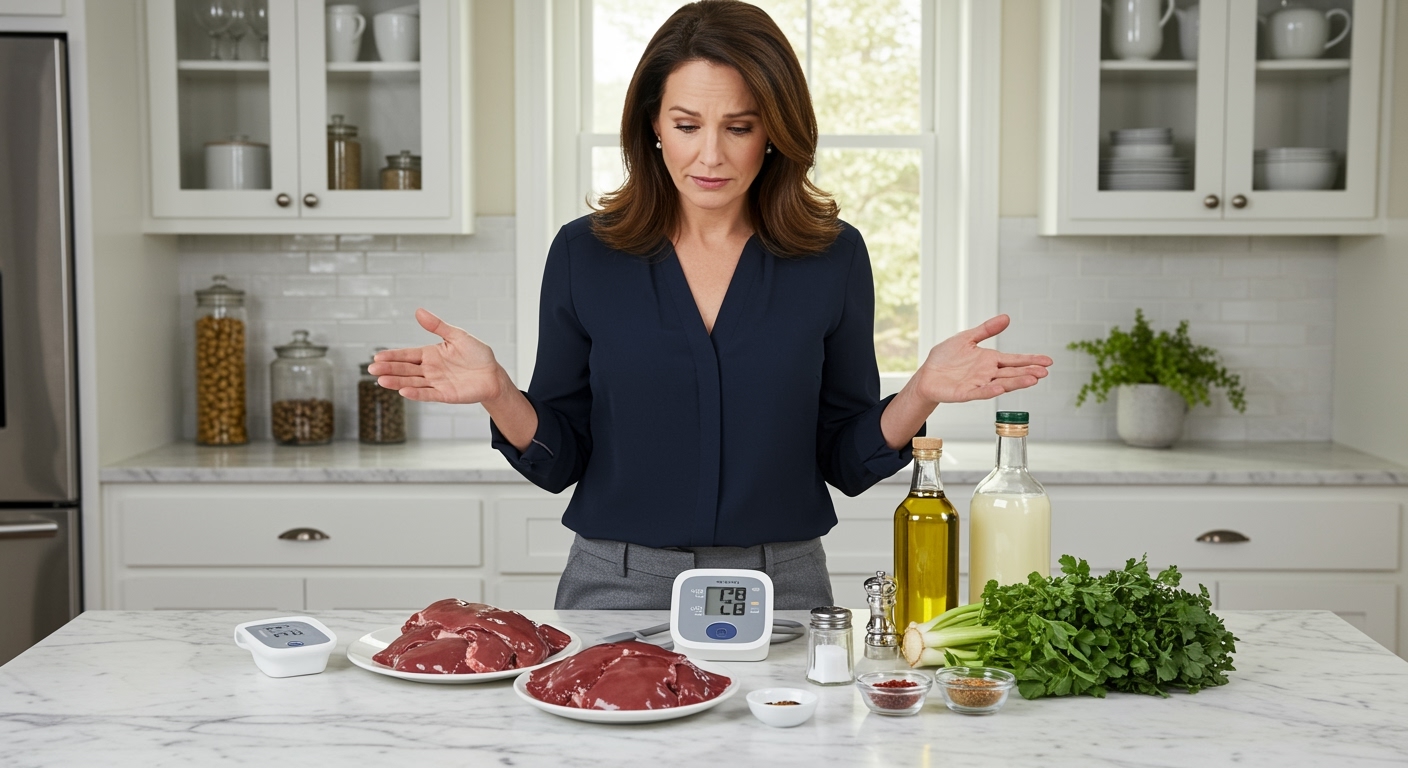
Middle-aged woman standing behind marble countertop with chicken liver, blood pressure monitor, and fresh vegetables in bright kitchen

✪ Key Takeaway: Chicken liver can be part of a high blood pressure diet when eaten occasionally in small portions, but its high cholesterol and sodium content make it risky for daily consumption. Introduction You walk into the grocery store and see chicken liver on sale. Your doctor told you to eat more nutrient-dense foods to help manage your high blood pressure, and you have heard that organ meats are nutritional powerhouses. Hi, I am Abdur, your nutrition coach, and today I am going to explain whether chicken liver truly supports healthy blood pressure or if it creates more problems than it solves. What Makes Chicken Liver Nutritionally Unique? Chicken liver packs an incredible amount of nutrients into a small serving. A 100-gram serving contains about 172 calories with 25 grams of protein and just 7 grams of fat. The vitamin content is where chicken liver really shines with massive amounts of vitamin A, vitamin B12, folate, and riboflavin. It also provides significant amounts of iron, zinc, selenium, and copper that your body needs for various functions. The bioavailability of these nutrients means your body can absorb and use them more efficiently compared to plant-based sources. However, this nutritional density comes with a catch that people with high blood pressure need to understand. One serving of chicken liver contains about 345 milligrams of cholesterol, which is more than the entire daily recommended limit. ✪ Fact: Chicken liver contains more vitamin A than almost any other food, providing over 300 percent

Almonds: Are They Really Good For High Blood Pressure? (Expert Answer)

Middle-aged woman examining bowl of almonds on white marble countertop with blood pressure monitor and heart health items in bright kitchen

✪ Key Takeaway: Almonds can help lower blood pressure through magnesium, potassium, and healthy fats that support arterial health. Introduction You grab a handful of almonds thinking they will fix your blood pressure problem overnight. You might be wondering if these crunchy nuts actually deliver on their heart-healthy promises or if it is just another nutrition myth that sounds too good to be true. Hi, I am Abdur, your nutrition coach and today I am going to explain exactly how almonds affect your blood pressure and what you need to know to use them effectively. What Makes Almonds Different From Other Nuts? Almonds stand out because they pack more magnesium per serving than most other nuts. One ounce of almonds gives you about 76 milligrams of magnesium, which is roughly 20 percent of your daily needs. This mineral helps your blood vessels relax and expand, making it easier for blood to flow through them. When your vessels stay tight and constricted, your heart has to work harder to pump blood throughout your body. Almonds also contain potassium, another mineral that counteracts the effects of sodium in your diet. The combination of these minerals creates a natural balance that supports healthy blood pressure levels over time. ✪ Fact: Almonds contain more fiber than any other tree nut, with 3.5 grams per ounce supporting overall cardiovascular function. How Do Almonds Actually Lower Blood Pressure? Research shows that eating almonds regularly can reduce both systolic and diastolic blood pressure numbers. A study published