Canned Tuna: Is It That Bad For High Blood Pressure? (Expert Answer)

Woman examining two unlabeled cans on marble counter with fresh tuna, blood pressure monitor, and heart-healthy foods in bright kitchen

✪ Key Takeaway: Canned tuna can be good for high blood pressure if you choose low-sodium versions, but regular canned tuna is often loaded with salt that raises blood pressure. Introduction You stand in the grocery aisle staring at rows of canned tuna wondering if this convenient protein will spike your blood pressure. You might be asking this question because you have heard conflicting information about canned tuna being both healthy and harmful for your heart. Hi, I am Abdur, your nutrition coach and today I am going to explain exactly how canned tuna affects your blood pressure and which types you should choose or avoid. What Makes Canned Tuna Different From Fresh Tuna? Fresh tuna contains almost no sodium naturally, with just 40 to 50 milligrams per 100 grams. Canned tuna gets packed in either water or oil along with added salt for preservation and flavor enhancement. This processing step transforms a heart-healthy fish into a potential blood pressure problem depending on how much salt gets added. Regular canned tuna in water contains between 200 to 400 milligrams of sodium per serving, which is about 10 times more than fresh tuna. Some brands pack their tuna with even more salt, reaching up to 600 milligrams per small can. The canning process itself does not harm the beneficial omega-3 fatty acids and protein that make tuna valuable for heart health. The real issue lies entirely in the sodium content that manufacturers add during processing. ✪ Fact: A single can of


Mushrooms: Are They Really Good For High Blood Pressure? (Expert Answer)

Woman holding portobello mushroom on marble countertop with blood pressure monitor, heart model, and various fresh mushrooms visible

✪ Key Takeaway: Mushrooms can help lower blood pressure through potassium, fiber, and bioactive compounds, but psilocybin mushrooms may dangerously raise it. Introduction You walk through the grocery store and see those little white mushrooms sitting quietly in their package. You might be wondering if these humble fungi could actually help manage your blood pressure readings that keep creeping higher each year. Hi, I am Abdur, your nutrition coach and today I am going to explain exactly how mushrooms affect your blood pressure, which types work best, and the surprising truth about one variety you should absolutely avoid. What Makes Mushrooms Potentially Helpful For Blood Pressure? Mushrooms contain high amounts of potassium, a mineral that directly counteracts sodium in your body. When you eat foods rich in potassium, your kidneys flush out more sodium through urine. This process helps relax blood vessel walls and reduces the pressure inside your arteries. A single cup of cooked white button mushrooms provides about 428 milligrams of potassium. That is roughly 9 percent of your daily potassium needs in just one serving. Mushrooms also contain beta-glucans, which are special types of soluble fiber found in fungal cell walls. These compounds help reduce cholesterol levels and improve overall cardiovascular function. ✪ Fact: Mushrooms are the only plant-based food source that naturally contains vitamin D when exposed to sunlight during growth. Does Research Actually Support Mushrooms For Hypertension? A 2023 study published in the Journal of Hypertension examined over 24,000 adults and their mushroom consumption patterns.

White Rice: Is It Always Bad For High Blood Pressure? (Expert Answer)

Middle-aged woman standing behind marble counter with white rice bowl, blood pressure monitor, measuring cup, vegetables, and protein

✪ Key Takeaway: White rice is not always bad for high blood pressure when you control portions, pair it with fiber and protein, and time it properly. Introduction You have been told to avoid white rice because it will spike your blood pressure and ruin your health. You might be asking this question because you love rice, it is a staple in your culture, or you simply want to know if you must give it up forever to control your blood pressure. Hi, I am Abdur, your nutrition coach, and today I am going to explain why white rice is not always the villain in your blood pressure story and how you can enjoy it without guilt. Does White Rice Directly Raise Blood Pressure? White rice does not directly cause high blood pressure the way excess sodium does. The concern with white rice comes from its high glycemic index, which means it breaks down quickly into sugar in your bloodstream. When your blood sugar spikes repeatedly over time, it can lead to insulin resistance, which is a condition where your cells stop responding properly to insulin. Insulin resistance creates inflammation in your blood vessels and makes your body retain more sodium and water. This chain reaction can eventually contribute to elevated blood pressure, but it takes consistent overconsumption and poor dietary habits to reach that point. A single serving of white rice with a balanced meal will not suddenly spike your blood pressure if you are otherwise healthy. The real

Oats: Are They Really Good For High Blood Pressure? (Expert Answer)

Woman holding measuring cup of oats behind marble counter with heart model, blood pressure monitor, and fresh fruits visible

✪ Key Takeaway: Oats effectively lower blood pressure through soluble fiber and bioactive compounds when consumed regularly in proper amounts. Introduction Your doctor just told you that your blood pressure numbers are climbing into dangerous territory. You are probably wondering if simple dietary changes like adding oats to your breakfast can actually make a difference or if this is just another health myth that sounds too good to be true. Hi, I am Abdur, your nutrition coach and today I am going to explain exactly how oats affect your blood pressure, what the science really says, and how to use them correctly for maximum benefit. What Makes Oats Different From Other Grains? Oats contain a special type of soluble fiber called beta-glucan that other common grains simply do not have in significant amounts. This unique fiber forms a gel-like substance in your digestive system that slows down nutrient absorption and creates several beneficial effects throughout your body. Research published in the American Journal of Clinical Nutrition found that just 3 grams of beta-glucan daily can reduce systolic blood pressure by 2 to 3 mmHg. That might sound small, but this reduction translates to about a 5 percent decrease in stroke risk and a 4 percent decrease in heart disease risk across entire populations. Oats also contain avenanthramides, which are antioxidant compounds found almost exclusively in oats and nowhere else in the plant kingdom. These compounds help your blood vessels relax and widen, which directly lowers the pressure inside your arteries.

Kiwi: Can It Help With High Blood Pressure? (Expert Answer)

Middle-aged woman standing behind white marble counter arranging whole and halved kiwi fruits alongside heart model and blood pressure cuff.

✪ Key Takeaway: Eating three kiwis daily can lower blood pressure more effectively than one apple due to higher potassium and bioactive compounds. Introduction Your doctor just told you that your blood pressure numbers are creeping up and you need to make changes fast. You are probably wondering if adding simple fruits like kiwi to your daily routine can actually make a real difference in those readings. Hi, I am Abdur, your nutrition coach and today I am going to explain exactly how kiwi affects blood pressure, what the science says, and whether this fuzzy fruit deserves a permanent spot in your kitchen. What Makes Kiwi Different From Other Fruits for Blood Pressure? Kiwi stands out because it packs an exceptional amount of potassium compared to most common fruits. One medium kiwi contains about 215 milligrams of potassium, which helps your body balance out the sodium that raises blood pressure. Your kidneys use potassium to flush excess sodium through urine, and this process directly lowers the pressure inside your blood vessels. Beyond potassium, kiwi contains bioactive compounds like lutein and vitamin C that protect your blood vessel walls from damage. These compounds reduce inflammation in your arteries, making them more flexible and better able to handle blood flow without creating high pressure. The fiber in kiwi also plays a role by improving your gut health, which recent research links to better cardiovascular function and blood pressure control. ✪ Fact: Three kiwis provide more potassium than one banana while containing fewer

Raisins: Are They Really Good For High Blood Pressure? (Expert Answer)

Woman holding bowl of raisins on marble counter with blood pressure monitor, banana, almonds, and heart symbol in bright kitchen

✪ Key Takeaway: Raisins can help lower blood pressure due to their high potassium content, but portion control matters because of their natural sugar concentration. Introduction You probably walked past the raisin box in your kitchen a hundred times without thinking twice about it. But then your doctor mentioned your blood pressure numbers were creeping up, and suddenly you started questioning everything you eat. Hi, I am Abdur, your nutrition coach, and today I am going to explain whether raisins truly help manage high blood pressure or if they are just another overhyped health food that does more harm than good. What Makes Raisins Different From Other Sweet Snacks? Raisins are simply dried grapes that have lost most of their water content through natural or mechanical drying processes. This drying process concentrates both the nutrients and the natural sugars found in fresh grapes. One small box of raisins contains about 129 calories, 34 grams of carbohydrates, and 25 grams of natural sugar. But here is what most people miss: those same raisins pack 322 milligrams of potassium, which is about 7 percent of your daily needs. They also contain fiber, antioxidants, and polyphenols that work together in ways that might surprise you. Unlike candy or processed sweets, raisins come with a nutritional package that includes minerals your body actually needs. The glycemic index of raisins sits at around 64, which is moderate compared to white bread or sugar. ✪ Fact: One cup of raisins contains more potassium than a medium-sized

Basmati Rice: Is It Even Safe For High Blood Pressure? (Expert Answer)

Woman standing behind marble countertop examining bowl of basmati rice with blood pressure monitor and heart model visible

✪ Key Takeaway: Basmati rice is safe for high blood pressure when consumed in controlled portions because it contains zero sodium naturally. Introduction You stand in the grocery aisle staring at bags of basmati rice wondering if this fragrant grain will spike your blood pressure readings. You might be asking this question because your doctor told you to watch your sodium intake and you are not sure if rice contains hidden salt. Hi, I am Abdur, your nutrition coach and today I am going to explain exactly how basmati rice affects your blood pressure and whether you should keep it in your diet. Does Basmati Rice Contain Sodium That Raises Blood Pressure? Basmati rice in its natural uncooked form contains absolutely zero sodium. This means the rice grain itself will not directly raise your blood pressure through sodium intake. The problem starts when you add salt during cooking or serve rice with high-sodium curries and sauces. One cup of cooked basmati rice without added salt contains less than 5 milligrams of sodium which is practically nothing. Your daily sodium limit for blood pressure management should stay below 2300 milligrams or ideally 1500 milligrams if you already have hypertension. The real danger comes from the accompaniments you pair with basmati rice not the rice itself. ✪ Pro Tip: Cook basmati rice with herbs and spices instead of salt to keep sodium levels under control without sacrificing flavor. How Does The Glycemic Index Of Basmati Rice Impact Blood Pressure? Basmati rice has

Kippers: Are They Really Good For High Blood Pressure? (Expert Answer)

Woman standing behind marble countertop with smoked kippers, heart model, blood pressure cuff, and salt bowl in bright kitchen

✪ Key Takeaway: Kippers contain beneficial omega-3s that lower blood pressure but their extremely high sodium content cancels out these benefits. Introduction You walk past the fish counter and spot those golden-brown smoked herrings called kippers. Your doctor told you to eat more fish for your blood pressure, but you wonder if these salty-looking kippers actually help or hurt your numbers. Hi, I am Abdur, your nutrition coach, and today I am going to explain the complete truth about kippers and blood pressure so you can make the right choice for your health. What Exactly Are Kippers And Why Do People Eat Them? Kippers are whole herring fish that have been split open, gutted, salted, and then cold-smoked over wood chips. This traditional preservation method originated in Britain during the 1840s when refrigeration did not exist. The smoking process gives kippers their distinctive golden-brown color and intense smoky flavor that people either love or hate. People traditionally eat kippers for breakfast in the UK, often grilled and served with eggs and toast. The fish provides a convenient protein source because you can cook them quickly without any complicated preparation. Modern kippers come vacuum-packed and ready to eat, making them even more accessible than the traditional whole smoked fish. However, the preservation process that makes kippers shelf-stable also creates the biggest problem for blood pressure management. ✪ Fact: A single kipper can contain up to 990 milligrams of sodium, which is nearly half your daily recommended limit. Do Kippers Actually Contain

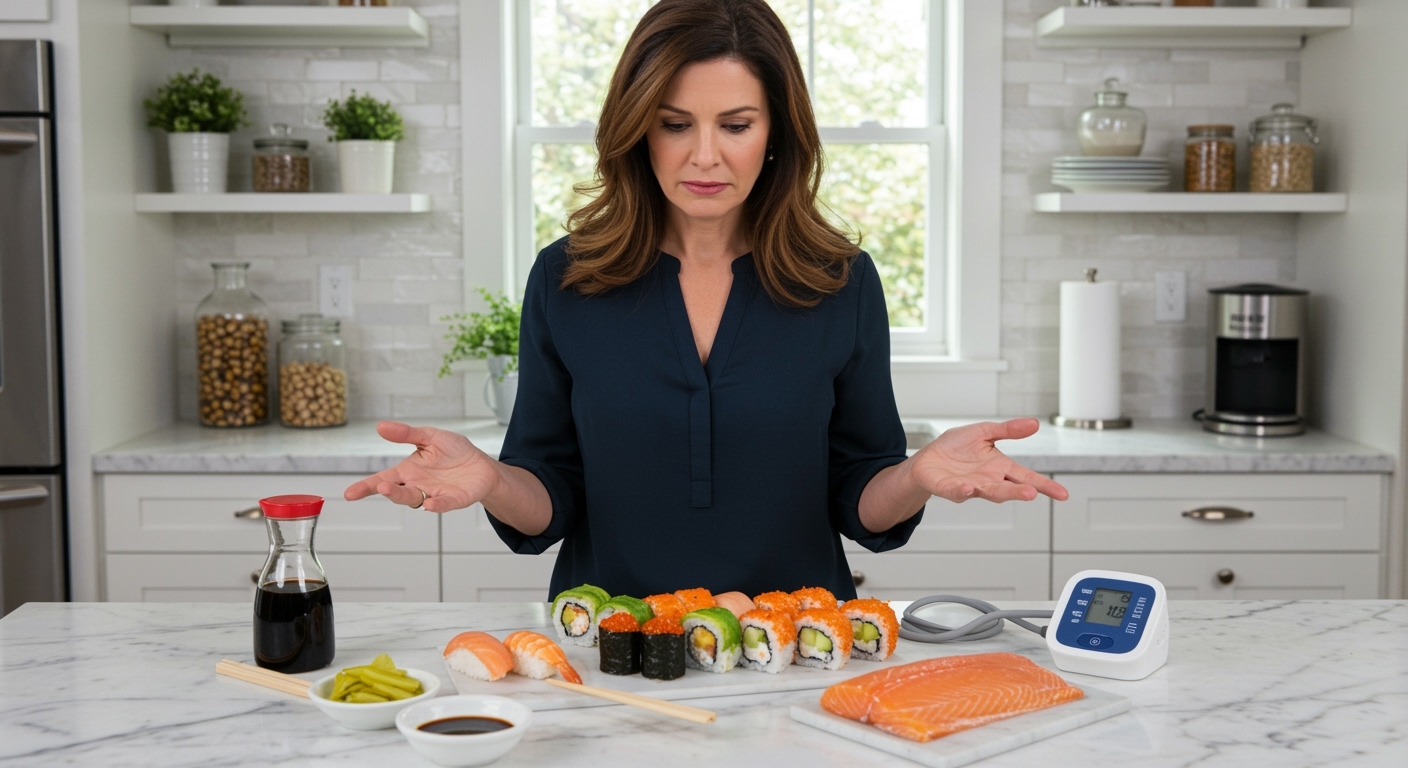
Sushi: Is It Really Good For High Blood Pressure? (Expert Answer)

Woman standing behind marble counter examining sushi rolls and blood pressure monitor with concerned expression in bright modern kitchen

✪ Key Takeaway: Sushi can be good for high blood pressure only when you choose low-sodium options and skip the soy sauce. Introduction You walk into your favorite sushi restaurant feeling proud of your healthy choice. But then you wonder if all that soy sauce and rice might be secretly raising your blood pressure while you think you are eating clean. Hi, I am Abdur, your nutrition coach and today I am going to explain exactly how sushi affects your blood pressure and which types you should choose or avoid. What Makes Sushi Seem Like a Healthy Choice? Sushi appears healthy because it contains raw fish that provides omega-3 fatty acids. These omega-3 fats help reduce inflammation in your blood vessels and may lower blood pressure naturally. Fish like salmon, tuna, and mackerel contain high amounts of these beneficial fats that support heart health. The seaweed wrap called nori also brings minerals like potassium and magnesium to your plate. Potassium helps your body flush out excess sodium, which directly impacts blood pressure control. The vegetables in sushi rolls add fiber and antioxidants without adding many calories. This combination of lean protein, healthy fats, and vegetables makes sushi look like the perfect meal for managing blood pressure. ✪ Fact: One tablespoon of regular soy sauce contains about 900 milligrams of sodium, which is nearly 40 percent of your daily limit. Where Does the Hidden Sodium Come From? The biggest problem with sushi is not the fish or rice but the soy

Rotisserie Chicken: Is It That Bad For High Blood Pressure? (Expert Answer)

Woman standing behind marble counter looking at rotisserie chicken, blood pressure monitor, salt shaker, and fresh chicken in bright kitchen

✪ Key Takeaway: Rotisserie chicken can be bad for high blood pressure because it contains excessive sodium that raises blood pressure levels. Introduction You walk into the grocery store after a long day and that warm rotisserie chicken calls your name. You might be wondering if this convenient protein choice is safe when you are managing high blood pressure. Hi, I am Abdur, your nutrition coach and today I am going to explain the truth about rotisserie chicken and how it affects your blood pressure. How Much Sodium Does Rotisserie Chicken Actually Contain? A typical store-bought rotisserie chicken contains between 600 to 1200 milligrams of sodium per serving. That single serving usually means about three ounces of meat, which is roughly the size of your palm. The American Heart Association recommends no more than 1500 milligrams of sodium per day for people with high blood pressure. This means just one serving of rotisserie chicken can give you nearly half to three-quarters of your daily sodium limit. Most people eat more than three ounces in one sitting, which pushes sodium intake even higher. The high sodium content comes from the brining process that stores use to keep the chicken moist and flavorful. This brining solution is basically salt water that gets absorbed deep into the meat before cooking. ✪ Fact: Some popular grocery store rotisserie chickens contain up to 460 milligrams of sodium per ounce of meat. Why Does Sodium From Rotisserie Chicken Raise Blood Pressure? Sodium causes your body to