Cherries: Can They Help With High Blood Pressure? (Expert Answer)

Woman standing behind marble counter with fresh cherries, cherry juice, heart model, and blood pressure monitor in bright kitchen

✪ Key Takeaway: Cherries can lower blood pressure through potassium, antioxidants, and anti-inflammatory compounds that relax blood vessels naturally. Introduction Your doctor just told you that your blood pressure numbers are creeping up and you need to make changes fast. You might be asking this question because you heard someone mention that cherries could help, or maybe you saw a headline about fruit and heart health, and now you want to know if something as simple and delicious as cherries could actually make a difference in your blood pressure readings. Hi, I am Abdur, your nutrition coach, and today I am going to explain exactly how cherries affect your blood pressure, what the science says, and whether you should add them to your daily routine. What Makes Cherries Special For Blood Pressure? Cherries contain a unique combination of nutrients and plant compounds that directly impact your cardiovascular system. The most important component is potassium, a mineral that helps balance sodium levels in your body. When you consume enough potassium, your kidneys flush out excess sodium through urine, which reduces the volume of fluid in your blood vessels. This process naturally lowers the pressure against your artery walls. Cherries also pack powerful antioxidants called anthocyanins, which give them their deep red color. These compounds reduce inflammation throughout your body, including in your blood vessels. When inflammation decreases, your blood vessels become more flexible and can relax more easily, allowing blood to flow with less resistance. ✪ Fact: One cup of cherries


Mango: Is It Really Good For High Blood Pressure? (Expert Answer)

Middle-aged woman in navy blouse holding mango slice while standing behind marble countertop with fresh mangoes and blood pressure monitor

✪ Key Takeaway: Mangoes may help lower blood pressure in some people due to their potassium and polyphenol content, but portion control matters greatly. Introduction You love mangoes but worry about whether they will spike your blood pressure or help control it. You might be asking this question because someone told you that mangoes are too sweet for people with high blood pressure, or perhaps you read somewhere that tropical fruits can support heart health. Hi, I am Abdur, your nutrition coach, and today I am going to explain exactly how mangoes affect your blood pressure and whether you should include them in your diet. What Makes Mango Different From Other Fruits? Mangoes contain a unique combination of nutrients that sets them apart from most other fruits. One cup of sliced mango provides about 257 milligrams of potassium, which is roughly 5 percent of your daily needs. Potassium helps your body balance sodium levels, and this balance directly affects your blood pressure readings. Mangoes also contain polyphenols like mangiferin, which are plant compounds with antioxidant properties. These polyphenols may help protect your blood vessels from damage and support healthy circulation. The fiber content in mangoes, about 3 grams per cup, also plays a role in overall cardiovascular health by supporting healthy cholesterol levels. ✪ Fact: Mangiferin, the main polyphenol in mangoes, has been studied for its potential to reduce inflammation in blood vessels. Does Research Support Mango For Blood Pressure? A recent study published in 2024 examined how daily mango

Celery Juice: Can It Help With High Blood Pressure? (Expert Answer)

Middle-aged woman standing behind marble counter with celery juice, fresh celery stalks, heart model, and blood pressure monitor

✪ Key Takeaway: Celery juice may help lower blood pressure modestly due to its nitrate and phthalide content, but results vary and it should not replace medication. Introduction You scroll through social media and see everyone drinking bright green celery juice claiming it cured their high blood pressure. You wonder if this simple vegetable juice could really help you manage your blood pressure without adding more pills to your daily routine. Hi, I am Abdur, your nutrition coach, and today I am going to explain what celery juice actually does to your blood pressure and whether the hype matches the science. What Makes Celery Juice Different From Eating Celery? Juicing celery removes the fiber that slows down nutrient absorption in your digestive system. This means the compounds in celery juice enter your bloodstream faster than if you ate the whole vegetable. One cup of celery juice contains about the same nutrients as three to four celery stalks but without the bulk that makes you feel full. The concentration of bioactive compounds becomes higher in juice form, which might explain why some people notice effects more quickly. However, removing fiber also means you miss out on the digestive benefits and blood sugar regulation that fiber provides. ✪ Note: Juicing concentrates nutrients but also concentrates natural sugars and removes beneficial fiber that supports gut health. Which Compounds in Celery Affect Blood Pressure? Celery contains phthalides, which are compounds that may help relax the smooth muscle tissue in blood vessel walls. When these

Tuna Fish: Is It Really Good For High Blood Pressure? (Expert Answer)

Woman examining blood pressure monitor on marble counter with fresh tuna steak, canned tuna, supplements, and vegetables in bright kitchen

✪ Key Takeaway: Tuna can lower blood pressure through omega-3s but may raise it through mercury and sodium depending on type and preparation. Introduction You stand in the grocery store aisle staring at rows of tuna cans wondering if this convenient protein will help or hurt your blood pressure. You have heard conflicting advice from friends, family, and even some health websites about whether tuna is a heart-healthy choice or a hidden danger. Hi, I am Abdur, your nutrition coach and today I am going to explain exactly how tuna affects your blood pressure, which types you should choose, and how much is safe to eat. What Makes Tuna Different From Other Fish? Tuna belongs to a unique category of fish that live longer and grow larger than most other seafood options. These fish swim in deep ocean waters and accumulate higher levels of mercury in their flesh over their lifetime. Mercury is a toxic heavy metal that enters oceans through industrial pollution and gets absorbed by small fish first. When larger fish like tuna eat these smaller fish, the mercury concentrates in their bodies through a process called bioaccumulation. Different tuna species contain vastly different mercury levels based on their size and age. Albacore tuna typically contains three times more mercury than skipjack tuna, which is commonly sold as light tuna. This distinction matters tremendously when you are trying to manage your blood pressure and overall cardiovascular health. ✪ Fact: A single serving of albacore tuna can contain up

Sweet Potatoes: Are They Really Good For High Blood Pressure? (Expert Answer)

Woman holding sweet potato behind marble counter with whole and cut sweet potatoes, blood pressure monitor, and stethoscope visible

✪ Key Takeaway: Sweet potatoes can help lower blood pressure due to their high potassium content, which balances sodium and relaxes blood vessels. Introduction You have probably heard that sweet potatoes are a superfood for your heart. You might be wondering if eating them regularly can actually bring down those stubborn blood pressure numbers that worry you during doctor visits. Hi, I am Abdur, your nutrition coach and today I am going to explain exactly how sweet potatoes affect blood pressure and whether they truly deserve their reputation as a heart-healthy food. What Makes Sweet Potatoes Special For Blood Pressure? Sweet potatoes contain an impressive amount of potassium, which is the key mineral that helps control blood pressure. One medium sweet potato provides about 542 milligrams of potassium, which is roughly 12 percent of your daily needs. Potassium works by helping your kidneys remove excess sodium from your body through urine. When sodium levels drop, the pressure on your blood vessel walls decreases naturally. Potassium also helps relax the walls of your blood vessels, which makes it easier for blood to flow through them. This dual action of removing sodium and relaxing vessels creates a powerful blood pressure lowering effect. ✪ Fact: The average American consumes only about half the recommended daily potassium intake of 4,700 milligrams. How Much Can Sweet Potatoes Actually Lower Your Blood Pressure? Research shows that increasing potassium intake can reduce systolic blood pressure by 3 to 5 points on average. That might not sound like

Rhubarb: Is It Really Good For High Blood Pressure? (Expert Answer)

Woman standing behind marble counter with fresh rhubarb stalks, blood pressure monitor, heart model, and healthy ingredients.

✪ Key Takeaway: Rhubarb contains potassium and bioactive compounds that may help lower blood pressure, but only when prepared without excessive sugar. Introduction You walk past the produce section and spot those bright red stalks that look like celery had a wild night out. You might be asking this question because your doctor told you to watch your blood pressure and you are searching for natural ways to keep those numbers in check. Hi, I am Abdur, your nutrition coach and today I am going to explain exactly how rhubarb affects your blood pressure and whether it deserves a permanent spot in your kitchen. What Makes Rhubarb Different From Other Vegetables? Rhubarb is technically a vegetable but most people treat it like a fruit because of its tart flavor. The stalks are the only edible part while the leaves contain oxalic acid that can be toxic if consumed in large amounts. This plant grows in cooler climates and has been used in traditional Chinese medicine for thousands of years to treat various health conditions. One cup of raw rhubarb contains only 26 calories but packs 351 milligrams of potassium which is about 7 percent of your daily needs. It also contains vitamin K, calcium, vitamin C, and dietary fiber that support overall health. The bioactive compounds in rhubarb include anthraquinones, polyphenols, and stilbenes that have been studied for their potential cardiovascular benefits. ✪ Fact: Rhubarb was so valuable in medieval Europe that it was more expensive than saffron and cinnamon

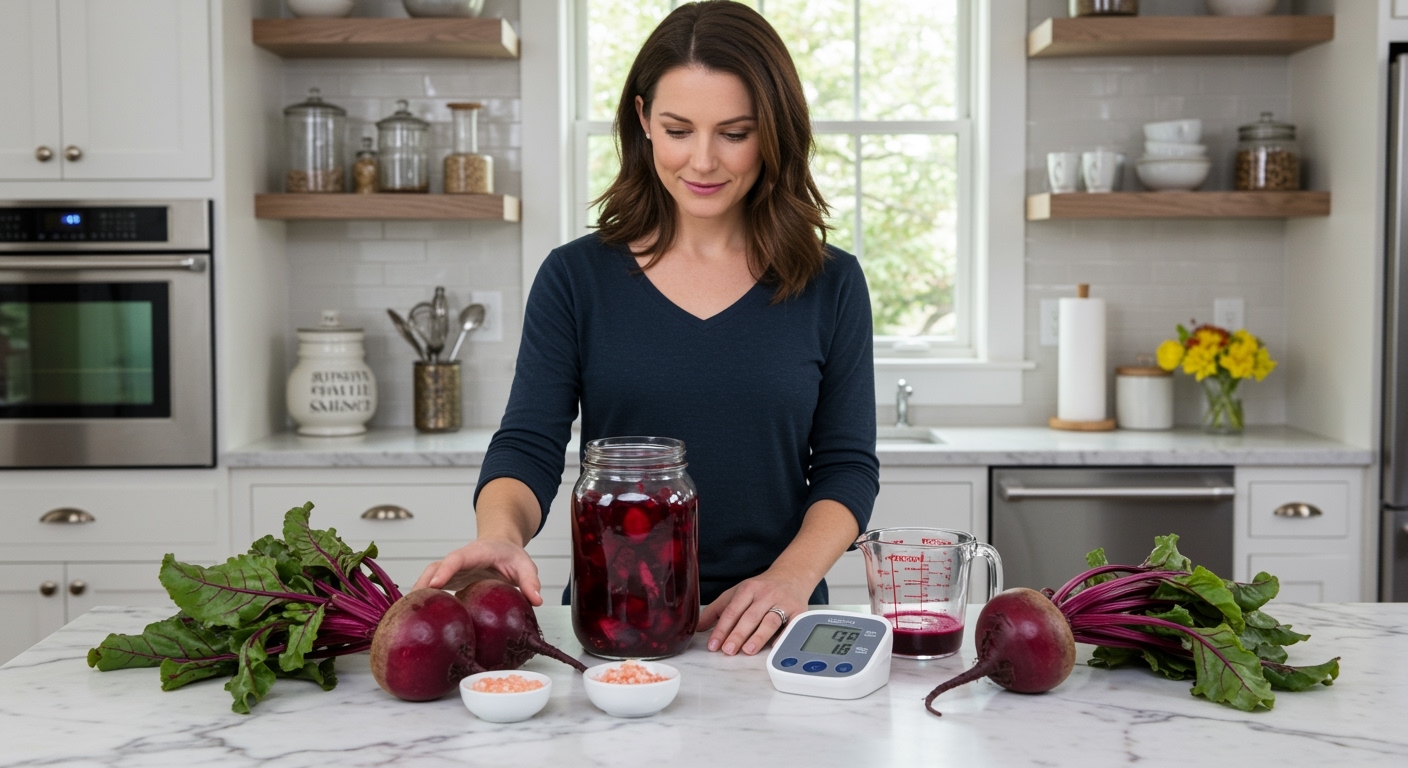
Pickled Beets: Can They Help With High Blood Pressure? (Expert Answer)

Woman standing behind marble counter with pickled beets in jar, fresh beets, salt bowl, blood pressure monitor, and beet juice

✪ Key Takeaway: Pickled beets contain blood pressure-lowering nitrates but their high sodium content cancels out most benefits. Introduction You walk down the grocery aisle and spot a jar of pickled beets sitting next to the fresh ones. You have heard that beets can lower blood pressure, but you wonder if the pickled version works the same way or if the pickling process changes everything. Hi, I am Abdur, your nutrition coach, and today I am going to explain exactly how pickled beets affect your blood pressure and whether they deserve a spot in your diet. What Makes Beets Good for Blood Pressure in the First Place? Fresh beets contain high levels of dietary nitrates, which are natural compounds found in many vegetables. When you eat beets, your body converts these nitrates into nitric oxide, a molecule that relaxes and widens your blood vessels. This widening of blood vessels is called vasodilation, and it directly reduces the pressure your blood exerts against artery walls. Multiple studies show that drinking beet juice or eating fresh beets can lower systolic blood pressure by 4 to 10 points within just a few hours. The effect is temporary but consistent, making beets a popular natural option for people managing high blood pressure. Fresh beets also provide potassium, fiber, and antioxidants that support overall cardiovascular health beyond just nitrate content. ✪ Fact: One cup of fresh beets contains about 440 mg of nitrates, which is enough to produce measurable blood pressure benefits. How Does Pickling

Oats: Are They Really Good For High Blood Pressure? (Expert Answer)

Woman holding measuring cup of oats at marble counter with heart model, blood pressure monitor, and healthy ingredients visible

✪ Key Takeaway: Oats lower blood pressure through beta-glucan fiber and specific compounds that improve arterial function. Introduction Your doctor tells you to eat healthier, and suddenly everyone is talking about oats. You might be wondering if this simple breakfast food can actually make a difference in your blood pressure readings, or if it is just another health trend that sounds too good to be true. Hi, I am Abdur, your nutrition coach, and today I am going to explain exactly how oats affect your blood pressure, what the science says, and how to use them properly for real results. What Makes Oats Different From Other Grains? Oats contain a special type of soluble fiber called beta-glucan that other grains simply do not have in the same amounts. This fiber forms a gel-like substance in your digestive system that slows down nutrient absorption and affects how your body processes food. Research shows that oats also contain unique compounds called avenanthramides, which are antioxidants found almost exclusively in oats. These compounds help your blood vessels relax and expand, which directly impacts blood pressure levels. The combination of beta-glucan fiber and avenanthramides creates a dual mechanism that targets blood pressure from two different angles. Most other whole grains provide fiber, but they lack these specific bioactive compounds that make oats particularly effective for cardiovascular health. ✪ Fact: Oats contain up to 8 grams of beta-glucan per 100 grams, which is significantly higher than barley or wheat. How Do Oats Actually Lower Blood

Cranberry Juice: Can It Help With High Blood Pressure? (Expert Answer)

Woman pouring red cranberry juice from pitcher into glass on marble counter with blood pressure monitor and fresh cranberries visible

✪ Key Takeaway: Cranberry juice may help lower blood pressure modestly through its antioxidants, but results vary and it works best alongside other healthy habits. Introduction Your doctor just told you that your blood pressure numbers are creeping up and you need to make some changes. You have heard people talking about cranberry juice being good for health and now you are wondering if this tart red drink could actually help bring those numbers down without adding another pill to your daily routine. Hi, I am Abdur, your nutrition coach and today I am going to explain exactly what science says about cranberry juice and blood pressure, how it works in your body, and whether you should add it to your daily routine. What Does Research Say About Cranberry Juice and Blood Pressure? Multiple studies have looked at whether cranberry juice can actually lower blood pressure and the results are surprisingly positive. A study published in 2021 found that people who drank cranberry juice daily experienced modest reductions in both systolic and diastolic blood pressure readings. Researchers at Pennsylvania State University conducted trials showing that participants who consumed cranberry juice for eight weeks saw improvements in their cardiovascular health markers. The USDA Agricultural Research Service also reported that cranberry juice consumption was associated with lower blood pressure in their study participants. However, the reductions were not dramatic enough to replace medication for people with diagnosed hypertension. Most studies showed blood pressure drops of around 3 to 5 mmHg, which is

Cloves: Can They Help With High Blood Pressure? (Expert Answer)

Woman examining whole cloves on white marble countertop with blood pressure monitor and heart model in bright modern kitchen

✪ Key Takeaway: Cloves may help lower blood pressure through compounds that relax blood vessels, but should complement medical treatment. Introduction You walk past the spice rack and notice that small jar of cloves sitting there untouched for months. You might be asking this question because your doctor mentioned your blood pressure numbers are creeping up, or perhaps you want natural ways to support your heart health without immediately jumping to medication. Hi, I am Abdur, your nutrition coach, and today I am going to explain how cloves may influence blood pressure, what science actually says about their effectiveness, and whether you should add them to your daily routine. What Makes Cloves Potentially Beneficial for Blood Pressure? Cloves contain a powerful compound called eugenol that makes up about 70 to 90 percent of clove oil. This compound acts as a natural calcium channel blocker, which means it prevents calcium from entering the cells of your heart and blood vessel walls. When calcium cannot enter these cells easily, your blood vessels relax and widen, allowing blood to flow more freely with less pressure against vessel walls. Research published in the Journal of Food and Drug Analysis found that eugenol reduced both systolic and diastolic blood pressure in animal studies through this exact mechanism. Cloves also contain high levels of antioxidants called polyphenols that fight oxidative stress in your blood vessels. Oxidative stress damages the inner lining of blood vessels, making them stiff and narrow, which forces your heart to pump harder