Canned Tuna Fish: Is It Even Safe For High Blood Pressure? (Expert Answer)

Woman examining opened canned tuna with blood pressure monitor and fresh tuna on white marble countertop in bright kitchen

✪ Key Takeaway: Canned tuna can be safe for high blood pressure if you choose low-sodium or no-salt-added varieties and limit portions. Introduction You stand in the grocery aisle staring at rows of canned tuna wondering if this convenient protein will send your blood pressure soaring. You have heard tuna is heart-healthy but you also know that sodium is your enemy when managing high blood pressure. Hi, I am Abdur, your nutrition coach and today I am going to explain exactly how canned tuna affects your blood pressure and which types you can safely enjoy without worry. What Makes Canned Tuna a Blood Pressure Concern? The main problem with canned tuna is not the fish itself but what gets added during processing. Regular canned tuna contains 200 to 400 milligrams of sodium per serving depending on the brand and preparation method. This sodium comes from salt added as a preservative and flavor enhancer during the canning process. When you consume excess sodium your body retains more water to dilute the salt concentration in your bloodstream. This extra fluid increases the volume of blood flowing through your vessels which raises pressure against artery walls. The American Heart Association recommends no more than 1500 milligrams of sodium daily for people with high blood pressure. A single serving of regular canned tuna can take up nearly one-third of your daily sodium limit before you even add it to a sandwich or salad. ✪ Fact: Water-packed tuna typically contains less sodium than oil-packed varieties


Tomato: Can It Help With High Blood Pressure? (Expert Answer)

Woman standing behind marble counter with fresh tomatoes, tomato juice, sliced tomatoes, and heart model in bright modern kitchen.

✪ Key Takeaway: Tomatoes can help lower high blood pressure through lycopene and potassium that relax blood vessels naturally. Introduction You walk past tomatoes in the grocery store every week without realizing they might be the answer to your blood pressure struggles. Many people search for natural ways to manage their blood pressure because medications often come with side effects that disrupt daily life. Hi, I’m Abdur, your nutrition coach and today I’m going to explain exactly how tomatoes affect your blood pressure and whether this simple food deserves a place in your heart-healthy eating plan. What Makes Tomatoes Special for Blood Pressure? Tomatoes contain a powerful antioxidant called lycopene that gives them their bright red color. This compound works by reducing oxidative stress in your blood vessels, which means it protects the delicate lining of your arteries from damage. When your blood vessels are healthy and flexible, they can relax more easily, allowing blood to flow smoothly without putting extra pressure on artery walls. Tomatoes also pack a significant amount of potassium, a mineral that balances out the negative effects of sodium in your body. Potassium helps your kidneys flush out excess sodium through urine, which directly reduces the amount of fluid in your bloodstream. Less fluid means less pressure pushing against your artery walls, which is exactly what you need when managing high blood pressure. ✪ Fact: One medium tomato provides about 292 milligrams of potassium, which is roughly 6 percent of your daily needs. Does Research Support

Tofu: Is It Really Good For High Blood Pressure? (Expert Answer)

Woman holding tofu block on cutting board with heart model, blood pressure monitor, soybeans, and kitchen tools on marble counter

✪ Key Takeaway: Tofu helps lower high blood pressure through isoflavones, potassium, magnesium, and minimal sodium content. Introduction You walk through the grocery store and see tofu sitting quietly in the refrigerated section. You might be asking this question because your doctor told you to watch your blood pressure, or maybe you heard conflicting stories about soy products and want the truth. Hi, I am Abdur, your nutrition coach and today I am going to explain exactly how tofu affects your blood pressure and whether it deserves a place in your weekly meal plan. What Makes Tofu Different From Other Protein Sources? Tofu comes from soybeans that are soaked, ground, boiled, and then pressed into solid blocks. This process creates a protein-rich food that contains unique compounds called isoflavones. Isoflavones are plant chemicals that can interact with your body in ways similar to estrogen, though much weaker. Unlike animal proteins that often come with saturated fat and cholesterol, tofu delivers complete protein without these cardiovascular burdens. A 100-gram serving of firm tofu provides about 8 grams of protein, 4 grams of fat, and only 70 calories. The fat in tofu is mostly polyunsaturated, which your heart prefers over the saturated kind found in red meat. ✪ Fact: Tofu contains all nine essential amino acids your body cannot produce on its own, making it a complete protein source. How Does Tofu Actually Lower Blood Pressure? Research shows that isoflavones in tofu can improve the function of your blood vessel walls. Your

Sweet Potatoes: Can They Help With High Blood Pressure? (Expert Answer)

Woman holding sweet potato behind marble counter with whole and sliced sweet potatoes, heart model, and blood pressure cuff visible

✪ Key Takeaway: Sweet potatoes help lower blood pressure through high potassium and magnesium content that counteracts sodium effects. Introduction Your doctor just told you that your blood pressure numbers are creeping up and you need to make dietary changes fast. You are probably wondering if simple food swaps like adding sweet potatoes to your plate can actually make a measurable difference in those stubborn readings. Hi, I am Abdur, your nutrition coach and today I am going to explain exactly how sweet potatoes affect your blood pressure and whether they deserve a regular spot in your kitchen. What Makes Sweet Potatoes Different From Regular Potatoes? Sweet potatoes and regular potatoes come from completely different plant families despite sharing a similar name. Regular potatoes belong to the nightshade family while sweet potatoes are part of the morning glory family. The nutritional profiles of these two root vegetables differ significantly in ways that matter for blood pressure management. Sweet potatoes contain about 542 milligrams of potassium per medium-sized serving compared to 926 milligrams in regular potatoes. However, sweet potatoes pack more fiber and vitamin A while having a lower glycemic index than their white counterparts. The orange flesh in sweet potatoes comes from beta-carotene which your body converts into vitamin A for immune function and eye health. Both vegetables offer health benefits but sweet potatoes provide a more balanced nutritional package for people managing blood pressure concerns. ✪ Fact: One medium sweet potato provides about 15% of your daily potassium needs

Shrimp: Is It That Bad For High Blood Pressure? (Expert Answer)

Woman standing behind marble counter looking at plate of cooked shrimp with blood pressure monitor and fresh vegetables nearby

✪ Key Takeaway: Shrimp itself does not raise blood pressure, but the sodium added during processing and cooking makes it problematic for hypertension. Introduction You love shrimp but your doctor told you to watch your blood pressure. Now you are confused because some people say shrimp is healthy while others warn it will spike your numbers. Hi, I am Abdur, your nutrition coach and today I am going to explain exactly how shrimp affects your blood pressure and what you need to know before your next meal. What Makes Shrimp Controversial For Blood Pressure? Shrimp has earned a bad reputation among people with high blood pressure for two main reasons. First, many believe shrimp contains high cholesterol that directly harms heart health. Second, processed shrimp products often contain added sodium that genuinely raises blood pressure. The cholesterol concern comes from outdated nutrition science that blamed dietary cholesterol for heart disease. Research now shows that dietary cholesterol has minimal impact on blood cholesterol levels for most people. The real problem with shrimp is not the shrimp itself but what gets added to it during processing and preparation. Understanding this difference will help you make smarter choices about including shrimp in your diet. ✪ Fact: Three ounces of plain cooked shrimp contains only 190 milligrams of naturally occurring sodium, which is relatively low compared to processed foods. How Does Sodium In Shrimp Actually Affect Your Blood Pressure? Sodium causes your body to retain water in your bloodstream. This extra fluid increases the

Sourdough Bread: Is It Even Safe For High Blood Pressure? (Expert Answer)

Woman standing behind marble counter examining sourdough bread alongside blood pressure monitor, salt jar, heart model, and wheat

✪ Key Takeaway: Sourdough bread can be safe for high blood pressure if you choose low-sodium versions and control portion sizes carefully. Introduction You stand in the bakery aisle staring at that beautiful loaf of sourdough bread wondering if one slice will send your blood pressure through the roof. The confusion makes perfect sense because everywhere you look someone tells you bread is bad for blood pressure while others praise sourdough as a health food miracle. Hi, I am Abdur, your nutrition coach and today I am going to explain exactly how sourdough bread affects your blood pressure and whether you can safely enjoy it without worry. What Makes Sourdough Different From Regular Bread? Sourdough bread uses a natural fermentation process that sets it apart from every other bread on the shelf. Wild yeast and bacteria work together over many hours to break down the flour and create that distinctive tangy flavor you recognize immediately. This fermentation process changes the bread structure in ways that affect how your body processes it. Regular bread uses commercial yeast that works quickly and skips the long fermentation period entirely. The bacteria in sourdough produce lactic acid which gives the bread its sour taste and creates a slightly acidic environment. This acidic environment breaks down compounds called phytates that normally block your body from absorbing important minerals like magnesium and potassium. These minerals play crucial roles in regulating blood pressure by helping blood vessels relax and maintaining proper fluid balance throughout your body. ✪

Salmon: Is It Really Good For High Blood Pressure? (Expert Answer)

Woman touching fresh salmon fillet on marble counter with blood pressure monitor, omega-3 capsules, herbs, and lemon in kitchen

✪ Key Takeaway: Salmon helps lower blood pressure through omega-3 fatty acids that reduce inflammation and improve blood vessel function. Introduction You walk through the grocery store and see salmon sitting there on ice looking expensive and supposedly healthy. Everyone keeps telling you to eat more fish for your heart, but you wonder if this pink fish actually does anything for your blood pressure numbers or if it is just another overhyped health trend. Hi, I am Abdur, your nutrition coach, and today I am going to explain exactly how salmon affects your blood pressure and whether it truly deserves a spot on your plate. What Makes Salmon Different From Other Fish? Salmon stands out because it contains high concentrations of omega-3 fatty acids called EPA and DHA. These specific fats work differently in your body compared to the omega-3s you get from plant sources like flaxseeds or walnuts. Your body can use EPA and DHA directly without needing to convert them first. A typical serving of salmon gives you about 1.5 to 2 grams of these omega-3 fatty acids, which is more than most other commonly eaten fish. Wild-caught salmon generally contains more omega-3s than farmed salmon, though both types offer significant amounts. The protein content in salmon also helps with blood pressure management by supporting healthy blood vessel walls. ✪ Fact: A 3-ounce serving of salmon provides about 22 grams of high-quality protein along with essential vitamins and minerals. How Does Salmon Actually Lower Blood Pressure? The omega-3

Rice: Is It Really Good For High Blood Pressure? (Expert Answer)

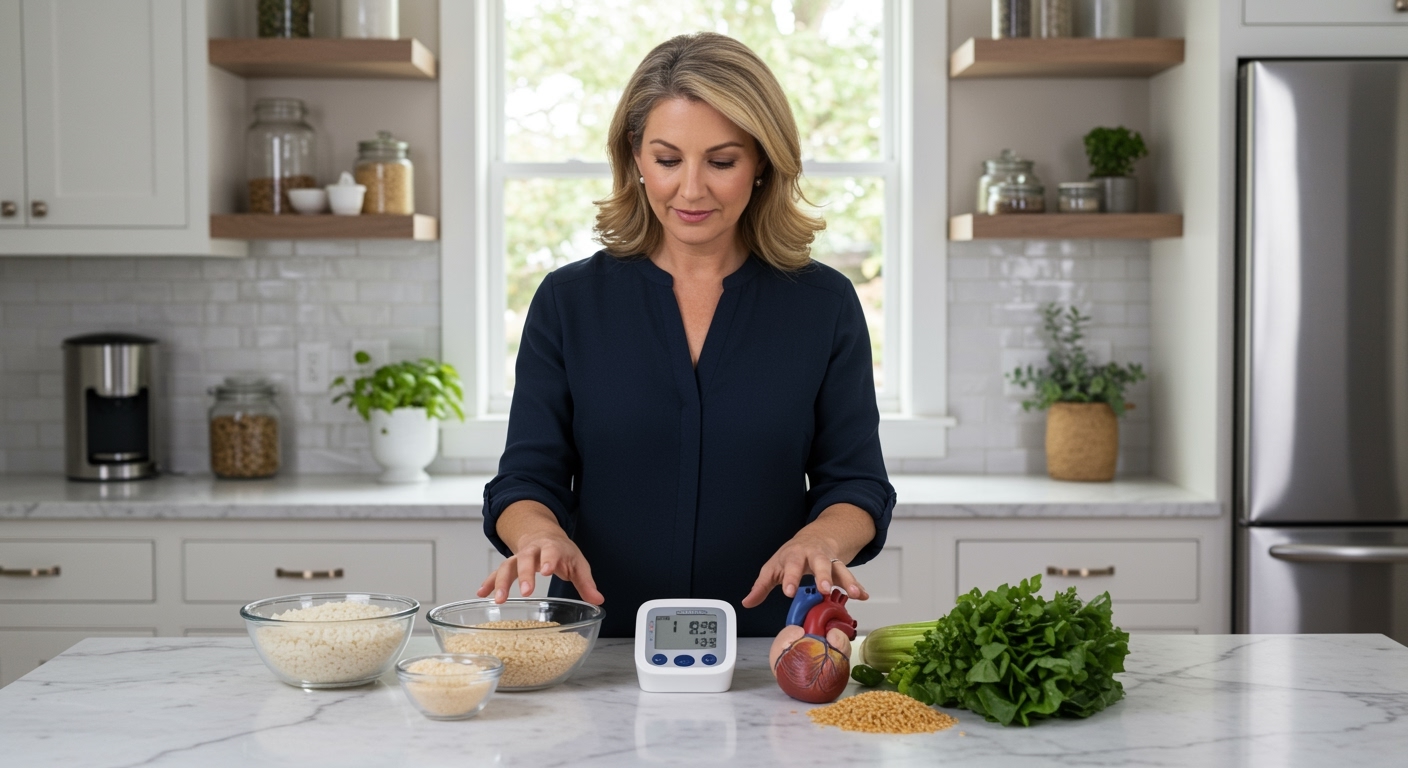
Woman standing behind marble countertop with white rice, brown rice, blood pressure monitor, heart model, and vegetables arranged

✪ Key Takeaway: Brown rice helps lower blood pressure while white rice may raise it due to differences in fiber, minerals, and glycemic impact. Introduction You stand in the grocery aisle staring at bags of rice wondering if this staple food will help or hurt your blood pressure numbers. You might be asking this question because your doctor told you to watch your diet or because you heard conflicting advice about carbs and heart health. Hi, I am Abdur, your nutrition coach and today I am going to explain exactly how different types of rice affect your blood pressure and which choices support your cardiovascular health. Does Rice Type Matter For Blood Pressure Control? The type of rice you choose makes a massive difference in how it affects your blood pressure. Brown rice contains the bran and germ layers that white rice loses during processing. These outer layers pack fiber, magnesium, and potassium that directly support healthy blood pressure levels. Research shows that people who eat brown rice regularly have lower systolic blood pressure compared to white rice eaters. White rice spikes your blood sugar faster because it lacks fiber to slow down digestion. These rapid blood sugar swings trigger insulin resistance over time which damages blood vessel walls and raises blood pressure. The glycemic index of white rice sits around seventy while brown rice stays closer to fifty. ✪ Fact: Studies show that replacing white rice with brown rice can reduce systolic blood pressure by up to four points

Granola: Is It Even Safe For High Blood Pressure? (Expert Answer)

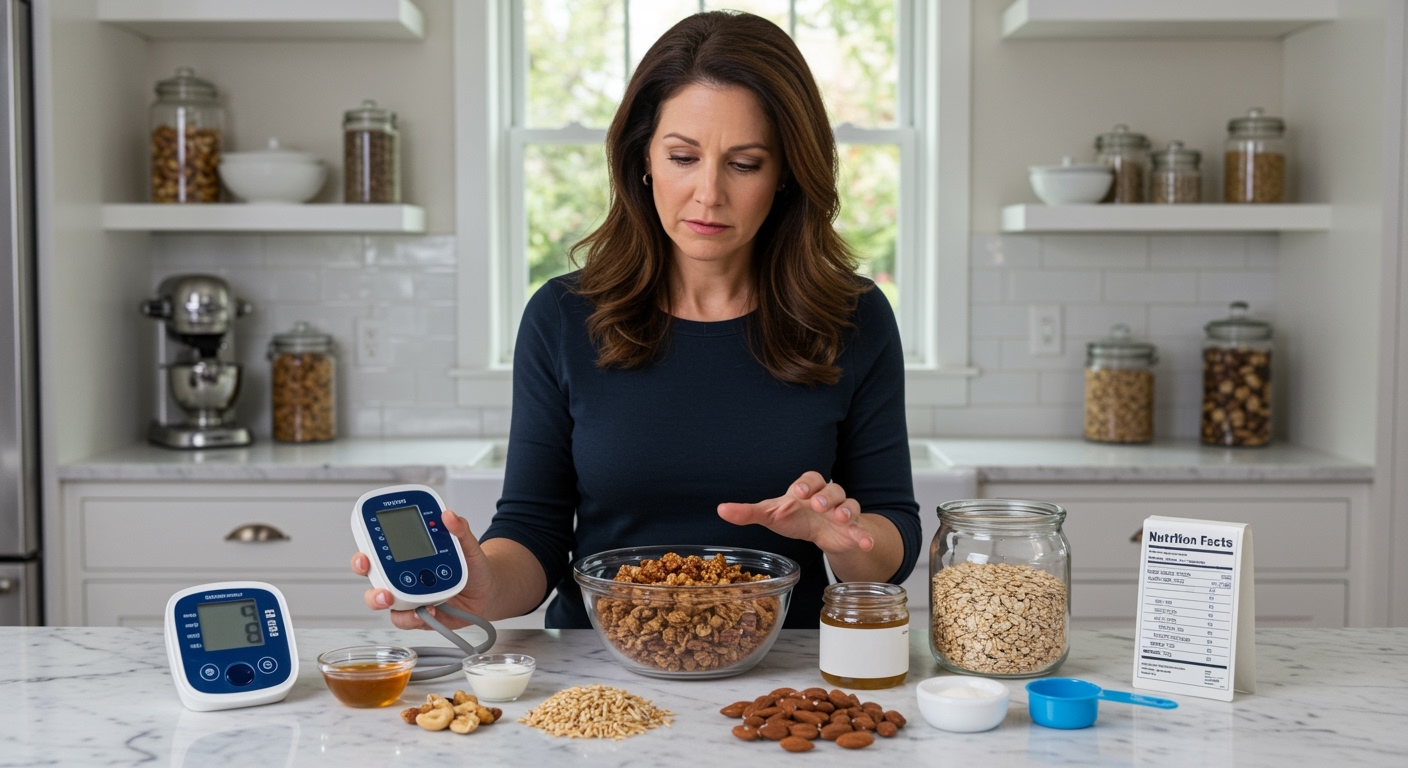
Middle-aged woman standing behind marble counter examining granola bowl and blood pressure monitor with concerned expression

✪ Key Takeaway: Granola can be safe for high blood pressure only when you choose low-sodium, low-sugar varieties and control your portions carefully. Introduction You grab that bag of granola thinking you are making a smart choice for your heart. Then you wonder if those crunchy clusters might actually be pushing your blood pressure numbers higher instead of helping them drop. Hi, I am Abdur, your nutrition coach and today I am going to explain exactly how granola affects your blood pressure and what you need to watch out for when choosing this popular breakfast option. What Makes Granola Risky For High Blood Pressure? The main problem with most commercial granola is the hidden sodium that manufacturers add during processing. Many brands contain between 100 to 300 milligrams of sodium per serving, which adds up quickly when you eat more than the tiny serving size listed on the package. The DASH diet, which is specifically designed for managing high blood pressure, recommends limiting sodium to 1500 to 2300 milligrams per day total. When you start your day with a bowl of granola that contains 200 milligrams of sodium, then add milk and maybe some dried fruit, you have already used up a significant chunk of your daily allowance before 9 AM. The added sugars in granola create another problem because they contribute to weight gain and insulin resistance over time. Research shows that excess sugar intake is linked to increased blood pressure through multiple mechanisms including inflammation and arterial stiffness.

Peanuts: Are They Really Good For High Blood Pressure? (Expert Answer)

Middle-aged woman holding bowl of peanuts with blood pressure monitor, heart model, and healthy foods on white marble countertop

✪ Key Takeaway: Peanuts can help lower blood pressure when eaten in moderation as part of a balanced diet, but only if you choose unsalted varieties. Introduction You grab a handful of peanuts as a snack and wonder if this simple choice actually helps your blood pressure numbers. You might be asking this question because your doctor told you to watch your blood pressure, or perhaps you heard conflicting information about whether peanuts are friends or foes for your heart. Hi, I am Abdur, your nutrition coach and today I am going to explain exactly how peanuts affect your blood pressure, what the research really shows, and how to include them in your diet the right way. What Makes Peanuts Different From Other Nuts? Peanuts are not actually nuts at all. They belong to the legume family, which means they grow underground like beans and lentils rather than on trees. This botanical difference matters because peanuts contain a unique combination of nutrients that sets them apart from true tree nuts like almonds or walnuts. Peanuts pack about 7 grams of protein per ounce, which is higher than most tree nuts. They also contain significant amounts of magnesium, a mineral that helps relax blood vessels and may directly influence blood pressure regulation. The fiber content in peanuts reaches about 2.4 grams per ounce, supporting digestive health and helping control blood sugar spikes that can indirectly affect blood pressure. Another key component is arginine, an amino acid that your body converts into