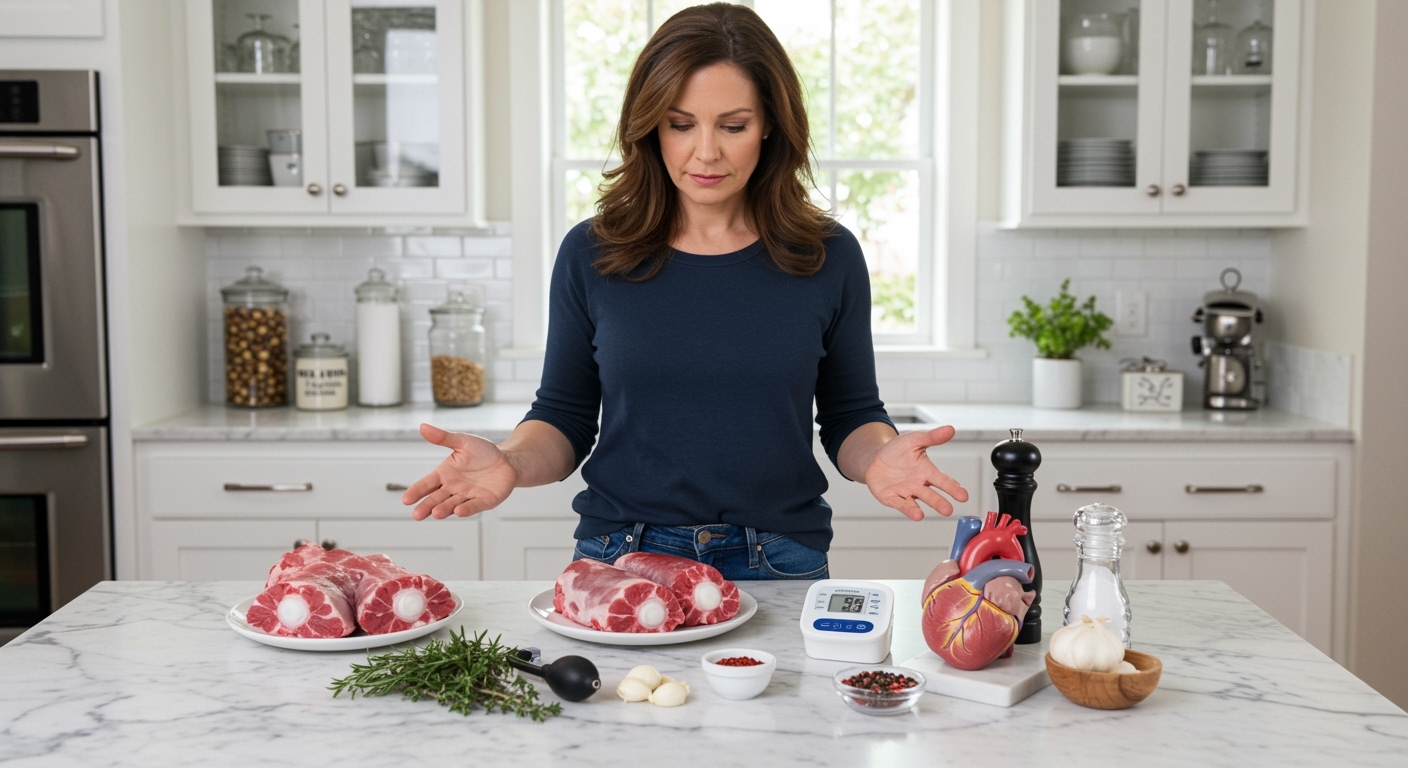
✪ Key Takeaway: Oxtail can raise blood pressure due to high sodium and saturated fat content, but mindful preparation makes it manageable.
Introduction
You smell that rich, fall-off-the-bone oxtail stew simmering on your stove and your mouth waters instantly.
But then you remember your last doctor visit when they warned you about your blood pressure numbers creeping up.
Hi, I am Abdur, your nutrition coach and today I am going to explain exactly how oxtail affects your blood pressure and what you can do to enjoy it without health consequences.
What Makes Oxtail Different From Other Beef Cuts?
Oxtail comes from the tail of cattle and contains more connective tissue than regular beef cuts.
This connective tissue breaks down during slow cooking and creates that signature gelatinous texture people love.
The meat sits close to the bone, which means you get a higher bone-to-meat ratio compared to steaks or roasts.
Each piece contains layers of fat that melt during cooking and add incredible flavor depth to your dishes.
Traditional recipes often call for long braising times that can concentrate both nutrients and problematic compounds.
The collagen in oxtail converts to gelatin when cooked properly, which some people believe supports joint health.
Understanding these unique characteristics helps you make smarter decisions about portion sizes and cooking methods.
✪ Fact: Oxtail contains approximately 14 grams of fat per 100-gram serving, with about half being saturated fat.
How Does Sodium in Oxtail Affect Your Blood Pressure?
Raw oxtail naturally contains about 60-80 milligrams of sodium per 100 grams, which seems reasonable at first glance.
The real problem starts when you add salt, bouillon cubes, soy sauce, or other high-sodium seasonings during cooking.
Most traditional oxtail recipes can push your sodium intake past 1000 milligrams in a single serving.
Your kidneys respond to excess sodium by holding onto more water to dilute the salt concentration in your bloodstream.
This extra fluid increases the volume of blood your heart must pump, which directly raises blood pressure readings.
Over time, high sodium intake can damage the delicate lining of your blood vessels and make them less flexible.
People with existing hypertension show even greater blood pressure spikes after consuming high-sodium meals like heavily seasoned oxtail stew.
✪ Pro Tip: Replace salt with herbs like thyme, rosemary, and bay leaves to cut sodium by 80 percent without sacrificing flavor.
What Role Does Saturated Fat Play in Blood Pressure?
Oxtail contains approximately 7 grams of saturated fat per 100-gram serving, which represents about 35 percent of the daily limit.
Saturated fat increases LDL cholesterol levels in your bloodstream, which contributes to plaque buildup inside artery walls.
These plaques narrow your arteries and force your heart to work harder to push blood through tighter spaces.
The combination of narrowed arteries and increased cardiac workload creates a perfect storm for elevated blood pressure.
Research shows that replacing saturated fat with unsaturated fats can lower systolic blood pressure by 2-3 mmHg.
The fat in oxtail also slows down digestion, which can lead to longer periods of elevated inflammatory markers in your blood.
Chronic inflammation damages blood vessel walls and makes them less responsive to signals that normally help regulate pressure.
✪ Note: Trimming visible fat before cooking can reduce saturated fat content by approximately 25-30 percent.
Can Cooking Methods Change How Oxtail Affects Blood Pressure?
Slow braising in salty broth concentrates sodium and creates the worst scenario for your blood pressure management.
Pressure cooking reduces cooking time and limits the amount of salt you need because flavors develop faster.
Skimming the fat layer that forms on top during cooking removes a significant portion of saturated fat from your final dish.
Cooking oxtail one day ahead and refrigerating it overnight makes fat removal incredibly easy because it solidifies on top.
Adding vegetables like celery, carrots, and tomatoes increases potassium content, which helps counteract sodium effects on blood pressure.
Using low-sodium broth or plain water with herbs instead of commercial bouillon cubes cuts sodium by more than half.
The cooking liquid itself often contains more sodium and fat than the meat, so limiting gravy consumption makes a measurable difference.
✪ Pro Tip: Cook oxtail with potassium-rich vegetables like spinach and sweet potatoes to naturally balance sodium effects.
How Often Can You Safely Eat Oxtail With High Blood Pressure?
Treating oxtail as an occasional treat rather than a weekly staple keeps your cardiovascular risk manageable.
Most cardiologists recommend limiting red meat consumption to 1-2 servings per week for people with hypertension.
A safe serving size of oxtail should not exceed 100-150 grams of cooked meat, which is smaller than most restaurant portions.
Your total daily sodium intake should stay below 1500 milligrams if you have high blood pressure, so plan your other meals accordingly.
Eating oxtail once a month instead of weekly reduces your exposure to saturated fat by 75 percent over time.
Monitor your blood pressure readings for 24-48 hours after eating oxtail to understand your personal sensitivity level.
If your numbers spike consistently after oxtail meals, consider replacing it with leaner proteins like chicken breast or fish.
✪ Fact: Studies show that reducing red meat intake by just one serving per week can lower systolic blood pressure by 1-2 mmHg.
The Bottom Line
Oxtail can fit into a blood pressure management plan when you control portions, reduce sodium, and limit frequency to occasional consumption.
Your health improves when you treat rich foods as celebrations rather than daily habits, and this principle applies perfectly to oxtail.
I would love to hear your experience with oxtail and blood pressure management, so please share your thoughts or questions in the comments below.
References
At NutritionCrown, we use quality and credible sources to ensure our content is accurate and trustworthy. Below are the sources referenced in writing this article:
- Nutrition Value: Beef, Oxtails Nutritional Value
- PMC: Sodium Intake and Blood Pressure
- Fitsian Food Life: Is Oxtail Healthy
- CK Barbados: Is Oxtail Good or Bad for You