✪ Key Takeaway: Granola can be safe for high blood pressure only when you choose low-sodium, low-sugar varieties and control your portions carefully.
Introduction
You grab that bag of granola thinking you are making a smart choice for your heart.
Then you wonder if those crunchy clusters might actually be pushing your blood pressure numbers higher instead of helping them drop.
Hi, I am Abdur, your nutrition coach and today I am going to explain exactly how granola affects your blood pressure and what you need to watch out for when choosing this popular breakfast option.
What Makes Granola Risky For High Blood Pressure?
The main problem with most commercial granola is the hidden sodium that manufacturers add during processing.
Many brands contain between 100 to 300 milligrams of sodium per serving, which adds up quickly when you eat more than the tiny serving size listed on the package.
The DASH diet, which is specifically designed for managing high blood pressure, recommends limiting sodium to 1500 to 2300 milligrams per day total.
When you start your day with a bowl of granola that contains 200 milligrams of sodium, then add milk and maybe some dried fruit, you have already used up a significant chunk of your daily allowance before 9 AM.
The added sugars in granola create another problem because they contribute to weight gain and insulin resistance over time.
Research shows that excess sugar intake is linked to increased blood pressure through multiple mechanisms including inflammation and arterial stiffness.
Most store-bought granola contains anywhere from 6 to 15 grams of added sugar per serving, which is concerning when the American Heart Association recommends no more than 25 grams per day for women and 36 grams for men.
✪ Fact: A single cup of some popular granola brands contains more sodium than a serving of potato chips.
Can The Fiber In Granola Help Lower Blood Pressure?
Yes, the whole grain content in granola does offer some benefits for blood pressure management.
Oats, which form the base of most granola recipes, contain a special type of soluble fiber called beta-glucan that has been shown to help reduce blood pressure.
Studies published in medical journals show that consuming at least 3 grams of beta-glucan daily can lead to modest reductions in both systolic and diastolic blood pressure readings.
The fiber in whole grains works by improving the flexibility of your blood vessels, which is technically called endothelial function.
When your blood vessels can relax and expand properly, blood flows more easily and your heart does not have to work as hard to pump blood throughout your body.
However, the beneficial effects of fiber can be completely overshadowed by the negative impact of excess sodium and sugar in processed granola.
Think of it like trying to bail water out of a sinking boat while someone else keeps pouring more water in from the other side.
✪ Pro Tip: Choose granola with at least 4 grams of fiber per serving to maximize the blood pressure benefits from whole grains.
How Do Nuts And Seeds In Granola Affect Your Blood Pressure?
The nuts and seeds commonly found in granola are actually one of the healthiest components for managing high blood pressure.
Almonds, walnuts, and sunflower seeds contain magnesium, which is a mineral that helps relax blood vessels and regulate blood pressure naturally.
Research shows that people who consume adequate magnesium through their diet have lower rates of hypertension compared to those with insufficient intake.
These nuts and seeds also provide healthy fats, particularly omega-3 fatty acids and monounsaturated fats, which have anti-inflammatory properties.
Chronic inflammation in your blood vessels contributes to high blood pressure by making arterial walls stiff and less responsive to normal regulatory signals.
The problem arises when manufacturers add salted nuts to their granola products instead of using raw or dry-roasted unsalted varieties.
Always check the ingredient list to see if the nuts and seeds are salted because this single factor can transform an otherwise heart-healthy ingredient into a blood pressure nightmare.
✪ Note: Raw almonds and walnuts in granola provide more blood pressure benefits than roasted salted versions.
What Should You Look For When Buying Granola With High Blood Pressure?
Start by flipping the package over and reading the nutrition facts panel before you even consider the front label claims.
Look for granola that contains less than 140 milligrams of sodium per serving, which is considered low sodium according to FDA guidelines.
The serving size is usually listed as one-quarter to one-third cup, which is much smaller than most people actually pour into their bowl.
Check the added sugars line and aim for products with 6 grams or less per serving to keep your total daily sugar intake under control.
The ingredient list should show whole grain oats as the first ingredient, followed by nuts, seeds, and minimal sweeteners.
Avoid granola that lists sugar, honey, or syrup as one of the first three ingredients because this indicates the product is more dessert than health food.
Watch out for sneaky sodium sources like added salt, soy sauce, or savory seasonings that some flavored varieties contain.
✪ Pro Tip: Compare at least three different brands side by side to find the option with the lowest sodium and sugar combination.
Should You Make Your Own Granola At Home Instead?
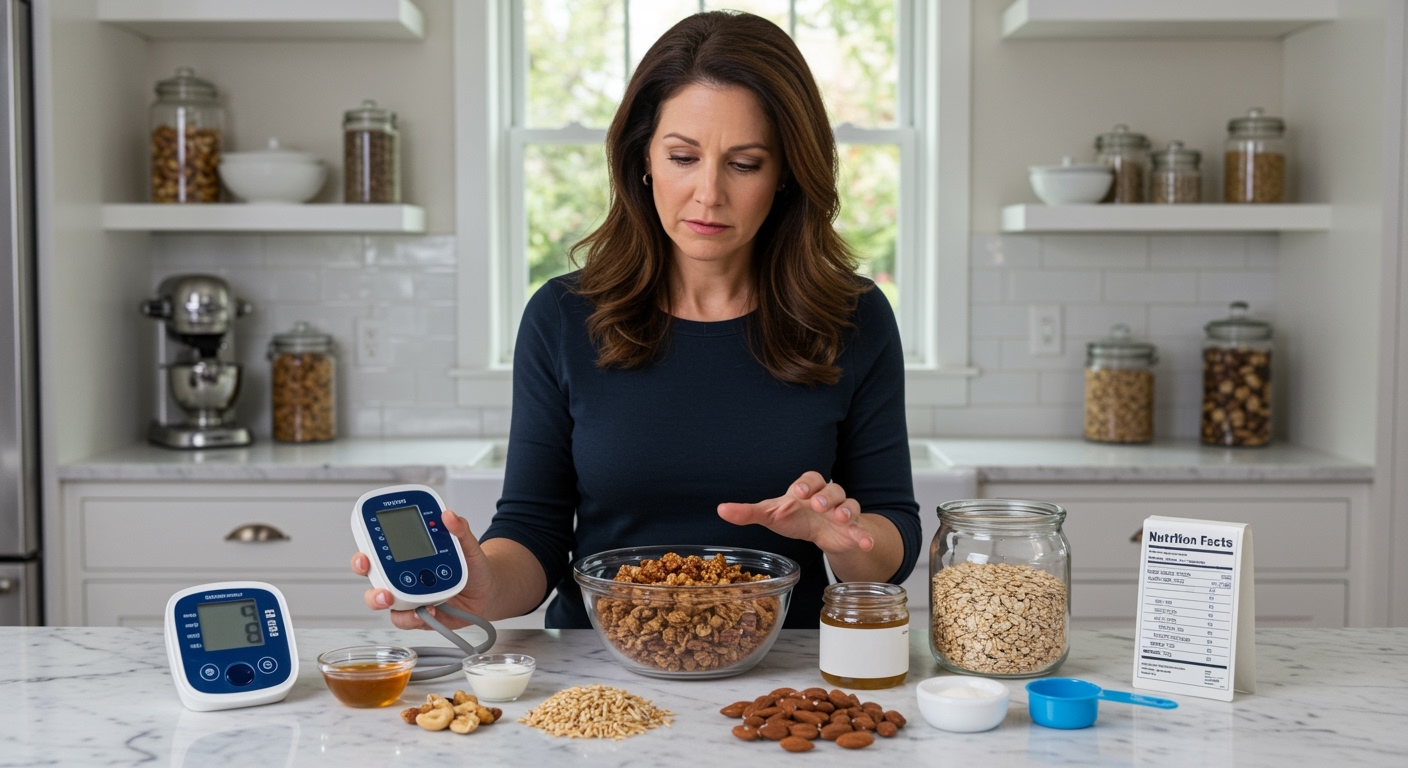
Making granola at home gives you complete control over every ingredient that goes into your breakfast bowl.
You can eliminate added salt entirely and use just a small amount of natural sweetener like mashed banana or unsweetened applesauce to bind the ingredients together.
Start with rolled oats as your base, add raw unsalted nuts and seeds, then use cinnamon, vanilla, or other salt-free spices for flavor.
Bake your mixture at a low temperature until golden and crispy, which usually takes about 30 to 40 minutes with occasional stirring.
The homemade version typically contains 80 percent less sodium and 50 percent less sugar compared to store-bought options.
You can prepare a large batch on the weekend and store it in an airtight container for up to two weeks, making it just as convenient as buying pre-made granola.
This approach aligns perfectly with the principle that prioritizing health over convenience leads to better long-term outcomes for your blood pressure and overall wellbeing.
✪ Fact: Homemade granola without added salt can contain as little as 5 milligrams of sodium per serving compared to 200 milligrams in commercial brands.
The Bottom Line
Granola can absolutely fit into a blood pressure-friendly diet when you choose wisely and watch your portions carefully.
The healthiest breakfast is not always the one that comes in the prettiest package but the one you prepare with intention and knowledge.
I would love to hear your experience with granola and blood pressure in the comments below, or feel free to share any questions you might have about making better breakfast choices for your heart health.
References
At NutritionCrown, we use quality and credible sources to ensure our content is accurate and trustworthy. Below are the sources referenced in writing this article:
- National Heart, Lung, and Blood Institute: Your Guide to Lowering Your Blood Pressure with DASH
- Mayo Clinic: Can Whole Grain Foods Lower Blood Pressure
- Apollo 247: Your Guide to Hidden Sodium in Healthy Packaged Foods
- Healthline: Foods That Are Good for High Blood Pressure