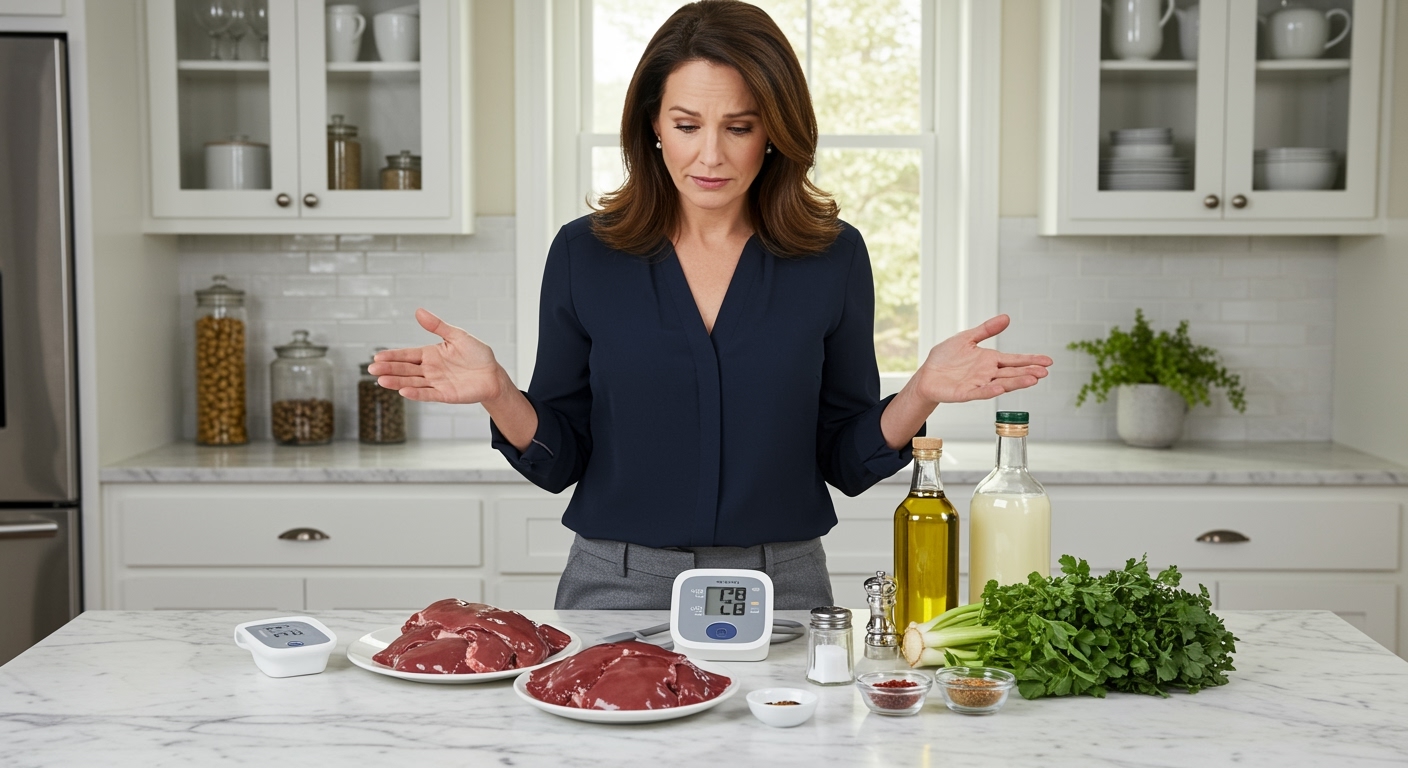
✪ Key Takeaway: Chicken liver can be part of a high blood pressure diet when eaten occasionally in small portions, but its high cholesterol and sodium content make it risky for daily consumption.
Introduction
You walk into the grocery store and see chicken liver on sale.
Your doctor told you to eat more nutrient-dense foods to help manage your high blood pressure, and you have heard that organ meats are nutritional powerhouses.
Hi, I am Abdur, your nutrition coach, and today I am going to explain whether chicken liver truly supports healthy blood pressure or if it creates more problems than it solves.
What Makes Chicken Liver Nutritionally Unique?
Chicken liver packs an incredible amount of nutrients into a small serving.
A 100-gram serving contains about 172 calories with 25 grams of protein and just 7 grams of fat.
The vitamin content is where chicken liver really shines with massive amounts of vitamin A, vitamin B12, folate, and riboflavin.
It also provides significant amounts of iron, zinc, selenium, and copper that your body needs for various functions.
The bioavailability of these nutrients means your body can absorb and use them more efficiently compared to plant-based sources.
However, this nutritional density comes with a catch that people with high blood pressure need to understand.
One serving of chicken liver contains about 345 milligrams of cholesterol, which is more than the entire daily recommended limit.
✪ Fact: Chicken liver contains more vitamin A than almost any other food, providing over 300 percent of your daily needs in just one serving.
How Does Chicken Liver Affect Blood Pressure Directly?
The relationship between chicken liver and blood pressure is more complicated than most people realize.
Chicken liver naturally contains about 71 milligrams of sodium per 100-gram serving when prepared without added salt.
This amount might seem moderate, but most recipes call for additional salt during cooking which dramatically increases the sodium content.
When you consume excess sodium, your body retains more water to dilute it in your bloodstream.
This extra fluid increases the volume of blood flowing through your vessels, which raises the pressure against artery walls.
The high cholesterol content in chicken liver presents another concern for people managing high blood pressure.
While dietary cholesterol does not affect everyone equally, it can contribute to arterial plaque buildup in susceptible individuals, which narrows blood vessels and elevates blood pressure over time.
✪ Note: The way you prepare chicken liver matters more than the liver itself when it comes to blood pressure impact.
What Are The Hidden Benefits For Blood Pressure Management?
Despite the concerns, chicken liver does offer some benefits that could indirectly support healthy blood pressure.
The high protein content helps maintain healthy body weight, and maintaining a healthy weight is one of the most effective ways to manage blood pressure naturally.
Chicken liver provides significant amounts of potassium, with about 230 milligrams per 100-gram serving.
Potassium works as a natural counterbalance to sodium by helping your kidneys excrete excess sodium through urine.
The B vitamins in chicken liver, particularly folate and B12, play important roles in reducing homocysteine levels in your blood.
High homocysteine levels can damage blood vessel walls and contribute to cardiovascular problems including elevated blood pressure.
The iron content supports healthy red blood cell production, which ensures efficient oxygen delivery throughout your body and reduces strain on your cardiovascular system.
✪ Pro Tip: Pair chicken liver with potassium-rich vegetables like spinach or sweet potatoes to maximize the blood pressure benefits while minimizing risks.
How Often Should You Eat Chicken Liver With High Blood Pressure?
The frequency of chicken liver consumption makes all the difference for people managing high blood pressure.
Eating chicken liver once or twice per month in small portions of about 50 to 75 grams allows you to enjoy its nutritional benefits without overwhelming your system with cholesterol and sodium.
Daily consumption or even weekly consumption creates a cumulative effect that can work against your blood pressure management efforts.
Your liver processes dietary cholesterol, and giving it frequent large doses can lead to elevated blood cholesterol levels over time.
The preparation method dramatically affects how chicken liver impacts your blood pressure.
Grilling or baking chicken liver with minimal added salt and pairing it with fresh vegetables creates a more blood pressure-friendly meal than frying it in butter with heavy seasoning.
Always check your blood pressure response after eating chicken liver to understand how your individual body reacts to this food.
✪ Note: People taking blood pressure medications should consult their healthcare provider before adding organ meats like chicken liver to their regular diet.
What Are Better Alternatives For Blood Pressure Control?
If you want the nutritional benefits without the blood pressure risks, several alternatives deserve your attention.
Fatty fish like salmon and mackerel provide high-quality protein along with omega-3 fatty acids that actively help lower blood pressure.
Legumes such as lentils and chickpeas offer excellent protein, fiber, and minerals including potassium and magnesium that support healthy blood pressure.
Skinless chicken breast provides lean protein without the cholesterol load of organ meats.
Leafy green vegetables deliver many of the same vitamins and minerals found in chicken liver but with zero cholesterol and minimal sodium.
If you specifically want the iron and B vitamins that chicken liver provides, consider a combination of fortified whole grains, eggs in moderation, and a variety of colorful vegetables.
This approach gives you nutritional diversity without putting all your eggs in one high-cholesterol basket.
✪ Pro Tip: Build your meals around foods that actively lower blood pressure rather than those that simply do not raise it significantly.
The Bottom Line
Chicken liver can fit into a high blood pressure management plan when consumed occasionally in small amounts and prepared with minimal added sodium.
The best foods for your health are not always the most nutrient-dense but rather the ones you can eat consistently without creating new problems.
I would love to hear your experience with chicken liver and blood pressure in the comments below, and feel free to share any questions about making this food work for your specific health situation.
References
At NutritionCrown, we use quality and credible sources to ensure our content is accurate and trustworthy. Below are the sources referenced in writing this article:
- WebMD: Is Liver Good for You?
- Cleveland Clinic: The Pros and Cons of Eating Organ Meat
- National Center for Biotechnology Information: Effects of Low Sodium Diet versus High Sodium Diet on Blood Pressure
- Diag: High Blood Pressure Diet: Foods to Eat and Avoid