✪ Key Takeaway: Plain dill pickles are safe for diabetes when consumed in moderation, but sweetened varieties can spike blood sugar dangerously.
Introduction
You stand in the grocery aisle staring at rows of pickle jars wondering if this tangy snack will send your blood sugar through the roof.
You might be asking this question because your doctor told you to watch your carbohydrate intake, yet pickles seem like vegetables and vegetables are supposed to be healthy.
Hi, I am Abdur, your nutrition coach and today I am going to explain exactly how pickles affect your blood sugar, which types are safe, and how much you can eat without worrying about glucose spikes.
What Exactly Happens To Your Blood Sugar When You Eat Pickles?
Plain dill pickles contain almost zero carbohydrates because the pickling process removes most natural sugars from cucumbers.
A typical serving of three medium dill pickle spears contains only about 2 grams of carbohydrates and less than 1 gram of sugar.
This minimal carbohydrate content means your pancreas does not need to release much insulin to process them.
The vinegar in pickles actually slows down the digestion of carbohydrates you eat alongside them.
Research published in the Journal of Diabetes Research shows that acetic acid (the main component of vinegar) improves insulin sensitivity and reduces post-meal blood sugar spikes by up to 20 percent.
The fermentation process creates beneficial bacteria that support gut health, which plays a crucial role in glucose metabolism and overall diabetes management.
✪ Fact: Fermented pickles contain probiotics that can improve insulin sensitivity by supporting healthy gut bacteria populations.
Which Types Of Pickles Should You Avoid With Diabetes?
Sweet pickles and bread-and-butter pickles are loaded with added sugar that can spike your blood glucose rapidly.
A single serving of sweet pickles can contain up to 15 grams of sugar, which is equivalent to nearly four teaspoons of table sugar.
These sweetened varieties often use high fructose corn syrup or regular sugar in their brine solution.
Candied pickles and pickle relish also contain significant amounts of added sugars that make them unsuitable for blood sugar control.
Even some dill pickle brands sneak in small amounts of sugar to balance the tartness, so you must always check the ingredient list on the back of the jar.
Look for pickles where the ingredients list only cucumbers, water, vinegar, salt, and spices without any mention of sugar, dextrose, or corn syrup.
✪ Pro Tip: If sugar appears in the first five ingredients on the label, put that pickle jar back on the shelf immediately.
Can The Salt In Pickles Cause Problems For People With Diabetes?
Pickles are notoriously high in sodium, with a single large pickle containing up to 1,000 milligrams of salt.
People with diabetes have a higher risk of developing high blood pressure and cardiovascular disease, conditions that worsen with excessive sodium intake.
The American Diabetes Association recommends limiting sodium to less than 2,300 milligrams per day for most adults with diabetes.
Eating just two large pickles could push you dangerously close to or over your entire daily sodium allowance.
High sodium intake causes your body to retain water, which increases blood volume and puts extra strain on your heart and kidneys.
This becomes especially concerning because diabetes already increases your risk of kidney disease, and excess salt accelerates kidney damage.
You can enjoy pickles safely by choosing reduced-sodium varieties or limiting yourself to one or two small pickle spears per day while monitoring your total daily sodium intake from all food sources.
✪ Note: If you have both diabetes and high blood pressure, consult your doctor about your safe daily sodium limit before eating pickles regularly.
How Many Pickles Can You Safely Eat In One Day?
Most people with diabetes can safely eat two to three medium dill pickle spears per day without affecting blood sugar control.
This portion size keeps your carbohydrate intake minimal while providing the tangy flavor you crave.
The key is treating pickles as a condiment or side dish rather than eating them straight from the jar in unlimited quantities.
If you choose fermented pickles, you get the added benefit of probiotics that support gut health and potentially improve insulin sensitivity.
Pay attention to how your body responds by testing your blood sugar one to two hours after eating pickles for the first few times.
Some people notice that the vinegar in pickles actually helps stabilize their blood sugar when eaten with higher-carbohydrate meals.
Remember that individual responses vary based on your current blood sugar control, medications, and overall diet pattern throughout the day.
✪ Pro Tip: Add a pickle spear to your sandwich instead of eating three pickles on the side to naturally control your portion size.
Do Homemade Pickles Offer Any Advantages Over Store-Bought Ones?
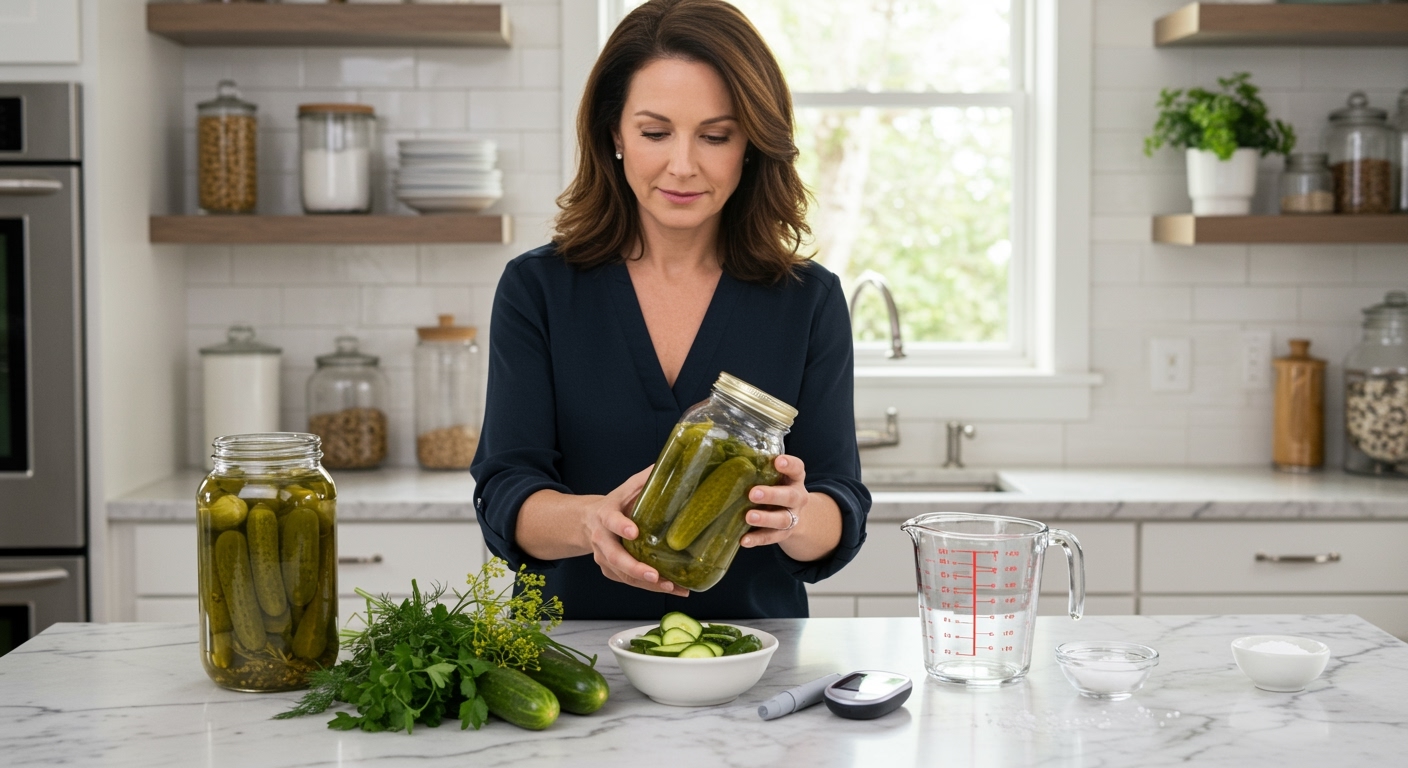
Making pickles at home gives you complete control over the sodium content and ensures no hidden sugars sneak into your food.
You can reduce the salt by up to 50 percent compared to commercial brands while still achieving that satisfying tangy crunch.
Homemade fermented pickles contain live probiotic bacteria that die during the pasteurization process used for most store-bought pickles.
These beneficial bacteria support digestive health and may improve glucose metabolism through the gut-pancreas connection.
The process is surprisingly simple, requiring only cucumbers, water, vinegar, salt, and your choice of spices like dill, garlic, or peppercorns.
You can prepare a large batch on Sunday and have diabetes-friendly snacks ready for the entire week without worrying about questionable ingredients.
✪ Fact: Homemade fermented pickles can contain up to 100 times more beneficial bacteria than pasteurized commercial varieties.
The Bottom Line
Plain dill pickles are safe for diabetes when you choose unsweetened varieties and watch your portion sizes to manage sodium intake.
Health is not about eliminating foods you enjoy but about making smart choices that support your long-term wellbeing without constant sacrifice.
I would love to hear your experience with pickles and diabetes management, so please share your thoughts, questions, or favorite pickle recipes in the comment section below.
References
At NutritionCrown, we use quality and credible sources to ensure our content is accurate and trustworthy. Below are the sources referenced in writing this article:
- Medical News Today: Can a diabetic eat pickles
- PubMed Central: Fermented Foods and Metabolic Outcomes
- Klinio: Pickles and Diabetes
- WebMD: Health Benefits of Pickles