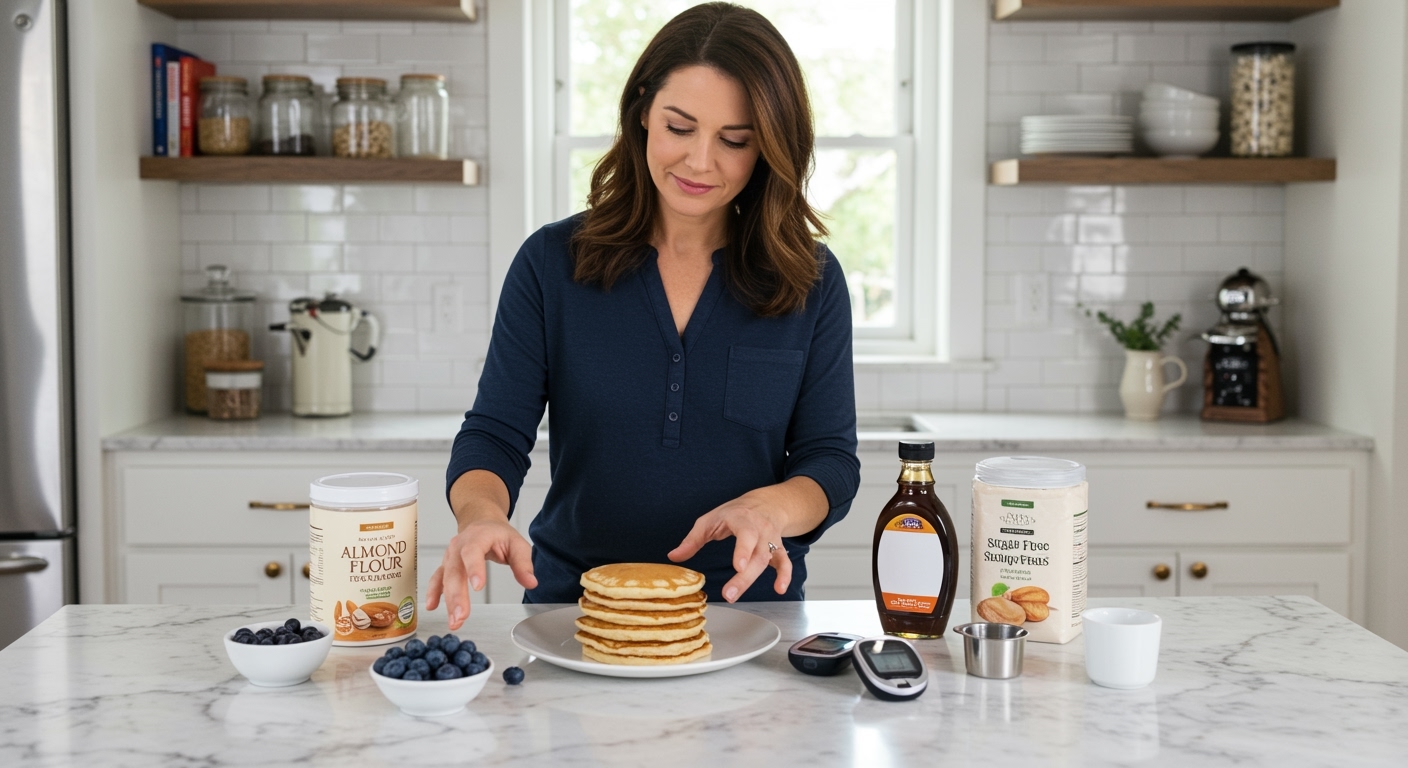
✪ Key Takeaway: Pancakes are not always bad for diabetes when you use low-glycemic flours, control portions, and add protein or healthy fats.
Introduction
You wake up craving fluffy pancakes but then remember your diabetes diagnosis and feel guilty before even reaching for the mixing bowl.
You are probably asking this question because someone told you that pancakes will spike your blood sugar dangerously high and you should never eat them again.
Hi, I am Abdur, your nutrition coach and today I am going to explain exactly when pancakes become problematic for diabetes and how you can modify them to enjoy this breakfast favorite safely.
Why Do Traditional Pancakes Spike Blood Sugar So Quickly?
Traditional pancakes are made with refined white flour that contains almost no fiber to slow down digestion.
When you eat refined flour, your body breaks it down into glucose within minutes because there is nothing to slow the process.
Most pancake recipes also include added sugar in the batter itself, which adds even more fast-acting carbohydrates to your meal.
Then you pour syrup on top, which is basically pure sugar that enters your bloodstream almost immediately.
A typical serving of three medium pancakes with syrup can contain 60 to 90 grams of fast-digesting carbohydrates with minimal protein or fat.
This combination creates a perfect storm that sends your blood glucose soaring within 30 to 60 minutes after eating.
Your pancreas then releases a large amount of insulin to handle this glucose flood, which can lead to a blood sugar crash a few hours later.
✪ Fact: White flour pancakes have a glycemic index of around 67, which is considered high and causes rapid blood sugar spikes.
What Makes Some Pancakes Better for Blood Sugar Control?
The type of flour you choose makes the biggest difference in how pancakes affect your blood sugar levels.
Almond flour, coconut flour, and oat flour contain more fiber and protein than white flour, which slows down carbohydrate absorption significantly.
Almond flour pancakes have only about 6 grams of carbohydrates per serving compared to 30 grams in traditional pancakes.
Adding protein powder to your pancake batter increases the protein content, which helps stabilize blood sugar by slowing digestion.
Eggs are another important ingredient because they provide protein and healthy fats that create a more balanced macronutrient profile.
Using unsweetened applesauce or mashed banana instead of sugar adds natural sweetness with fiber that moderates glucose absorption.
The cooking method also matters because using a small amount of healthy fat like coconut oil or butter adds satiety without excessive calories.
✪ Pro Tip: Mix half almond flour with half oat flour to get the benefits of both low carbs and satisfying texture in your pancakes.
How Do Toppings Change the Blood Sugar Impact of Pancakes?
Regular pancake syrup is essentially liquid sugar that contains about 50 grams of carbohydrates in just a quarter cup serving.
Sugar-free syrups made with artificial sweeteners or natural alternatives like monk fruit provide sweetness without affecting blood glucose.
Fresh berries like blueberries or strawberries add natural sweetness along with fiber and antioxidants that support overall health.
A tablespoon of nut butter provides healthy fats and protein that slow down the absorption of any carbohydrates in your meal.
Greek yogurt makes an excellent topping because it adds protein and probiotics while creating a creamy texture without excess sugar.
Avoid toppings like chocolate chips, whipped cream, or powdered sugar because they add empty calories and fast-acting carbohydrates.
The key is choosing toppings that add nutritional value rather than just sweetness to keep your blood sugar stable throughout the morning.
✪ Note: Two tablespoons of regular syrup contain the same amount of sugar as eating five sugar cubes at once.
Does Portion Size Really Matter for Diabetic Pancake Consumption?
Even the healthiest pancake recipe will spike your blood sugar if you eat too many at one sitting.
Most people with diabetes can handle one to two small pancakes when made with low-glycemic ingredients and paired with protein.
A small pancake should be about four inches in diameter, which is much smaller than the restaurant-sized pancakes many people are used to eating.
Adding a protein source like eggs, turkey sausage, or cottage cheese on the side helps balance your meal and prevents blood sugar spikes.
You should aim for a meal that contains no more than 45 to 60 grams of total carbohydrates if you have diabetes.
This means your pancakes should be just one component of your breakfast, not the entire meal by themselves.
Testing your blood sugar two hours after eating pancakes will help you understand how your body responds to different recipes and portion sizes.
✪ Pro Tip: Use a food scale to measure your pancake batter so you can create consistent portion sizes that fit your carbohydrate goals.
When Is the Best Time to Eat Pancakes With Diabetes?
The timing of your pancake breakfast can significantly affect how your body handles the carbohydrate load.
Eating pancakes after morning exercise is ideal because your muscles are more sensitive to insulin and will absorb glucose more efficiently.
Your body naturally has higher insulin resistance in the early morning due to hormones like cortisol, which means breakfast carbohydrates can be harder to manage.
Waiting until mid-morning or having pancakes as a weekend brunch after some physical activity can improve your blood sugar response.
Never eat pancakes late at night because your body is less efficient at processing carbohydrates when you are preparing for sleep.
If you take diabetes medication, coordinate your pancake meals with your medication schedule to ensure proper blood sugar management.
The best approach is treating pancakes as an occasional breakfast choice rather than a daily habit, even when using diabetes-friendly recipes.
✪ Fact: Studies show that insulin sensitivity is typically 25 percent lower in the early morning compared to later in the day.
The Bottom Line
Pancakes are not always bad for diabetes when you make smart choices about ingredients, portions, and timing.
The difference between a blood sugar disaster and a satisfying breakfast lies in the choices you make before the first bite hits your plate.
I would love to hear about your experience with diabetes-friendly pancakes or any questions you have about making breakfast work for your blood sugar goals, so please share your thoughts in the comments below.
References
At NutritionCrown, we use quality and credible sources to ensure our content is accurate and trustworthy. Below are the sources referenced in writing this article:
- Diabetes Strong: Diabetic Pancakes
- Klinio: Pancakes and Diabetes
- Tap Health: Can a Diabetic Have Pancakes
- PubMed Central: Dietary Patterns and Diabetes