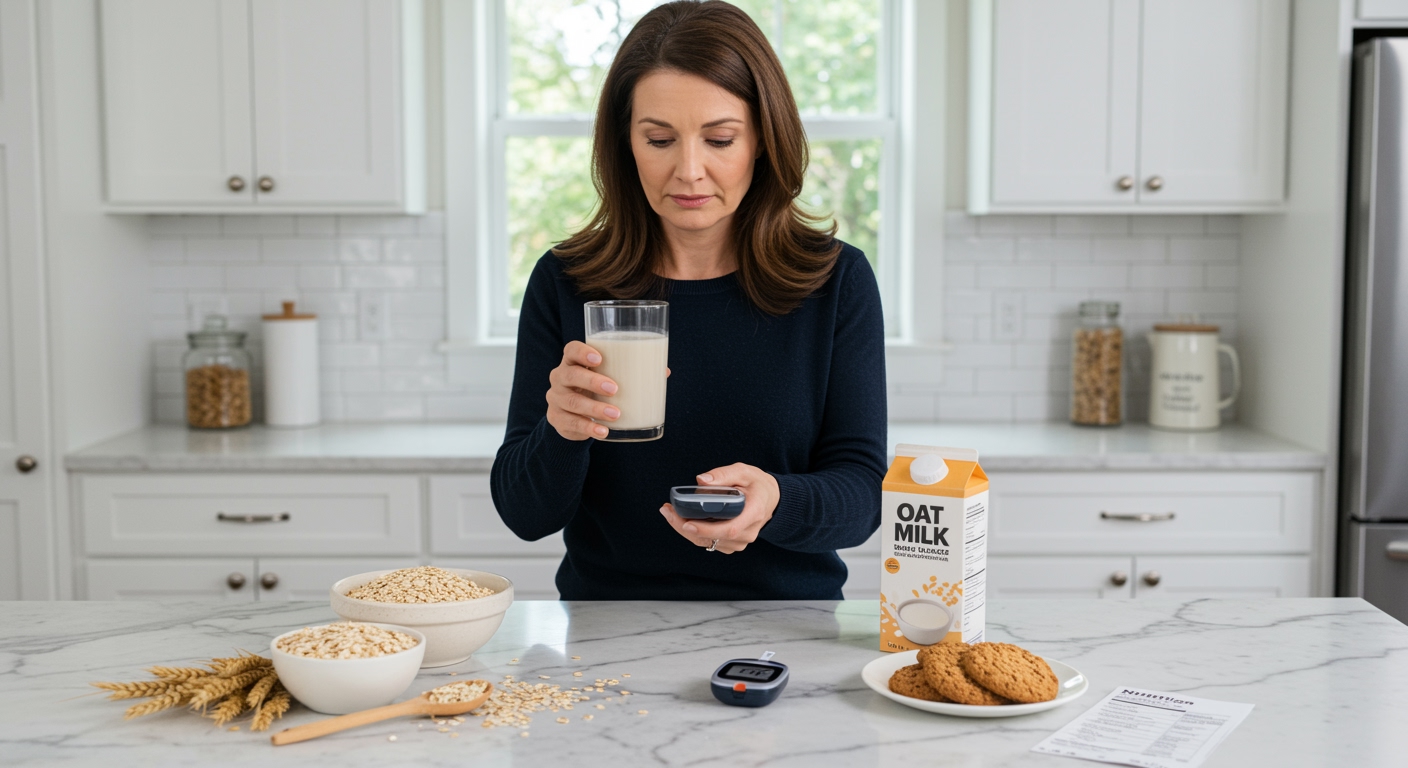
✪ Key Takeaway: Oat milk can spike blood sugar quickly due to high carb content, making it a poor choice for most people with diabetes.
Introduction
You walk into a coffee shop and see oat milk listed as the healthiest dairy alternative on the menu.
You might be wondering if this trendy plant-based milk is safe for your blood sugar levels, especially when every food choice feels like a calculated risk.
Hi, I am Abdur, your nutrition coach, and today I am going to explain why oat milk might not be the diabetes-friendly option you think it is and what you should know before making it a regular part of your diet.
What Makes Oat Milk Different From Other Plant Milks?
Oat milk is made by blending whole oats with water and then straining out the solid parts.
This process leaves behind a creamy liquid that contains the starch from the oats.
Starch is a type of carbohydrate that your body breaks down into glucose, which is the sugar that enters your bloodstream.
Unlike almond milk or coconut milk, which are naturally low in carbohydrates, oat milk carries a significant carb load in every serving.
One cup of unsweetened oat milk typically contains around 16 grams of carbohydrates, while the same amount of unsweetened almond milk has only 1 to 2 grams.
This difference matters tremendously when you are trying to manage blood sugar levels throughout the day.
The processing method also affects how quickly your body absorbs these carbohydrates, which brings us to the next critical point.
✪ Fact: Commercial oat milk often contains added oils and stabilizers that can further impact how your body processes the beverage.
How Does Oat Milk Affect Your Blood Sugar?
When you drink oat milk, the starch molecules break down rapidly in your digestive system.
Your body converts these starches into glucose faster than you might expect.
Research shows that oat-based beverages can have a glycemic index ranging from 69 to 86, which is considered high.
The glycemic index measures how quickly a food raises your blood sugar on a scale from 0 to 100, with pure glucose scoring 100.
Foods with a glycemic index above 70 are considered high and can cause rapid blood sugar spikes.
Your pancreas responds to this spike by releasing insulin, the hormone that helps move glucose from your bloodstream into your cells.
For people with diabetes, this process does not work efficiently, leading to prolonged elevated blood sugar levels that can damage your organs over time.
✪ Note: The processing of oats into milk removes most of the fiber that would normally slow down sugar absorption.
Why Does Processing Matter For Blood Sugar Control?
Whole oats contain beta-glucan, a type of soluble fiber that slows down digestion and helps stabilize blood sugar.
When oats are processed into milk, much of this beneficial fiber gets filtered out.
What remains is primarily the starchy component without the protective fiber buffer.
Studies comparing different oat processing methods found that more refined oat products cause higher insulin responses in the body.
This means your pancreas has to work harder to manage the glucose entering your bloodstream.
The smoother and more liquid the oat product becomes, the faster your body can break it down and absorb the carbohydrates.
This is why eating a bowl of steel-cut oats affects your blood sugar differently than drinking a glass of oat milk, even though both come from the same grain.
✪ Pro Tip: If you eat oats, choose steel-cut or rolled oats instead of instant varieties to preserve more fiber and slow digestion.
What Are Better Alternatives For People With Diabetes?
Unsweetened almond milk stands out as one of the best choices for blood sugar management.
It contains minimal carbohydrates and will not cause significant glucose spikes.
Coconut milk, particularly the unsweetened variety, also keeps carbohydrate content low while providing a creamy texture.
Soy milk offers a middle ground with moderate carbohydrates but includes protein that helps slow down sugar absorption.
Regular dairy milk contains natural sugars but also provides protein and fat that moderate the blood sugar response.
If you prefer the taste of oat milk, consider using it sparingly as a treat rather than a daily beverage.
You can also dilute oat milk with water or mix it with almond milk to reduce the overall carbohydrate impact per serving.
✪ Pro Tip: Always check the nutrition label for added sugars, as many plant milks contain sweeteners that make blood sugar control even harder.
Can You Ever Include Oat Milk In A Diabetes Diet?
The answer depends on your individual blood sugar control and overall diet strategy.
If your diabetes is well-managed and you monitor your glucose levels regularly, you might tolerate small amounts occasionally.
Pairing oat milk with foods that contain protein, fat, or fiber can help slow down the absorption of carbohydrates.
For example, adding oat milk to a smoothie with nuts, seeds, and leafy greens creates a more balanced meal.
Timing also matters when it comes to managing blood sugar spikes.
Consuming oat milk after physical activity might be less problematic because your muscles use glucose more efficiently during this recovery period.
However, drinking oat milk on an empty stomach or as a standalone beverage will likely cause a rapid blood sugar increase that you want to avoid.
✪ Note: Testing your blood sugar before and after consuming oat milk can help you understand your personal response to this beverage.
The Bottom Line
Oat milk is not a good choice for most people with diabetes because of its high carbohydrate content and rapid impact on blood sugar levels.
Your health depends on consistent choices, not convenient trends, so prioritize alternatives that support stable glucose control instead of following popular marketing messages.
I would love to hear about your experience with different milk alternatives and how they affect your blood sugar, so please share your thoughts or questions in the comment section below.
References
At NutritionCrown, we use quality and credible sources to ensure our content is accurate and trustworthy. Below are the sources referenced in writing this article:
- Cambridge University Press: Impact of oat processing on glycaemic and insulinaemic responses in healthy humans
- National Center for Biotechnology Information: Oat beta-glucan and blood glucose control
- Nutrisense: Does Oat Milk Spike Blood Sugar
- Dietitian Live: Is Oat Milk Good for Diabetics