✪ Key Takeaway: Matcha may help with diabetes by improving insulin sensitivity and lowering blood sugar, but it works best as part of a complete diet.
Introduction
You walk past the coffee shop and see bright green drinks everywhere.
People with diabetes often wonder if this trendy matcha powder can actually help control their blood sugar or if it is just another health fad that promises too much.
Hi, I am Abdur, your nutrition coach, and today I am going to explain exactly how matcha affects diabetes, what the research really shows, and whether you should add it to your daily routine.
What Makes Matcha Different From Regular Green Tea?
Matcha comes from the same plant as regular green tea, but farmers grow it differently.
They cover the tea plants with shade cloths about three weeks before harvest, which forces the plant to produce more chlorophyll and certain beneficial compounds.
After harvesting, workers steam the leaves, remove the stems and veins, then grind the remaining leaf tissue into a fine powder.
When you drink matcha, you consume the entire leaf rather than just the water that passed through tea leaves.
This means you get much higher concentrations of beneficial compounds called catechins, especially one called epigallocatechin gallate or EGCG.
Regular green tea might contain 25 to 86 milligrams of catechins per cup, while matcha can deliver 137 milligrams or more in the same amount.
This concentration difference matters because catechins are the compounds researchers believe help with blood sugar control.
✪ Fact: One gram of matcha powder contains about the same amount of catechins as ten cups of regular brewed green tea.
How Does Matcha Affect Blood Sugar Levels?
Research shows that the catechins in matcha can slow down how quickly your body breaks down carbohydrates into sugar.
These compounds inhibit an enzyme called alpha-amylase, which your body uses to convert starch into glucose.
When this enzyme works more slowly, glucose enters your bloodstream at a gentler pace rather than spiking suddenly after meals.
A 2013 review published in the Diabetes and Metabolism Journal examined multiple studies on green tea and diabetes.
The researchers found that people who regularly consumed green tea had lower fasting blood sugar levels and better long-term blood sugar control measured by hemoglobin A1C.
Another study showed that green tea catechins improved insulin sensitivity, which means your cells respond better to insulin and can take up glucose more efficiently.
However, most of these studies used regular green tea, and we need more research specifically on matcha to understand if the higher catechin concentration provides even better results.
✪ Pro Tip: Drink matcha about 30 minutes before meals to maximize its blood sugar-blunting effects on the carbohydrates you eat.
Can Matcha Help Prevent Type 2 Diabetes?
Several large population studies suggest that regular green tea consumption may lower your risk of developing type 2 diabetes.
A Japanese study followed over 17,000 adults for five years and found that those who drank six or more cups of green tea daily had a 33 percent lower risk of developing diabetes.
The protective effect seems to come from multiple mechanisms working together in your body.
First, catechins reduce oxidative stress, which damages the insulin-producing beta cells in your pancreas.
Second, these compounds decrease inflammation throughout your body, and chronic inflammation is a major driver of insulin resistance.
Third, green tea catechins may help with weight management by slightly increasing your metabolic rate and fat oxidation.
Since excess body weight is the biggest risk factor for type 2 diabetes, anything that helps you maintain a healthy weight provides indirect diabetes prevention benefits.
✪ Note: Prevention studies show correlation, not causation, so matcha alone cannot prevent diabetes without other healthy lifestyle choices.
What Is the Right Amount of Matcha for Blood Sugar Control?
Most research on green tea and diabetes used doses equivalent to three to five cups of regular green tea per day.
Since matcha is much more concentrated, you would need less to get similar amounts of active compounds.
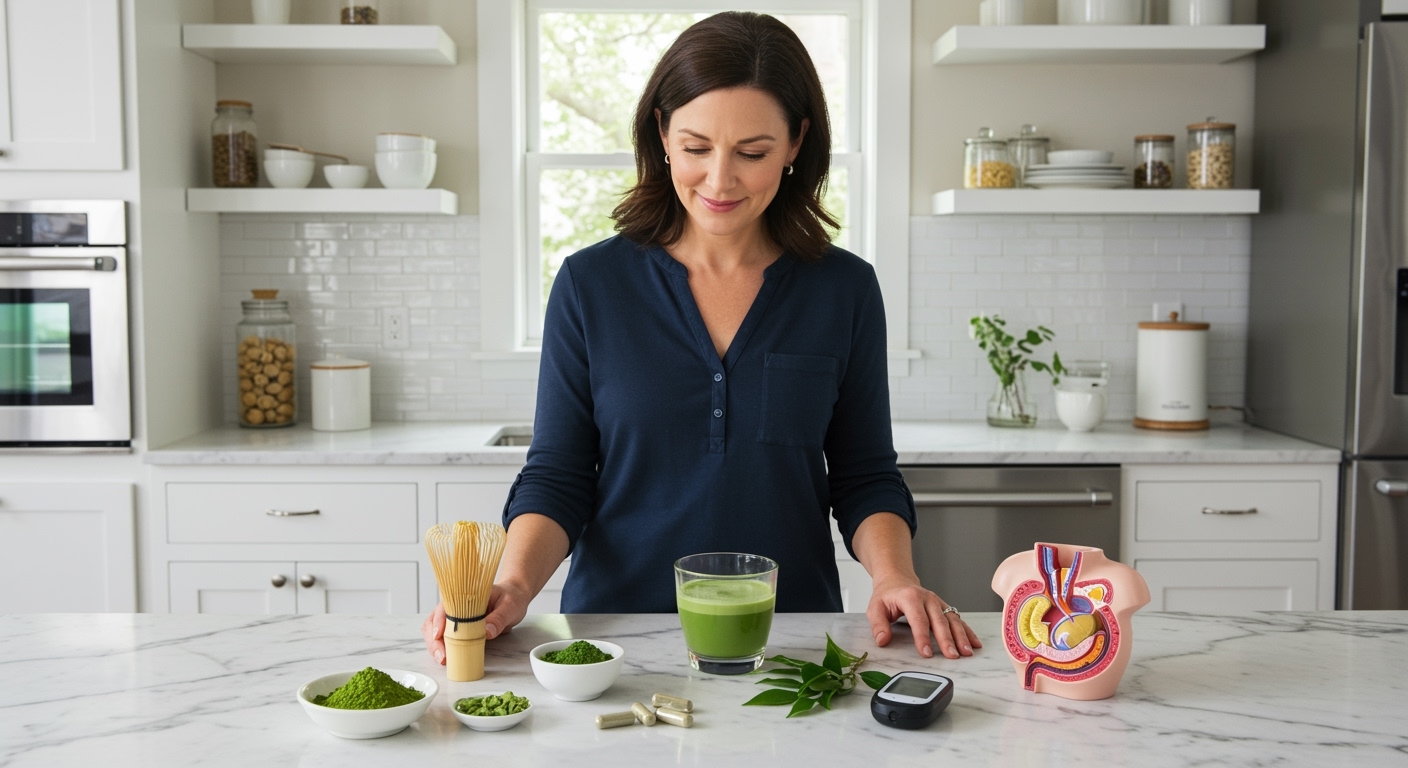
One to two grams of matcha powder daily, which equals about one to two teaspoons, should provide enough catechins to potentially benefit blood sugar control.
You can mix this amount with hot water to make traditional matcha tea, or blend it into smoothies, yogurt, or oatmeal.
Timing matters because drinking matcha with or just before meals appears more effective than consuming it hours away from food.
The catechins work best when they are present in your digestive system as you eat carbohydrates, so they can slow down the breakdown and absorption process.
Remember that matcha contains caffeine, typically about 70 milligrams per teaspoon, so avoid drinking it late in the day if you are sensitive to stimulants.
✪ Pro Tip: Start with half a teaspoon daily for one week to assess your tolerance before increasing to a full serving.
Are There Any Risks or Side Effects to Consider?
Matcha is generally safe for most people, but you need to be aware of a few potential issues.
The caffeine content can cause jitters, anxiety, or sleep problems in sensitive individuals, especially if you consume multiple servings daily.
Some people experience stomach upset or nausea when drinking matcha on an empty stomach because of its high concentration of tannins.
If you take diabetes medications, particularly insulin or sulfonylureas, adding matcha to your routine might lower your blood sugar more than expected.
This could potentially cause hypoglycemia, which is when blood sugar drops too low and causes symptoms like shakiness, sweating, confusion, or dizziness.
Always monitor your blood sugar closely when starting matcha, and talk to your doctor about whether you need to adjust your medication doses.
Quality matters because some matcha products contain heavy metals like lead, especially if the tea plants were grown in contaminated soil.
✪ Note: Choose matcha from Japan rather than China, as Japanese products typically have stricter quality controls and lower contamination risks.
The Bottom Line
Matcha can be a helpful addition to your diabetes management plan because it contains concentrated amounts of catechins that improve insulin sensitivity and slow carbohydrate digestion.
Real health improvements come from consistent small actions repeated daily, not from searching for miracle foods that fix everything overnight.
I would love to hear about your experience with matcha or any questions you have about using it for blood sugar control, so please share your thoughts in the comments below.
References
At NutritionCrown, we use quality and credible sources to ensure our content is accurate and trustworthy. Below are the sources referenced in writing this article:
- PubMed Central: Green tea consumption and the risk of coronary heart disease and diabetes
- PubMed Central: Effects of green tea on diabetes and related complications
- Matcha Source: 7 reasons why matcha green tea is good for diabetics