✪ Key Takeaway: Jelly is not always bad for diabetes when you choose sugar-free versions, control portions, and pair it with protein or fiber-rich foods.
Introduction
You probably heard that jelly will spike your blood sugar faster than almost any other food.
This fear makes sense because most jellies contain concentrated sugar that enters your bloodstream quickly, but the complete picture tells a different story that might surprise you.
Hi, I’m Abdur, your nutrition coach, and today I’m going to explain exactly when jelly becomes problematic for diabetes and when it might fit safely into your meal plan.
What Makes Regular Jelly Problematic For Blood Sugar?
Regular jelly contains about 13 grams of sugar in just one tablespoon.
This concentrated sugar comes primarily from the fruit juice used during processing, which removes all the fiber that would normally slow down sugar absorption.
When you eat regular jelly alone, your body absorbs this sugar rapidly because nothing slows the digestion process.
The glycemic index of most regular jellies ranges between 49 and 51, which places them in the medium category but still causes noticeable blood sugar elevation.
Your pancreas must release a surge of insulin to handle this quick sugar load, which creates stress on your system over time.
People with diabetes already struggle with insulin production or insulin resistance, so adding concentrated sugar makes their blood glucose management even harder.
The problem becomes worse when you use more than one tablespoon, which happens easily because jelly spreads thinly and people underestimate their portion sizes.
✪ Fact: Two tablespoons of regular jelly contain more sugar than a small chocolate chip cookie.
Does Sugar-Free Jelly Work Better For Diabetes Management?
Sugar-free jelly uses artificial sweeteners or sugar alcohols instead of regular sugar, which dramatically changes how it affects your blood glucose.
These sweeteners provide the sweet taste without causing the blood sugar spike that regular sugar creates.
Most sugar-free jellies contain less than 1 gram of carbohydrates per serving, making them a safer choice for people managing diabetes.
Research shows that sugar-free jelly has minimal impact on glycemic metabolism when consumed in reasonable amounts.
However, you need to check the ingredient list carefully because some brands add maltodextrin or other fillers that can still raise blood sugar.
The sugar alcohols used in these products, like sorbitol or erythritol, pass through your digestive system without being fully absorbed.
Some people experience digestive discomfort from sugar alcohols when they consume large amounts, so moderation remains important even with sugar-free options.
✪ Pro Tip: Always read the nutrition label to confirm the total carbohydrate content, not just the sugar content.
How Does Food Pairing Change Jelly’s Impact On Blood Sugar?
The foods you eat with jelly make a massive difference in how quickly your blood sugar rises.
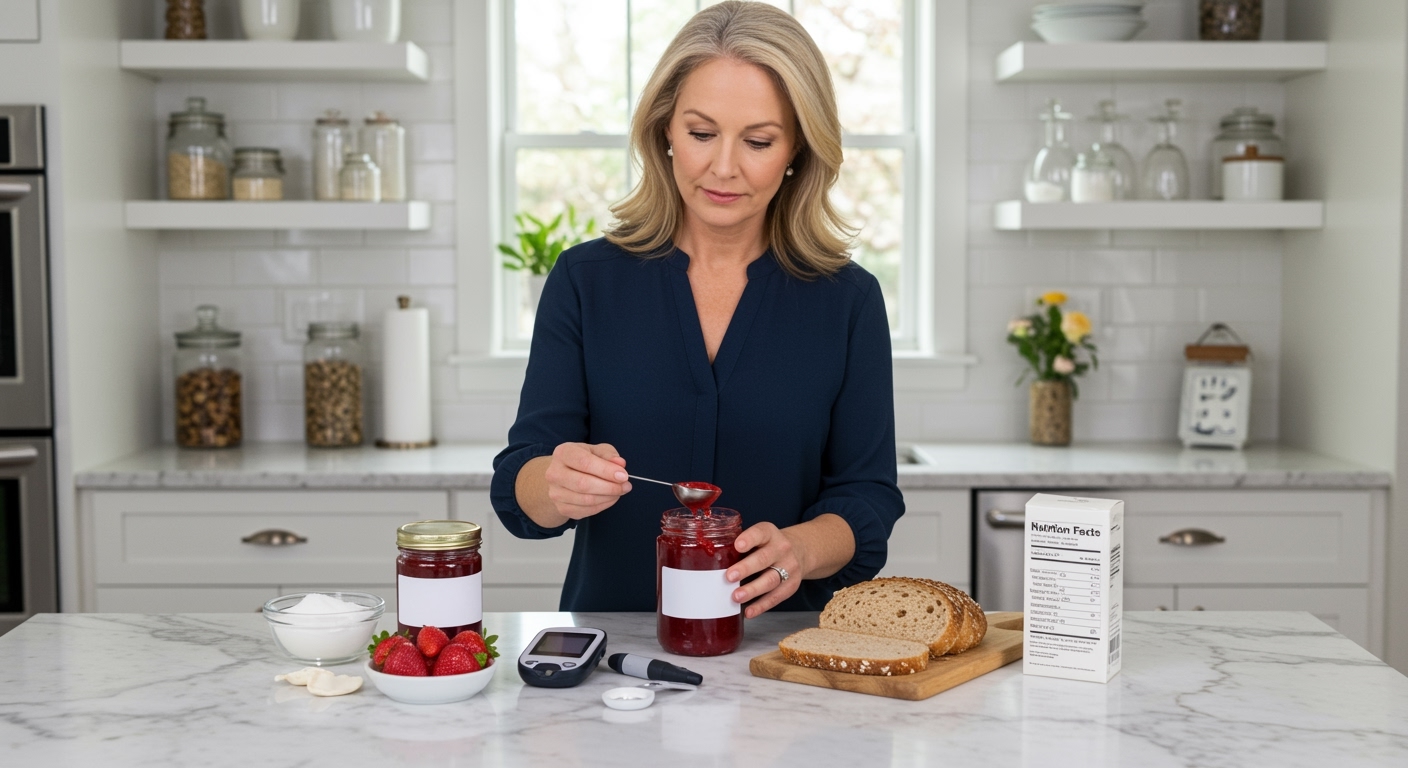
When you spread jelly on whole grain bread with peanut butter, the fiber and protein slow down sugar absorption significantly.
This combination creates a more gradual blood sugar curve instead of the sharp spike you get from eating jelly alone.
The protein from peanut butter also triggers a smaller insulin response compared to eating carbohydrates by themselves.
Fat in the peanut butter further delays stomach emptying, which means the sugar enters your bloodstream more slowly over a longer period.
You can apply this same principle by pairing jelly with Greek yogurt, cottage cheese, or nuts to create a more balanced meal.
The key is never eating jelly alone or with other high-carbohydrate foods that lack protein and fiber.
✪ Note: Combining jelly with protein can reduce the glycemic response by up to 40 percent compared to eating it alone.
What Role Does Portion Size Play In Managing Jelly Consumption?
Most people dramatically underestimate how much jelly they actually use on their toast or in their recipes.
A proper serving of jelly is one tablespoon, which looks much smaller than what most people spread on their bread.
Using a measuring spoon instead of eyeballing your portion helps you maintain consistent blood sugar control.
Even with sugar-free jelly, eating excessive amounts can cause digestive issues and might contain hidden carbohydrates from thickening agents.
Your total daily carbohydrate budget matters more than any single food choice, so jelly must fit within your overall meal plan.
If you use two tablespoons of regular jelly, you consume 26 grams of sugar, which equals about two slices of white bread in terms of blood sugar impact.
Learning to enjoy smaller amounts of jelly with proper food pairings gives you more flexibility without sacrificing your glucose management goals.
✪ Pro Tip: Use a small spoon to spread jelly thinly across your bread instead of dolloping it in the center.
Can Timing Of Jelly Consumption Affect Blood Sugar Response?
The time of day when you eat jelly influences how your body handles the sugar load.
Your insulin sensitivity is typically higher in the morning, which means your body processes carbohydrates more efficiently after you wake up.
Eating jelly as part of your breakfast alongside protein and fiber creates less blood sugar disruption than having it as an evening snack.
Your body also benefits from physical activity after meals, so having jelly before you exercise can help your muscles use that glucose for energy.
Late-night consumption of sugary foods like regular jelly can interfere with your overnight blood sugar stability and affect your fasting glucose reading the next morning.
If you take diabetes medications, the timing of your jelly consumption should align with when your medication works most effectively.
Planning your jelly intake around your daily routine and activity level helps you maintain better overall glycemic control.
✪ Fact: Morning insulin sensitivity can be up to 25 percent higher than evening levels in many people with diabetes.
The Bottom Line
Jelly is not always bad for diabetes when you make smart choices about the type, portion size, food pairings, and timing of consumption.
The difference between food working for you or against you often comes down to how you use it, not just what it contains.
I would love to hear your experience with jelly and diabetes management, so please share your thoughts, questions, or feedback in the comment section below.
References
At NutritionCrown, we use quality and credible sources to ensure our content is accurate and trustworthy. Below are the sources referenced in writing this article:
- PMC: Glycemic Index and Diabetes
- PMC: Sugar-Free Products and Glycemic Control
- Better Health Victoria: Carbohydrates and the Glycaemic Index
- Diabetes Journals: International Tables of Glycemic Index
- Nature: Food Processing and Glycemic Response