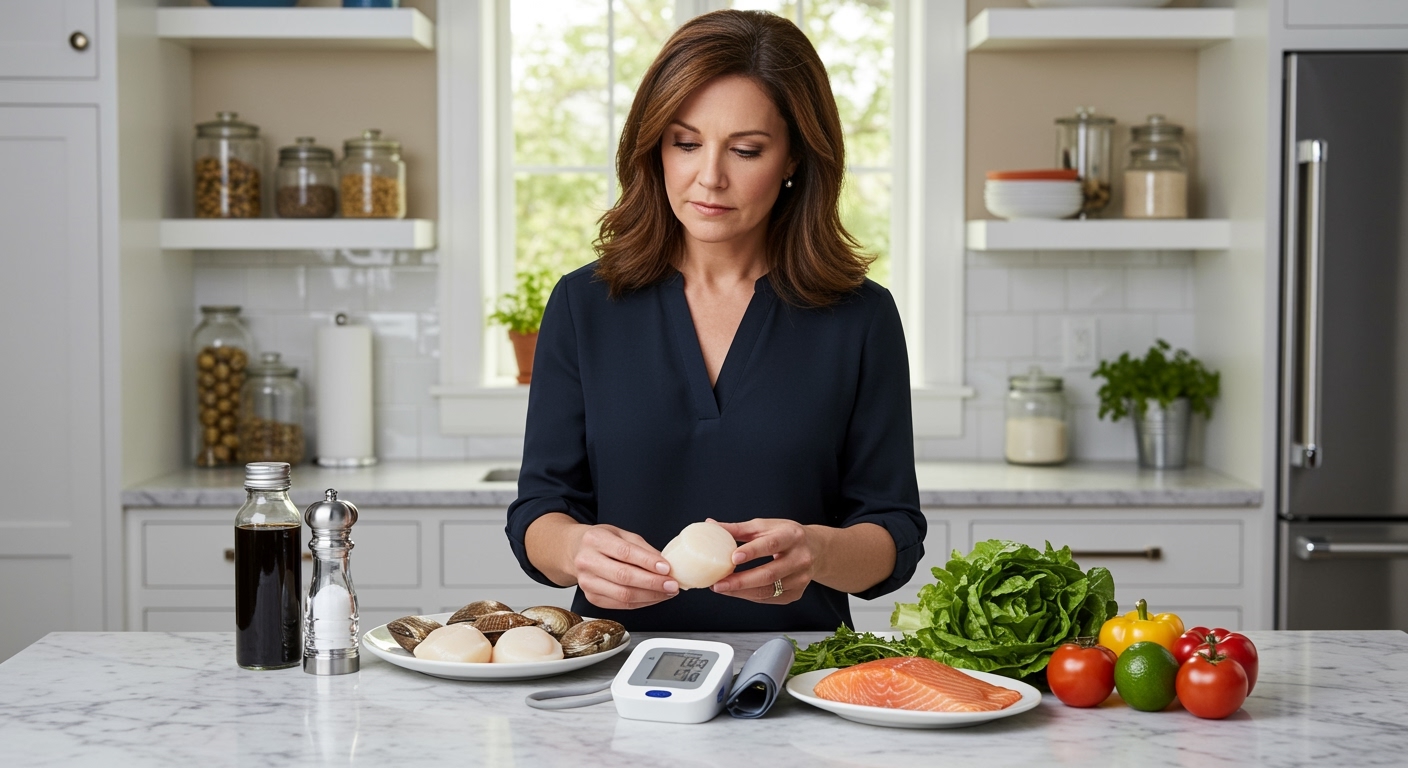
✪ Key Takeaway: Scallops are safe for high blood pressure when eaten fresh and prepared without added salt, but avoid processed varieties.
Introduction
You stand in the seafood section staring at those beautiful scallops and wonder if they will spike your blood pressure.
You might be asking this question because someone told you all seafood is high in sodium or because your doctor said to watch your salt intake.
Hi, I am Abdur, your nutrition coach and today I am going to explain exactly how scallops affect blood pressure and when they become dangerous.
What Makes Scallops Different From Other Seafood?
Scallops contain natural sodium that comes from the ocean water they live in.
A three-ounce serving of fresh scallops has about 667 milligrams of sodium, which seems high at first glance.
But this natural sodium behaves differently in your body compared to added table salt.
The sodium in scallops comes packaged with potassium and magnesium, two minerals that help balance blood pressure.
Fresh scallops also provide omega-3 fatty acids that reduce inflammation in your blood vessels.
The problem starts when companies process scallops by soaking them in sodium tripolyphosphate to increase weight and shelf life.
✪ Fact: Processed scallops can contain up to 40 percent more sodium than fresh ones due to chemical treatment.
How Does Natural Sodium Compare To Added Salt?
Your body processes natural sodium from whole foods differently than refined table salt.
Natural sodium in scallops comes with a complete package of minerals that work together in your body.
Table salt added during cooking or processing enters your bloodstream rapidly and causes immediate blood pressure spikes.
The potassium in scallops helps your kidneys flush out excess sodium through urine.
Magnesium in scallops relaxes your blood vessel walls, which naturally lowers pressure.
Studies show that people who eat whole foods with natural sodium have better blood pressure control than those eating processed foods with added salt.
The key difference is that natural sodium comes with protective nutrients that counteract its blood pressure effects.
✪ Pro Tip: Always buy dry-packed scallops labeled as chemical-free to avoid unnecessary sodium from processing.
What Nutrients In Scallops Actually Help Blood Pressure?
Scallops provide exceptional amounts of vitamin B12, which supports healthy blood vessel function.
A three-ounce serving delivers over 18 micrograms of B12, which is more than 700 percent of your daily need.
This vitamin helps lower homocysteine levels in your blood, a compound that damages artery walls when elevated.
Scallops also contain selenium, a mineral that protects your blood vessels from oxidative stress.
The omega-3 fatty acids in scallops reduce inflammation throughout your cardiovascular system.
These healthy fats also improve the flexibility of your artery walls, allowing blood to flow more easily.
Zinc and phosphorus in scallops support heart muscle function and energy production in cardiovascular cells.
✪ Note: The DASH diet, designed specifically for blood pressure control, includes scallops as a recommended protein source.
When Do Scallops Become Dangerous For Blood Pressure?
The danger comes from how you prepare and serve scallops, not from the scallops themselves.
Restaurant scallops often get cooked in butter with added salt, which can double or triple the sodium content.
Breaded and fried scallops absorb oil and salt, turning a healthy food into a blood pressure nightmare.
Scallops served with heavy cream sauces or salty sides like french fries create a sodium overload.
Processed frozen scallops treated with sodium tripolyphosphate contain significantly more sodium than fresh ones.
If you eat scallops every single day without balancing your diet with potassium-rich vegetables, the sodium can accumulate.
People with severe kidney disease need to be more careful because their bodies cannot flush excess sodium efficiently.
✪ Pro Tip: Pair scallops with leafy greens, sweet potatoes, or avocado to boost potassium and balance sodium naturally.
How Should You Prepare Scallops For Blood Pressure Control?
Start by buying fresh dry-packed scallops from a trusted seafood counter or market.
Pat them completely dry with paper towels before cooking to get a good sear without needing extra salt.
Use a small amount of olive oil or avocado oil in a hot pan to cook them quickly.
Season with fresh herbs like parsley, cilantro, or dill instead of salt or salty seasoning blends.
Add lemon juice, garlic, or black pepper for flavor without increasing sodium.
Serve your scallops with roasted vegetables or a fresh salad instead of starchy, salty sides.
Limit your portion to three to four ounces and eat scallops two to three times per week maximum.
✪ Fact: Cooking scallops for just 90 seconds per side preserves their nutrients while creating a delicious caramelized crust.
The Bottom Line
Fresh scallops prepared without added salt are safe and beneficial for people with high blood pressure.
Health is not about avoiding good foods but about preparing them wisely and eating them in balance.
Share your questions or experiences with scallops and blood pressure in the comments below because your story might help someone else make better choices.
References
At NutritionCrown, we use quality and credible sources to ensure our content is accurate and trustworthy. Below are the sources referenced in writing this article:
- Individual Fitness LLC: Health Benefits of Scallops
- Discover Grassland Beef: Scallops Nutrition
- Fulton Fish Market: DASH Diet Seafood
- American Sport and Fitness: Scallops Nutrition Facts Pros Cons