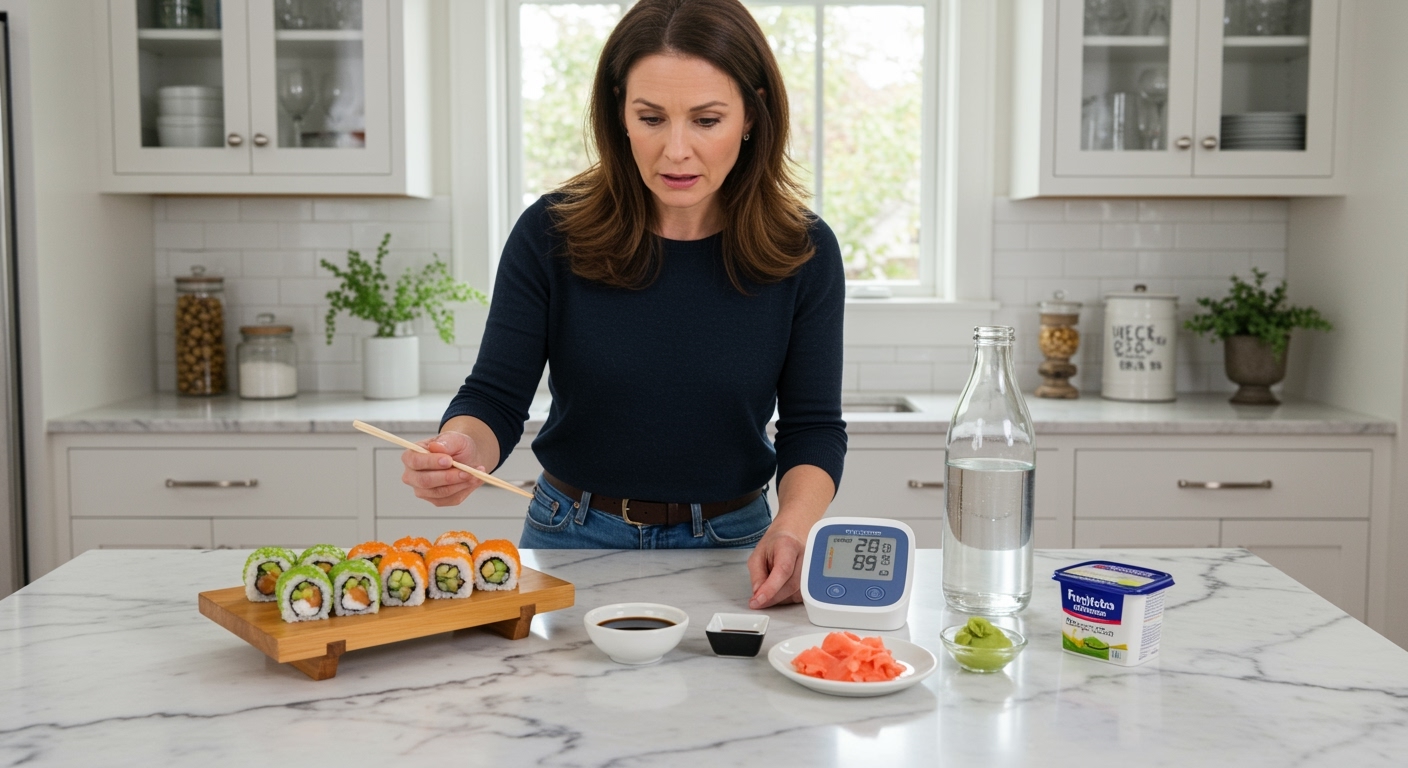
✪ Key Takeaway: Sushi can be safe for high blood pressure if you skip soy sauce, avoid tempura rolls, and choose fresh fish with brown rice options.
Introduction
You walk into your favorite sushi restaurant and suddenly wonder if those beautiful rolls could send your blood pressure through the roof.
You might be asking this question because your doctor warned you about sodium, and you heard sushi contains hidden salt bombs that could threaten your cardiovascular health.
Hi, I am Abdur, your nutrition coach and today I am going to explain exactly how sushi affects your blood pressure, which types pose the biggest risks, and how you can enjoy it safely without compromising your health.
What Makes Sushi Risky For High Blood Pressure?
The biggest danger in sushi comes from sodium, not the fish or rice.
One tablespoon of regular soy sauce contains about 900 to 1000 milligrams of sodium, which is nearly half your daily recommended limit.
When you dip multiple pieces of sushi throughout your meal, you easily consume 2000 to 3000 milligrams of sodium in one sitting.
This massive sodium load causes your body to retain water, which increases blood volume and puts extra pressure on your artery walls.
Your kidneys struggle to filter out this excess sodium, especially if you already have compromised kidney function from long-term high blood pressure.
Beyond soy sauce, many sushi restaurants add salt to their sushi rice during preparation, which adds another hidden sodium source.
Processed ingredients like imitation crab (often used in California rolls) contain high amounts of sodium as a preservative, sometimes exceeding 700 milligrams per serving.
✪ Fact: Research shows that reducing sodium intake by just 1000 milligrams daily can lower systolic blood pressure by 5 to 6 points.
Which Sushi Types Should You Avoid Completely?
Tempura rolls top the list of sushi you should never order when managing high blood pressure.
These rolls contain deep-fried ingredients that add unhealthy trans fats and extra sodium from the batter and frying process.
The combination of refined carbohydrates, unhealthy fats, and sodium creates a perfect storm for blood pressure spikes.
Spicy mayo rolls present another hidden danger because the mayo-based sauce contains high amounts of sodium and inflammatory omega-6 fatty acids.
Smoked salmon sushi should be avoided because the smoking process requires heavy salting, with some varieties containing over 600 milligrams of sodium per serving.
Sushi made with pickled vegetables like oshinko (pickled radish) contains extremely high sodium levels due to the pickling brine.
Any roll with cream cheese (like Philadelphia rolls) adds saturated fat and sodium, both of which negatively impact cardiovascular health.
✪ Note: Specialty rolls with multiple sauces and toppings can contain over 1500 milligrams of sodium in just one roll.
Can Fresh Fish In Sushi Actually Help Your Blood Pressure?
Yes, the omega-3 fatty acids in fresh fish provide significant cardiovascular benefits when consumed without high-sodium accompaniments.
Salmon, tuna, and mackerel contain EPA and DHA, which are omega-3 types that help relax blood vessel walls and reduce inflammation.
Studies show that people who consume fatty fish twice weekly have lower systolic and diastolic blood pressure compared to those who avoid fish.
These omega-3 fatty acids work by increasing the production of nitric oxide, a compound that dilates blood vessels and improves blood flow.
The protein in fresh fish also helps maintain healthy blood vessel elasticity, which naturally declines with age and high blood pressure.
However, these benefits disappear completely when you drown your sushi in soy sauce or choose rolls with processed ingredients.
The key is eating sashimi (fish without rice) or simple nigiri with minimal sodium additions to maximize the cardiovascular benefits.
✪ Pro Tip: Choose sashimi over rolls to get maximum omega-3 benefits without the added sodium from rice seasoning and sauces.
How Can You Order Sushi Safely With High Blood Pressure?
Start by requesting no soy sauce and ask for low-sodium soy sauce on the side if you absolutely need it.
Low-sodium soy sauce contains about 500 milligrams per tablespoon, which is still high but better than regular versions.
Use only a few drops instead of dipping your entire piece, or better yet, skip it completely and enjoy the natural flavors.
Choose simple rolls with fresh vegetables like cucumber, avocado, and carrots, which provide potassium that helps counteract sodium effects.
Ask for brown rice instead of white rice because it contains more fiber and minerals that support healthy blood pressure regulation.
Request that the chef use less salt when preparing your sushi rice, and many restaurants will accommodate this simple modification.
Pair your sushi with a side of edamame (without added salt) and miso soup made with reduced sodium, which provides protein and helps you feel satisfied with less food.
✪ Pro Tip: Drink extra water before and after eating sushi to help your kidneys flush out excess sodium more efficiently.
What About Making Sushi At Home For Better Control?
Making sushi at home gives you complete control over every ingredient, especially sodium content.
You can prepare sushi rice without any added salt and use fresh, high-quality fish from trusted sources.
Create your own low-sodium dipping sauce using rice vinegar, a tiny amount of low-sodium soy sauce, and fresh ginger.
Focus on vegetable-heavy rolls with cucumber, bell peppers, carrots, and avocado, which provide fiber and potassium.
Add fatty fish like salmon or mackerel for omega-3 benefits without the restaurant markup or hidden sodium additions.
Making sushi at home also helps with portion control because you decide exactly how many pieces to prepare.
The initial investment in a bamboo mat and sharp knife pays off quickly when you consider the health benefits and cost savings compared to restaurant dining.
✪ Fact: Homemade sushi typically contains 70 to 80 percent less sodium than restaurant versions when prepared without added salt.
The Bottom Line
Sushi can be safe for high blood pressure when you make smart choices and avoid the sodium traps that most people fall into.
Your health depends not on avoiding foods you love but on learning how to enjoy them without compromising your wellbeing, and sushi is no exception to this rule.
I would love to hear about your experiences with sushi and blood pressure management, so please share your questions, tips, or concerns in the comments below.
References
At NutritionCrown, we use quality and credible sources to ensure our content is accurate and trustworthy. Below are the sources referenced in writing this article:
- American Heart Association: Fish and Omega-3 Fatty Acids
- The Kidney Dietitian: Low Sodium Sushi: The Ultimate Guide
- Midtown Nephrology: 15 Worst Foods for High Blood Pressure
- Stroke Foundation: Swapping Your Soy Sauce Can Halve Your Salt Intake
- Nature: Dietary Sodium and Health