✪ Key Takeaway: Dried cranberries are not always bad for diabetes when you choose unsweetened versions and control portions carefully.
Introduction
You grab a handful of dried cranberries thinking you made a healthy choice, then your blood sugar shoots up like a rocket.
You might be asking this question because someone told you dried fruits are diabetes poison, or maybe you noticed your glucose meter showing scary numbers after eating them.
Hi, I am Abdur, your nutrition coach, and today I am going to explain the complete truth about dried cranberries and diabetes management.
What Makes Dried Cranberries Different From Fresh Ones?
Fresh cranberries contain about 4 grams of sugar per cup, which makes them one of the lowest sugar fruits available.
When you dry cranberries, water evaporates and the natural sugars become highly concentrated in a smaller volume.
But here is where things get worse for most commercial products.
Manufacturers add extra sugar because dried cranberries taste extremely tart and bitter without sweetening.
One-third cup of sweetened dried cranberries contains around 26 grams of sugar, which equals more than 6 teaspoons.
The glycemic index of sweetened dried cranberries sits around 64, putting them in the medium category that can spike blood glucose.
This dramatic transformation from low-sugar fresh fruit to high-sugar dried product creates the diabetes concern most people worry about.
✪ Fact: Fresh cranberries have 87 percent water content, which disappears during the drying process, concentrating everything else.
Does The Added Sugar Make All Dried Cranberries Bad?
The answer depends entirely on which type you choose and how much you eat.
Sweetened dried cranberries contain added sugars like cane sugar, corn syrup, or fruit juice concentrates listed on ingredient labels.
These added sugars cause rapid blood glucose spikes because they get absorbed quickly into your bloodstream.
Unsweetened dried cranberries exist in the market, though they are harder to find and taste significantly more tart.
Research published in Food and Function journal shows that cranberry polyphenols may actually improve insulin sensitivity and reduce inflammation.
The problem is not the cranberry itself but the sugar coating manufacturers add to make them palatable.
When you eat sweetened versions regularly in large amounts, you are essentially consuming candy disguised as health food.
✪ Pro Tip: Always check the ingredient list and choose products where cranberries are the only ingredient without added sweeteners.
What Happens To Your Blood Sugar After Eating Them?
Your body treats the sugar in sweetened dried cranberries like any other simple carbohydrate source.
Within 15 to 30 minutes after eating, your blood glucose starts climbing as the sugar gets absorbed through your intestinal walls.
Your pancreas responds by releasing insulin, the hormone that helps move glucose from blood into cells.
If you have diabetes, your body either does not make enough insulin or cannot use it effectively, causing blood sugar to stay elevated longer.
A study in the Journal of Medicinal Food found that whole cranberry consumption improved glycemic response compared to cranberry juice in people with type 2 diabetes.
The fiber in whole dried cranberries slows down sugar absorption slightly, but added sugar still dominates the metabolic response.
Eating them with protein or healthy fats can reduce the blood sugar spike by slowing digestion and absorption rates.
✪ Note: Pairing dried cranberries with nuts or cheese creates a more balanced snack that minimizes glucose spikes.
Can You Ever Eat Dried Cranberries With Diabetes?
Yes, you can eat them occasionally in small, controlled portions as part of a balanced meal plan.
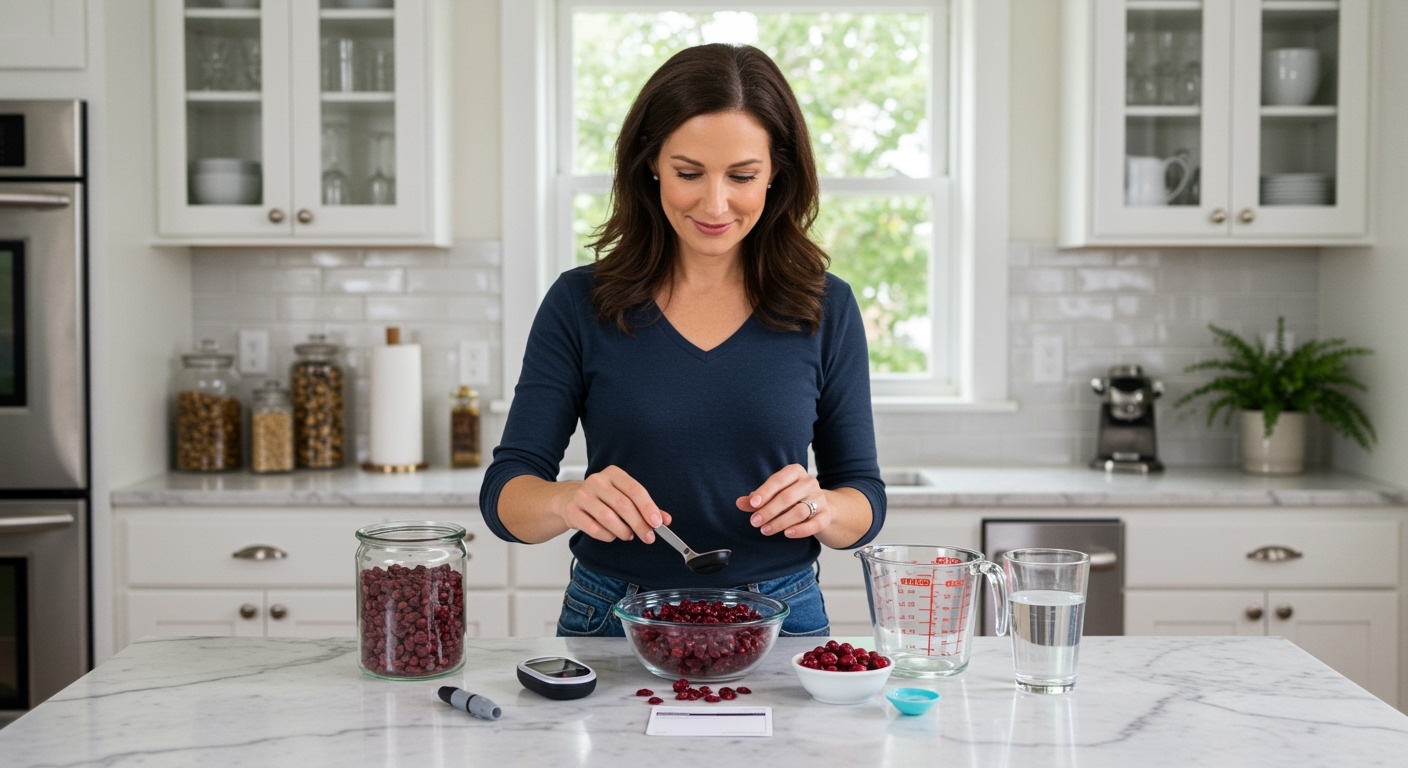
The key is treating them as a condiment rather than a snack you eat by the handful.
One tablespoon of sweetened dried cranberries contains about 7 grams of carbohydrates, which fits into most diabetes meal plans.
You can sprinkle this small amount on salads, oatmeal, or yogurt to add flavor without causing major blood sugar problems.
Research from the Cranberry Institute suggests that cranberry polyphenols may offer cardiovascular benefits for people with diabetes.
These compounds help reduce oxidative stress and inflammation, which are common complications in diabetes management.
The best approach is choosing unsweetened versions and measuring portions carefully with a measuring spoon instead of eyeballing amounts.
✪ Pro Tip: Keep a food journal tracking how different portion sizes affect your blood glucose readings over two hours.
What Are Better Alternatives For Diabetes Management?
Fresh or frozen cranberries give you all the beneficial compounds without added sugars.
You can cook them with a small amount of stevia or monk fruit sweetener to reduce tartness naturally.
Berries like strawberries, blueberries, and raspberries offer similar antioxidants with lower glycemic impact in their fresh form.
If you want dried fruit, choose options like unsweetened dried apricots or prunes that come naturally sweeter without added sugar.
Studies show that whole fruits with intact fiber provide better blood sugar control than any dried or processed version.
Making your own dried cranberries at home lets you control the sweetness level and avoid unnecessary additives.
The bottom line is that fresh whole foods should always be your first choice for diabetes management and long-term health.
✪ Fact: Frozen cranberries retain nearly all their nutrients and can be stored for months without losing health benefits.
The Bottom Line
Dried cranberries are not always bad for diabetes, but the sweetened commercial versions cause problems when eaten in typical serving sizes.
Small portions of unsweetened dried cranberries can fit into a diabetes-friendly diet when you measure carefully and pair them with protein or fat.
I would love to hear your experience with dried cranberries and blood sugar management, so please share your thoughts in the comments below.
References
At NutritionCrown, we use quality and credible sources to ensure our content is accurate and trustworthy. Below are the sources referenced in writing this article:
- Royal Society of Chemistry: Cranberry polyphenols and prevention of urinary tract infections
- Glycemic Index: Cranberries dried sweetened glycemic index
- PubMed: Cranberries and lower urinary tract infection prevention
- Cranberry Institute: Glycemic response and type II diabetes research