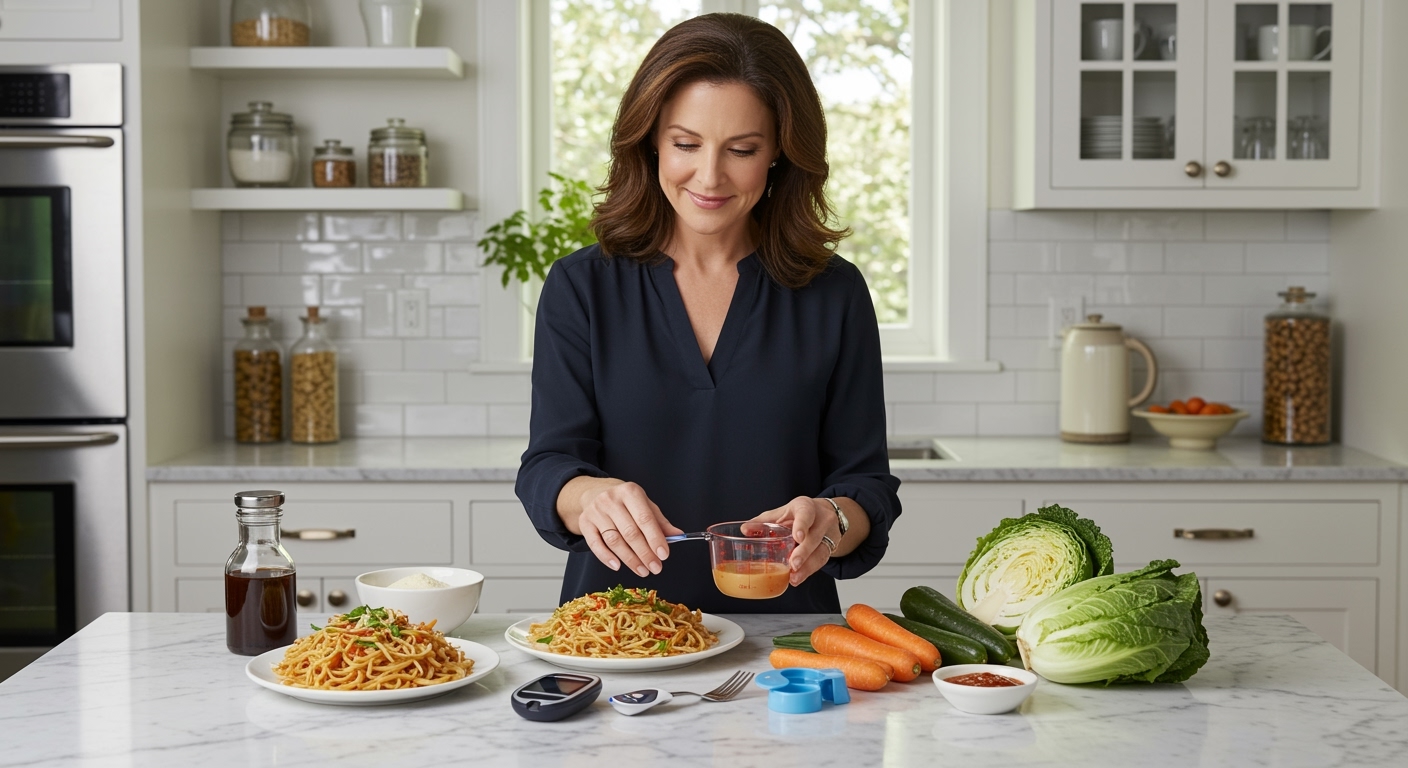
✪ Key Takeaway: Pancit is not always bad for diabetes when you control portions, choose the right type, and pair it with protein and vegetables.
Introduction
You love pancit but your doctor told you to watch your carbs.
You might be asking this question because you want to enjoy your favorite Filipino noodle dish without spiking your blood sugar levels or you heard that all noodles are forbidden when you have diabetes.
Hi, I’m Abdur, your nutrition coach and today I’m going to explain exactly how pancit affects your diabetes and what you can do to enjoy it safely.
What Makes Pancit A Concern For People With Diabetes?
Pancit contains refined carbohydrates that break down quickly into glucose in your bloodstream.
Most traditional pancit recipes use rice noodles or wheat noodles that have a high glycemic index.
The glycemic index measures how quickly a food raises your blood sugar after eating.
Foods with a high glycemic index cause rapid blood sugar spikes followed by crashes that leave you hungry again.
A typical serving of pancit contains 40 to 60 grams of carbohydrates depending on the portion size.
Your body converts these carbohydrates into glucose within 15 to 30 minutes after eating.
This rapid conversion overwhelms your insulin response when you have diabetes because your body cannot produce enough insulin or cannot use insulin effectively.
✪ Fact: Research shows that rice noodles have a glycemic index ranging from 53 to 65, which falls into the medium to high category.
Does The Type Of Pancit Matter For Blood Sugar Control?
Different types of pancit use different noodles that affect your blood sugar in different ways.
Pancit canton uses wheat noodles that typically have a slightly lower glycemic index than rice noodles.
Pancit bihon uses thin rice noodles that digest faster and raise blood sugar more quickly.
Pancit sotanghon uses mung bean noodles that have a lower glycemic index compared to rice or wheat noodles.
Mung bean noodles contain more resistant starch that your body digests more slowly.
This slower digestion means a more gradual rise in blood sugar instead of a sharp spike.
Studies show that sotanghon has a glycemic index around 45, making it the best choice among traditional pancit varieties for diabetes management.
✪ Pro Tip: Choose pancit sotanghon over pancit bihon when eating out to minimize blood sugar spikes while still enjoying Filipino cuisine.
How Can You Make Pancit Safer For Your Blood Sugar?
The way you prepare and serve pancit makes a bigger difference than the noodles themselves.
Adding more vegetables to your pancit increases fiber content that slows down carbohydrate absorption.
Fiber creates a gel-like substance in your digestive system that prevents rapid glucose release into your bloodstream.
Including lean protein like chicken, shrimp, or tofu further slows digestion and improves blood sugar response.
Protein triggers the release of hormones that help regulate insulin secretion and glucose uptake by your cells.
Reducing the noodle portion by half and doubling the vegetables transforms pancit from a high-carb dish into a balanced meal.
This simple modification can reduce the total carbohydrate content from 50 grams to 25 grams per serving while increasing nutrient density.
✪ Note: Adding one tablespoon of vinegar to your pancit can lower the glycemic response by up to 20 percent according to research.
What About Portion Size And Timing?
Portion control matters more than completely avoiding pancit when you have diabetes.
A reasonable portion of pancit for someone with diabetes is about one cup or roughly the size of your closed fist.
This portion contains approximately 30 grams of carbohydrates that most people with diabetes can handle when paired with other foods.
Eating pancit as part of a complete meal rather than alone helps stabilize your blood sugar response.
The timing of your pancit consumption also affects how your body processes the carbohydrates.
Eating pancit after physical activity allows your muscles to absorb glucose more efficiently without requiring as much insulin.
Your muscles act like sponges after exercise, pulling glucose from your bloodstream to replenish their energy stores called glycogen.
✪ Pro Tip: Test your blood sugar two hours after eating pancit to understand how your body specifically responds to this dish.
Can You Create A Diabetes-Friendly Version At Home?
Making pancit at home gives you complete control over ingredients and preparation methods.
You can substitute traditional noodles with shirataki noodles that contain almost zero digestible carbohydrates.
Shirataki noodles come from the konjac plant and consist mostly of water and a fiber called glucomannan.
This fiber passes through your digestive system without raising blood sugar at all.
Another option involves using zucchini noodles or cabbage strips mixed with a small amount of traditional noodles.
This combination gives you the texture and satisfaction of pancit while dramatically reducing the carbohydrate load.
When cooking at home, you can also control the amount of oil and sodium, making your pancit healthier for your overall diabetes management and heart health.
✪ Fact: Studies show that people with diabetes who cook at home at least five times per week have better blood sugar control than those who eat out frequently.
The Bottom Line
Pancit is not always bad for diabetes when you make smart choices about type, portion, preparation, and timing.
Food is not just fuel but also culture and joy, so finding ways to include your favorite dishes in a diabetes-friendly way beats restriction every time.
I would love to hear your experience with pancit and diabetes in the comments below, or share any questions you might have about making your favorite Filipino foods work with your health goals.
References
At NutritionCrown, we use quality and credible sources to ensure our content is accurate and trustworthy. Below are the sources referenced in writing this article:
- Hey Peony: Filipino Food Diabetes Guide
- Alberta Diabetes Link: Healthy Eating With Type 2 Diabetes Filipino Foods
- Academia: Glycemic Index of Commonly Consumed Carbohydrate Foods in the Philippines
- Hello Doctor: Can Diabetics Eat Noodles