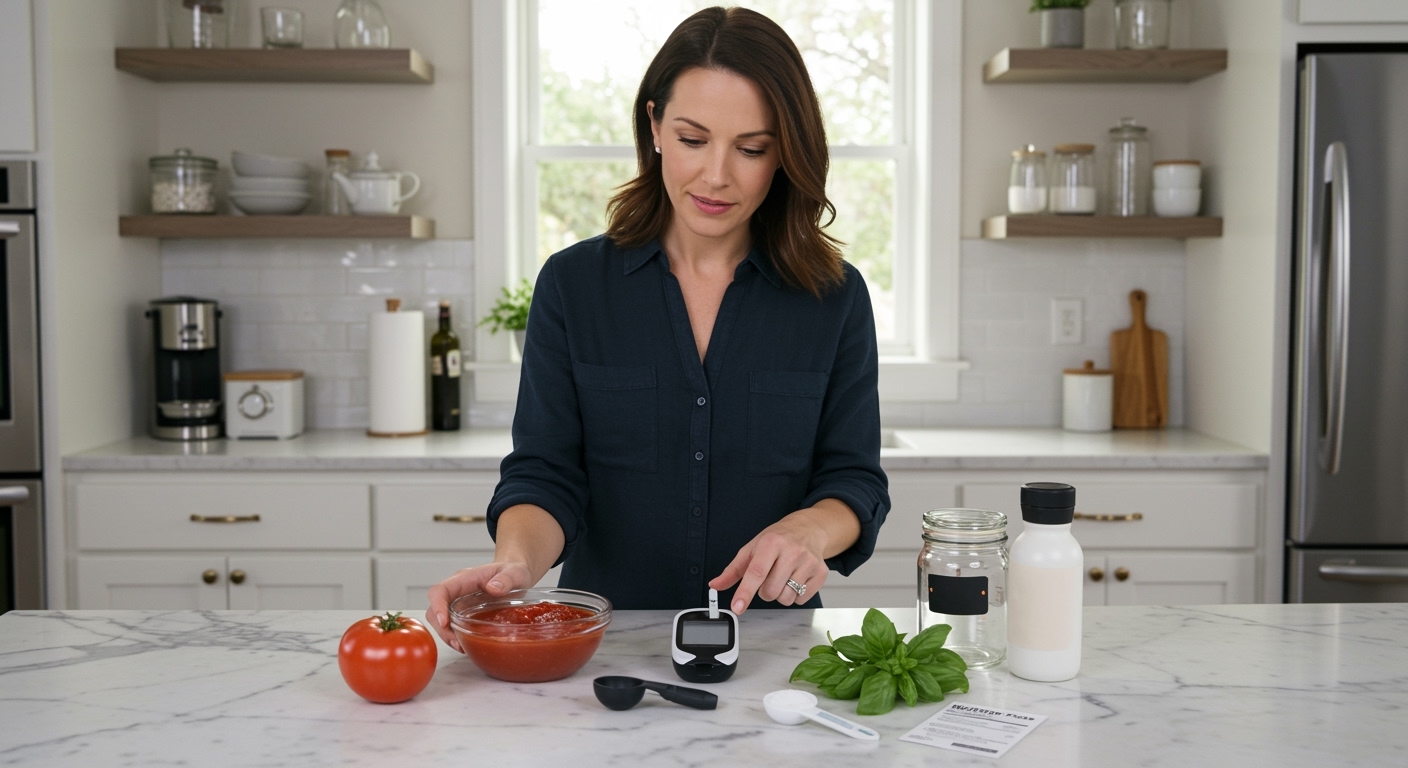
✪ Key Takeaway: Tomato sauce is not always bad for diabetes when you choose versions without added sugars and consume appropriate portions.
Introduction
You stand in the grocery aisle staring at rows of tomato sauce jars wondering if any of them are safe for your blood sugar.
You might be asking this question because your doctor told you to watch carbohydrates or because you noticed blood sugar spikes after pasta night.
Hi, I am Abdur, your nutrition coach and today I am going to explain exactly which tomato sauces work for diabetes management and which ones you should avoid.
What Makes Tomato Sauce Different From Fresh Tomatoes?
Fresh tomatoes contain about 4 grams of carbohydrates per 100 grams with most of it coming from natural sugars.
When manufacturers make tomato sauce, they cook down multiple tomatoes into a concentrated form that increases the carbohydrate density significantly.
A half cup of plain tomato sauce contains roughly 10 grams of carbohydrates compared to just 4 grams in a whole medium tomato.
The cooking process also breaks down some of the fiber structure that normally slows sugar absorption in your digestive system.
However, this same cooking process increases the availability of lycopene, a powerful antioxidant that may help reduce inflammation associated with diabetes complications.
Research published in Diabetes Care journal showed that tomato juice supplementation improved antioxidant status in people with type 2 diabetes.
✪ Fact: Cooked tomatoes contain up to five times more bioavailable lycopene than raw tomatoes due to heat breaking down cell walls.
Why Do Some Tomato Sauces Spike Blood Sugar More Than Others?
The biggest problem with commercial tomato sauce is the added sugar that manufacturers include to balance the natural acidity of tomatoes.
Some popular brands contain up to 12 grams of sugar per half cup serving with much of it coming from added sweeteners rather than tomatoes.
These added sugars cause rapid blood glucose spikes because they enter your bloodstream quickly without fiber to slow absorption.
Plain tomato sauce without added sugars has a glycemic index of around 35 to 45, which falls in the low to medium range.
When you add sugar to that same sauce, the glycemic response increases dramatically because you are consuming simple carbohydrates alongside the natural tomato sugars.
The glycemic load, which considers both the quality and quantity of carbohydrates, becomes more important than glycemic index alone when evaluating portion sizes.
✪ Pro Tip: Check the ingredient list and choose tomato sauces where sugar appears after the fifth ingredient or not at all.
How Much Tomato Sauce Can You Safely Eat With Diabetes?
A reasonable serving of plain tomato sauce for someone with diabetes is about half a cup, which provides roughly 10 grams of carbohydrates.
This amount fits comfortably within most diabetes meal plans when you account for the total carbohydrates in your entire meal including pasta or bread.
The key is balancing your tomato sauce with protein and healthy fats that slow down the absorption of carbohydrates into your bloodstream.
Adding lean ground turkey or chicken to your tomato sauce creates a more balanced meal that produces a gentler blood sugar response.
Including vegetables like zucchini, mushrooms, or bell peppers increases the fiber content and adds volume without significantly increasing carbohydrate load.
Your individual tolerance may vary based on your medication, activity level, and overall diabetes management, so monitoring your blood sugar after meals helps you find your personal sweet spot.
✪ Note: Pairing tomato sauce with whole grain pasta instead of refined pasta further reduces the glycemic impact of your meal.
Which Type of Tomato Product Works Best For Blood Sugar Control?
Plain tomato sauce without added sugars remains your best choice because it provides tomato benefits without unnecessary carbohydrates.
Tomato paste offers an even more concentrated source of lycopene and nutrients but contains slightly more carbohydrates per tablespoon due to its thick consistency.
Crushed tomatoes or diced tomatoes in their own juice give you more control over the final product because you can season them yourself without hidden sugar additions.
Making your own tomato sauce at home takes about 30 minutes and lets you control every ingredient that goes into your finished product.
You simply cook down canned tomatoes with garlic, olive oil, and herbs to create a sauce that tastes better than most store bought versions.
Studies show that tomatoes contain compounds that may improve insulin sensitivity and reduce oxidative stress in people with diabetes.
✪ Pro Tip: Freeze homemade tomato sauce in ice cube trays for perfect single serving portions that you can use anytime.
What Should You Look For On Tomato Sauce Labels?
The ingredient list tells you everything you need to know about whether a tomato sauce will work for your diabetes management.
Look for products where tomatoes appear as the first ingredient and the list contains fewer than five total ingredients.
Avoid sauces that list sugar, corn syrup, or any sweetener in the first five ingredients because these products will spike your blood glucose unnecessarily.
Check the nutrition facts panel for total carbohydrates per serving rather than focusing only on the sugar content listed below it.
Some manufacturers use concentrated fruit juices as sweeteners, which still count as added sugars even though they sound more natural.
The best tomato sauces contain only tomatoes, olive oil, garlic, herbs, and salt without any mysterious ingredients you cannot pronounce.
Remember that serving sizes on labels often underestimate what people actually eat, so you may need to double the carbohydrate count for realistic portion assessment.
✪ Fact: Some tomato sauces marketed as healthy contain more sugar per serving than a chocolate chip cookie.
The Bottom Line
Tomato sauce is not always bad for diabetes when you choose versions without added sugars and watch your portion sizes carefully.
The ingredient list on the back of the jar matters more than the health claims on the front because that is where manufacturers hide the truth about what you are really eating.
I would love to hear about your experience with tomato sauce and blood sugar management, so please share your questions or feedback in the comment section below.
References
At NutritionCrown, we use quality and credible sources to ensure our content is accurate and trustworthy. Below are the sources referenced in writing this article:
- Diabetes Care: Effect of supplementation with tomato juice
- Glycemic Index: Tomato Sauce Natural Sugar Free
- PubMed: Tomato consumption and health benefits
- Taylor and Francis Online: Tomato bioactive compounds and diabetes