✪ Key Takeaway: Regular jello raises blood sugar quickly, but sugar-free versions can work for diabetes when consumed in moderation with careful ingredient checking.
Introduction
You open your fridge looking for a quick dessert and spot that colorful jello cup staring back at you.
If you have diabetes, you probably wonder whether this wobbly treat will send your blood sugar soaring or if it might actually be a safe choice.
Hi, I am Abdur, your nutrition coach, and today I am going to explain exactly how different types of jello affect diabetes and which versions you can enjoy without guilt.
What Makes Regular Jello Problematic For Diabetes?
Regular jello contains high amounts of sugar that get absorbed into your bloodstream extremely fast.
A typical half-cup serving of regular jello packs around 19 grams of carbohydrates, with nearly all of it coming from added sugar.
Your body breaks down this sugar within minutes because jello has almost no fiber, protein, or fat to slow digestion.
This rapid absorption causes a sharp spike in blood glucose levels, which is exactly what people with diabetes need to avoid.
The glycemic index of regular jello sits around 73, placing it in the high category that triggers quick insulin responses.
When your blood sugar jumps rapidly, your pancreas must work overtime to produce insulin, and over time this pattern worsens insulin resistance.
Regular jello also provides zero nutritional value beyond empty calories and artificial colors, making it a poor choice for anyone managing blood sugar.
✪ Fact: Regular jello contains about the same amount of sugar as a small candy bar, but people often think of it as a lighter dessert option.
Can Sugar-Free Jello Be A Safe Alternative?
Sugar-free jello uses artificial sweeteners instead of sugar, which means it contains virtually zero carbohydrates and calories.
Most brands use sweeteners like aspartame, sucralose, or acesulfame potassium that do not raise blood glucose levels.
A half-cup serving of sugar-free jello typically contains less than 1 gram of carbohydrates, making it a dramatically different option from regular versions.
Research shows that these non-nutritive sweeteners do not trigger the same insulin response as sugar, allowing people with diabetes to enjoy sweet flavors without blood sugar spikes.
However, you need to check the ingredient list carefully because some sugar-free products still contain small amounts of maltodextrin or dextrose as fillers.
These filler ingredients can add up if you consume large portions, potentially affecting your blood sugar control more than you expect.
Sugar-free jello can fit into a diabetes meal plan when you treat it as an occasional dessert rather than a daily staple.
✪ Pro Tip: Always read the nutrition label on sugar-free jello because different brands use different sweeteners and some may affect your digestion differently.
Does The Gelatin In Jello Offer Any Health Benefits?
Jello gets its wobbly texture from gelatin, which is a protein derived from animal collagen found in bones, skin, and connective tissue.
Gelatin contains amino acids like glycine and proline that support joint health, skin elasticity, and gut lining integrity.
Some studies suggest that gelatin may help improve joint pain and stiffness, though you would need to consume it regularly in larger amounts than a typical jello serving provides.
The protein content in jello is minimal, with only about 1-2 grams per serving, which is not enough to significantly impact your daily protein needs.
For people with diabetes, the small amount of protein in jello does not help slow down sugar absorption from regular versions because the sugar content overwhelms any potential benefit.
If you want the collagen benefits of gelatin, you would be better off consuming bone broth or unflavored gelatin powder mixed into other foods.
The artificial colors and flavors in commercial jello products add no nutritional value and some people prefer to avoid these synthetic additives altogether.
✪ Note: The gelatin in jello is not a complete protein source because it lacks the amino acid tryptophan, which your body needs for various functions.
How Should You Include Jello In A Diabetes Meal Plan?
If you choose sugar-free jello, you can enjoy it as a low-carb dessert option that satisfies sweet cravings without derailing your blood sugar control.
Stick to reasonable portions like half a cup to one cup, even with sugar-free versions, because eating excessive amounts of anything disrupts balanced eating patterns.
You can make jello more nutritious by adding fresh berries, which provide fiber and antioxidants that help moderate blood sugar responses.
Another smart strategy is pairing a small serving of sugar-free jello with a handful of nuts, which adds protein and healthy fats to create a more balanced snack.
Never use jello as a meal replacement because it lacks the essential nutrients your body needs for proper function and blood sugar stability.
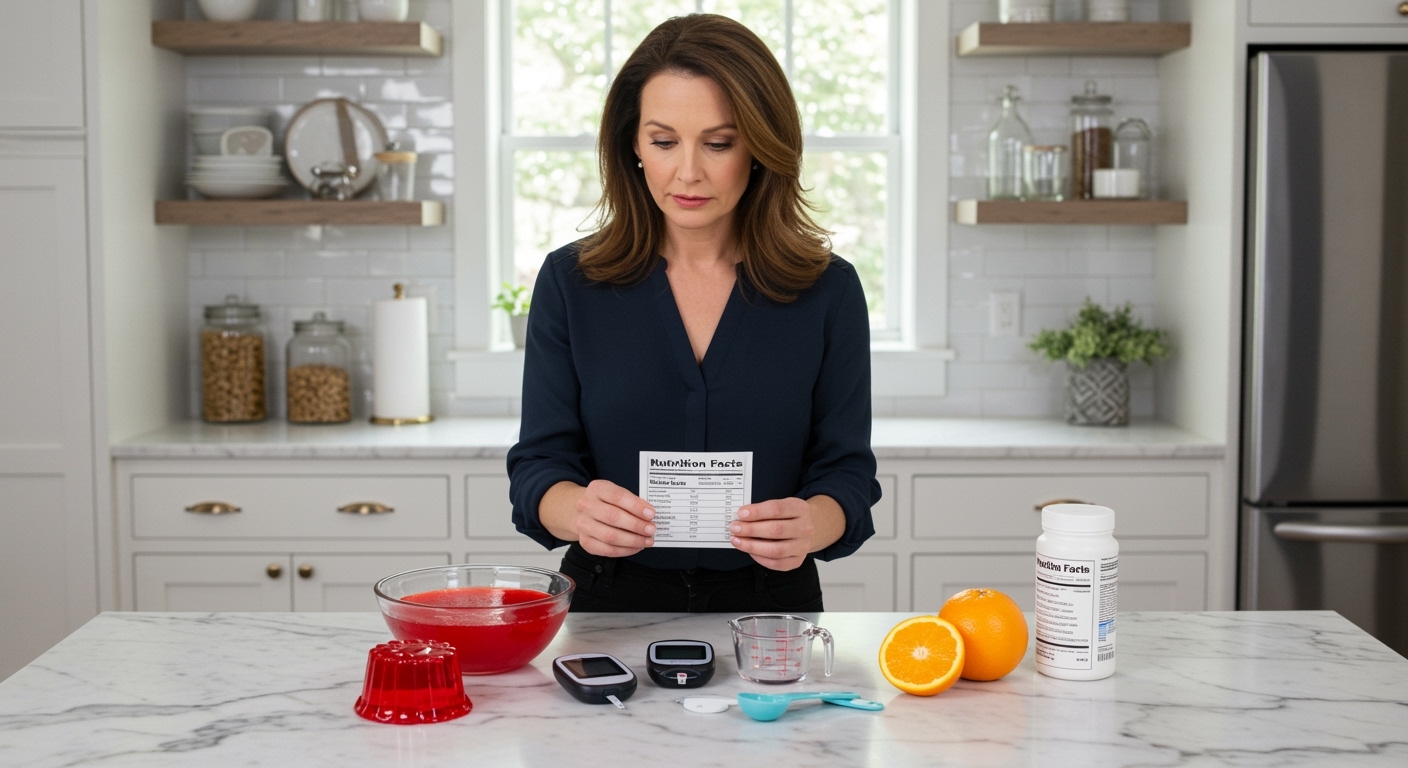
If you want to avoid artificial sweeteners completely, you can make homemade jello using unflavored gelatin, fruit juice diluted with water, and a small amount of natural sweetener like stevia.
This homemade approach gives you complete control over ingredients and allows you to adjust sweetness levels to match your personal tolerance and preferences.
✪ Pro Tip: Make jello cups with added chia seeds for extra fiber and omega-3 fatty acids that support better blood sugar control and heart health.
What Are Better Dessert Alternatives For Diabetes?
While sugar-free jello can work occasionally, you have many other dessert options that provide actual nutritional benefits alongside satisfying sweetness.
Fresh berries with a dollop of unsweetened Greek yogurt give you fiber, protein, probiotics, and antioxidants that support overall health.
A small piece of dark chocolate with at least 70 percent cocoa content provides flavonoids that may improve insulin sensitivity when consumed in moderation.
Chia seed pudding made with unsweetened almond milk and a touch of vanilla offers healthy fats, fiber, and protein that keep blood sugar stable.
Frozen banana slices blended into a creamy texture create a naturally sweet treat with potassium and fiber that regular jello cannot match.
Baked apple slices sprinkled with cinnamon provide natural sweetness plus fiber and polyphenols that help regulate glucose metabolism.
The key to smart dessert choices with diabetes is selecting options that combine natural sweetness with nutrients that actively support your metabolic health rather than just avoiding harm.
✪ Fact: Studies show that people who include small amounts of satisfying desserts in their meal plans have better long-term adherence to diabetes management than those who try to eliminate all sweets.
The Bottom Line
Regular jello is not a good choice for diabetes because it spikes blood sugar rapidly, but sugar-free versions can fit into your meal plan when consumed mindfully.
Health is not about perfection but about making informed choices that support your body without sacrificing all enjoyment, and understanding how different foods affect your blood sugar puts you in control of your diabetes management.
I would love to hear your thoughts on this topic, so please share your experiences with jello or any questions you have about dessert choices in the comments below.
References
At NutritionCrown, we use quality and credible sources to ensure our content is accurate and trustworthy. Below are the sources referenced in writing this article:
- PMC: Nutritional and Health Aspects of Food in Western Europe
- Virta Health: How Many Carbs in Jello
- Healthline: What Is Jello Made Of
- Medical News Today: Gelatin Benefits and Health Effects