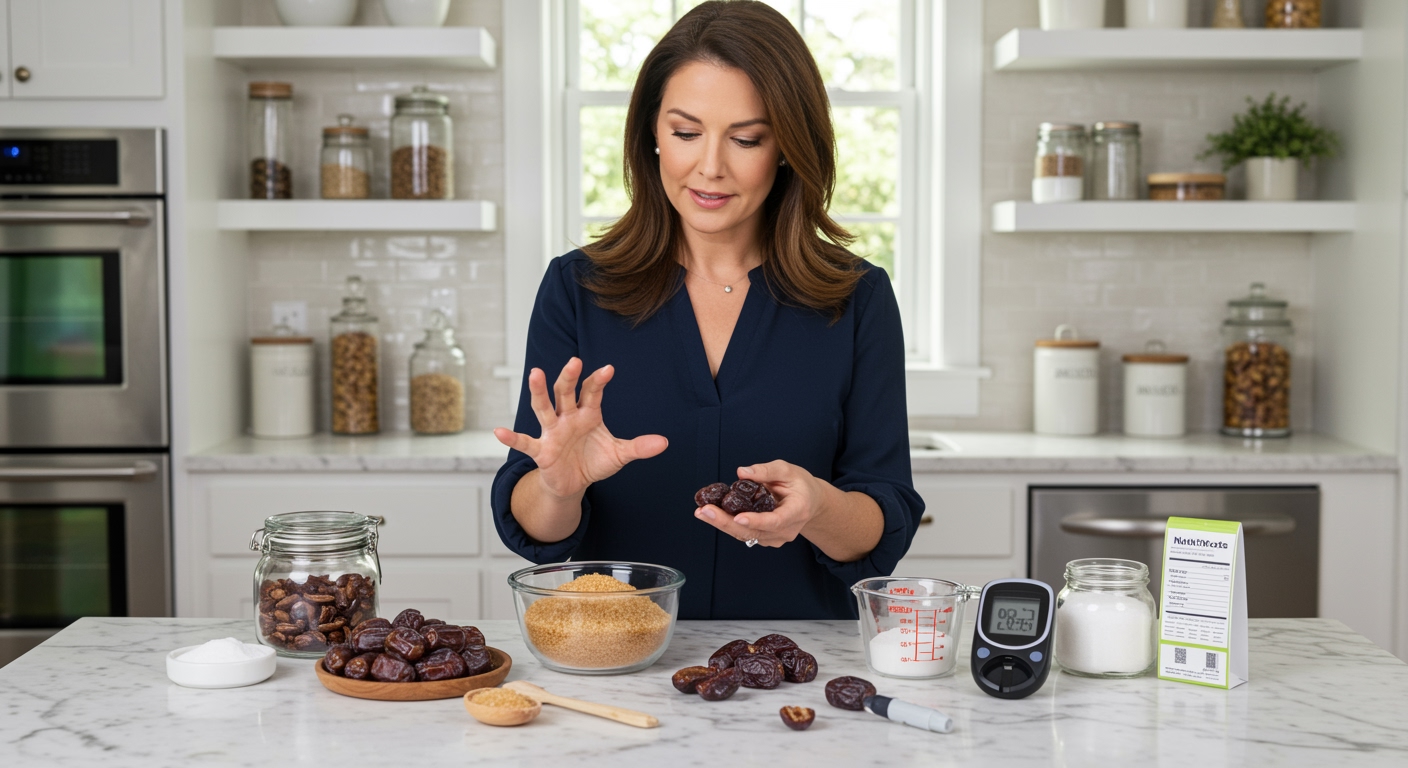
✪ Key Takeaway: Date sugar offers minimal benefits for PCOS and can spike blood sugar just like regular sugar.
Introduction
You walk down the health food aisle and see date sugar marketed as a natural sweetener perfect for PCOS management.
Women with PCOS often search for better sugar alternatives because insulin resistance makes blood sugar control challenging.
Hi, I’m Abdur, your nutrition coach and today I’m going to explain whether date sugar truly helps with PCOS or if it’s just clever marketing.
What Exactly Is Date Sugar?
Date sugar is simply ground up dehydrated dates with no additional processing or refining.
The manufacturing process removes water from whole dates and grinds them into a granulated powder that looks similar to brown sugar.
This means date sugar retains some of the fiber and nutrients found in whole dates, unlike refined white sugar.
However, the grinding process breaks down the fruit’s cellular structure, making the natural sugars more readily available for absorption.
One tablespoon of date sugar contains approximately 15 grams of carbohydrates and 60 calories, similar to regular sugar.
The main sugars in dates are glucose, fructose, and sucrose, which your body processes just like any other sugar source.
✪ Fact: Date sugar contains the same amount of carbohydrates as regular table sugar per serving.
How Does Date Sugar Affect Blood Sugar In PCOS?
Date sugar has a glycemic index of approximately 55-65, which falls into the medium range on the glycemic scale.
For comparison, white sugar has a glycemic index of 65, making date sugar only slightly better for blood sugar control.
The small amount of fiber in date sugar does slow down sugar absorption compared to refined sugar, but the difference is minimal.
Women with PCOS often have insulin resistance, meaning their cells don’t respond properly to insulin signals.
When you consume date sugar, your pancreas still needs to release insulin to manage the resulting blood sugar spike.
Research shows that any significant carbohydrate load can worsen insulin resistance in PCOS patients, regardless of the source.
The fructose content in date sugar can be particularly problematic because it bypasses normal glucose regulation and goes straight to the liver.
✪ Pro Tip: Monitor your blood glucose 1-2 hours after consuming date sugar to see your individual response.
Does Date Sugar Provide Any Nutritional Benefits For PCOS?
Date sugar contains small amounts of potassium, copper, and manganese from the original dates.
However, you would need to consume large quantities to get meaningful amounts of these nutrients, which defeats the purpose.
The antioxidants in dates do survive the dehydration process, but again, the amounts are too small to provide significant health benefits.
Some marketing claims suggest date sugar helps with PCOS symptoms because dates contain natural compounds that support hormone balance.
Unfortunately, there is no scientific evidence supporting these claims, and the processing likely reduces any beneficial compounds.
The fiber content in date sugar is approximately 1 gram per tablespoon, which is insignificant compared to whole fruits and vegetables.
For PCOS management, you’re better off getting nutrients from whole foods rather than processed sweeteners.
✪ Note: The nutrient content in date sugar is too low to justify its use as a health food.
What Are Better Sweetener Options For PCOS?
Stevia and monk fruit are zero-calorie sweeteners that don’t affect blood sugar or insulin levels.
These natural alternatives allow you to satisfy sweet cravings without triggering the metabolic issues associated with PCOS.
Small amounts of erythritol can also work well because it has minimal impact on blood glucose and insulin.
If you prefer to use whole foods for sweetening, try small portions of berries or a few drops of pure vanilla extract.
The key with PCOS is to minimize all forms of added sugars, even natural ones like date sugar.
Focus on developing your taste buds to appreciate less sweet foods over time rather than finding sugar substitutes.
Remember that managing PCOS successfully requires consistent blood sugar control, not occasional use of slightly better sweeteners.
✪ Pro Tip: Gradually reduce all sweeteners to retrain your taste preferences and improve PCOS symptoms long-term.
The Bottom Line
Date sugar offers no significant advantages for women with PCOS compared to regular sugar when it comes to blood glucose and insulin management.
Smart nutrition choices require looking beyond marketing claims to understand how foods actually affect your body.
I’d love to hear about your experiences with different sweeteners and PCOS management in the comments below.
References
At NutritionCrown, we use quality and credible sources to ensure our content is accurate and trustworthy. Below are the sources referenced in writing this article:
- Practo: Use of Dates in PCOS
- PMC: Nutritional Management of PCOS
- Biomedical and Pharmacology Journal: Nutritional Management of Polycystic Ovary Syndrome
- PMC: PCOS Dietary Management