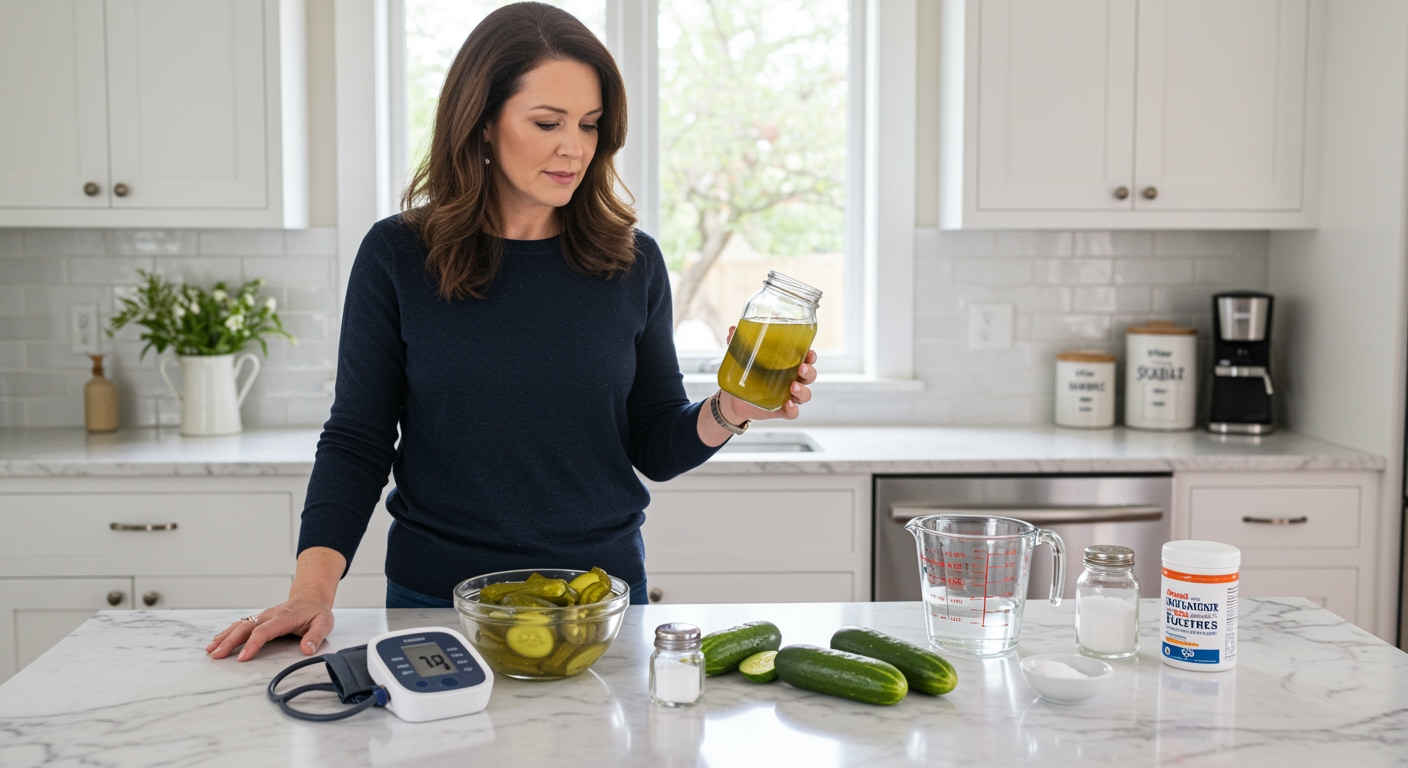
✪ Key Takeaway: Pickle juice can temporarily raise low blood pressure due to its high sodium content, but it should not replace proper medical treatment.
Introduction
You grab that jar of pickles from your fridge and notice the leftover juice at the bottom.
Maybe you heard someone mention that pickle juice could help with low blood pressure, and now you are wondering if this salty liquid sitting in your refrigerator could actually be a simple solution to your health concern.
Hi, I am Abdur, your nutrition coach, and today I am going to explain whether pickle juice can really help with low blood pressure and what you need to know before trying this approach.
What Makes Pickle Juice Special for Blood Pressure?
Pickle juice contains an impressive amount of sodium, typically ranging from 400 to 1200 milligrams per serving.
This high sodium content is exactly what makes it potentially useful for people with low blood pressure or hypotension.
When you have low blood pressure, your blood vessels are not maintaining enough pressure to pump blood effectively throughout your body.
Sodium helps your body retain water, which increases blood volume and can raise blood pressure temporarily.
The pickle juice also contains electrolytes like potassium and magnesium, though in smaller amounts compared to sodium.
These electrolytes work together to help maintain proper fluid balance in your body and support normal blood pressure regulation.
✪ Fact: One ounce of pickle juice can contain as much sodium as eating 10 potato chips.
How Does Sodium Actually Raise Blood Pressure?
When you drink pickle juice, the sodium enters your bloodstream and signals your kidneys to hold onto more water.
This extra water increases the total volume of blood flowing through your blood vessels.
Think of it like adding more water to a garden hose – the increased volume creates more pressure against the walls.
Your heart also responds to the increased blood volume by working slightly harder to pump the extra fluid.
The combination of increased blood volume and enhanced heart function can raise your blood pressure within 30 to 60 minutes after consuming pickle juice.
However, this effect is temporary and typically lasts only a few hours as your body processes and eliminates the excess sodium and water.
✪ Pro Tip: Monitor your blood pressure before and after consuming pickle juice to track its effects on your body.
What Are the Risks of Using Pickle Juice?
The biggest concern with using pickle juice for low blood pressure is the extremely high sodium content.
Most health organizations recommend limiting daily sodium intake to 2300 milligrams, and some pickle juice servings can provide nearly half of that amount.
Regular consumption of high-sodium foods can lead to kidney problems, especially if you already have kidney disease or diabetes.
The high sodium can also cause your body to retain too much water, leading to swelling in your hands, feet, and ankles.
Some people experience stomach upset, nausea, or digestive issues when consuming large amounts of pickle juice due to its acidity and salt content.
If you have any heart conditions, kidney disease, or are taking medications for blood pressure, the sudden sodium load could interfere with your treatment plan or cause dangerous interactions.
✪ Note: Always consult your doctor before using pickle juice as a remedy for low blood pressure.
How Much Pickle Juice Should You Try?
If your doctor approves trying pickle juice for low blood pressure, start with a very small amount to test your body’s response.
Begin with just one tablespoon (about half an ounce) and wait at least two hours to see how your body reacts.
Never exceed two ounces of pickle juice in a single day, and avoid using it as a daily remedy without medical supervision.
The best time to consume pickle juice for low blood pressure is when you are experiencing symptoms like dizziness or lightheadedness.
Make sure to drink plenty of plain water throughout the day to help your kidneys process the extra sodium effectively.
Keep track of your blood pressure readings and any symptoms you experience to share this information with your healthcare provider.
✪ Pro Tip: Choose pickle juice from naturally fermented pickles rather than those made with artificial preservatives for better health benefits.
Are There Better Alternatives to Pickle Juice?
While pickle juice might provide temporary relief, there are safer and more effective ways to manage low blood pressure naturally.
Increasing your overall fluid intake with water and natural electrolyte sources can help maintain healthy blood pressure without the extreme sodium load.
Foods like celery, beets, and leafy greens contain natural nitrates that support healthy blood flow and pressure regulation.
Regular physical activity, even light walking, helps improve circulation and can naturally raise blood pressure in people with hypotension.
Eating smaller, more frequent meals prevents blood pressure drops that often occur after large meals.
If you need quick relief from low blood pressure symptoms, try sitting down, elevating your legs, and drinking a glass of water with a pinch of sea salt instead of pickle juice.
✪ Fact: Compression stockings can be more effective than dietary changes for managing chronic low blood pressure.
The Bottom Line
Pickle juice can temporarily raise low blood pressure due to its high sodium content, but it comes with significant risks and should never replace proper medical treatment.
Quick fixes rarely lead to lasting health solutions, and your body deserves better than a jar of salty water.
I would love to hear about your experiences with managing low blood pressure or any questions you might have about natural approaches – please share your thoughts in the comments below so we can learn from each other.
References
At NutritionCrown, we use quality and credible sources to ensure our content is accurate and trustworthy. Below are the sources referenced in creating this article:
- WebMD: Pickle Juice: Are There Health Benefits?
- Medical News Today: What are the health benefits of pickle juice?
- Ohio State University: What can pickle juice do for your body?
- LifeMD: Is Pickle Juice Good for You?