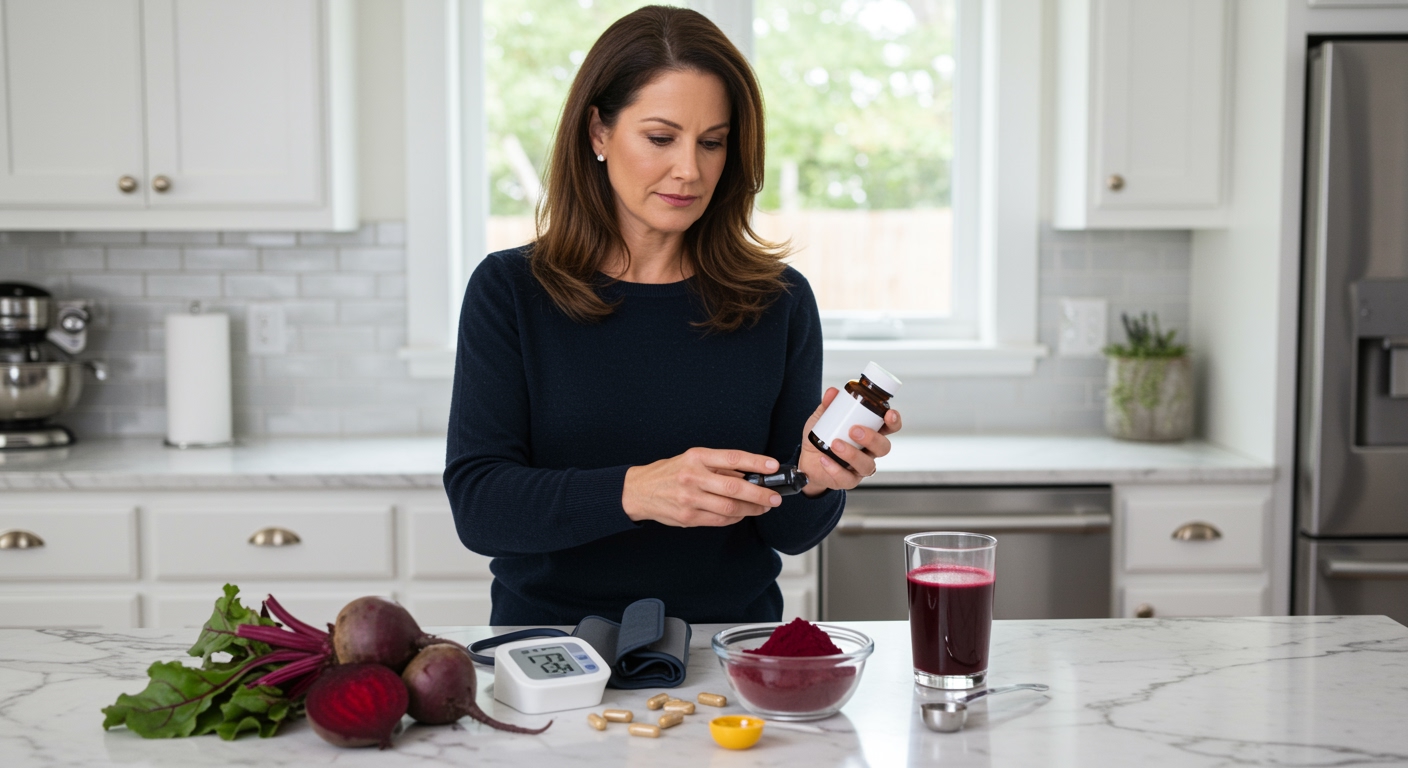
✪ Key Takeaway: Beetroot juice can lower blood pressure within 3-6 hours due to nitrates, but effects are temporary and mild.
Introduction
Your doctor just told you that your blood pressure is too high and you need to make changes fast.
You start searching for natural solutions and beetroot juice keeps popping up everywhere with claims about rapid blood pressure reduction.
Hi, I’m Abdur, your nutrition coach and today I’m going to explain exactly how beetroot juice affects your blood pressure, how quickly it works, and whether it can be a reliable part of your heart health strategy.
How Does Beetroot Juice Lower Blood Pressure?
Beetroot juice contains high levels of dietary nitrates that your body converts into nitric oxide.
Nitric oxide acts as a powerful vasodilator that relaxes and widens your blood vessels.
When your blood vessels relax, blood flows more easily and your heart doesn’t have to work as hard to pump blood throughout your body.
This process directly reduces the pressure against your artery walls, which is what we measure as blood pressure.
Research shows that beetroot juice contains about 250-400mg of nitrates per 250ml serving.
This amount is significant enough to trigger measurable changes in your cardiovascular system within hours of consumption.
✪ Pro Tip: Choose beetroot juice without added sugars to maximize the nitrate benefits without spiking your blood sugar.
How Quickly Can You See Results?
Studies show that beetroot juice can start lowering blood pressure within 3 hours of consumption.
The peak effect typically occurs between 3-6 hours after drinking the juice.
Research published in the journal Hypertension found that participants experienced an average reduction of 4-5 mmHg in systolic blood pressure.
This reduction might seem small, but it’s actually meaningful from a health perspective.
A 5 mmHg reduction in systolic blood pressure can decrease your risk of stroke by about 14% and heart disease by 9%.
However, the effects are temporary and typically return to baseline within 24 hours.
This means you would need to consume beetroot juice daily to maintain any blood pressure benefits.
✪ Fun Fact: Your urine might turn pink or red after drinking beetroot juice, which is completely harmless and normal.
What Does the Research Actually Say?
Multiple clinical trials have tested beetroot juice for blood pressure reduction with consistent results.
A systematic review of 16 studies found that beetroot juice consumption led to significant reductions in both systolic and diastolic blood pressure.
The British Heart Foundation has acknowledged these findings and considers beetroot juice a beneficial addition to heart-healthy diets.
However, most studies used participants with normal to slightly elevated blood pressure.
People with severely high blood pressure or those taking medication showed less dramatic results.
The research also shows that fresh beetroot juice works better than beetroot supplements or cooked beetroot.
Heat and processing can reduce the nitrate content significantly, making fresh juice the most effective option.
✪ Note: Most studies used 250-500ml of beetroot juice daily, which is roughly 1-2 cups.
Should You Replace Your Blood Pressure Medication?
Absolutely not – beetroot juice should never replace prescribed blood pressure medication.
While beetroot juice can provide modest blood pressure reductions, it’s not powerful enough to manage hypertension on its own.
Blood pressure medications are specifically designed and tested to provide consistent, reliable control of your blood pressure.
Beetroot juice works best as a complementary approach alongside your prescribed treatment plan.
If you want to add beetroot juice to your routine, discuss it with your doctor first.
Some blood pressure medications can interact with high nitrate foods, and your doctor needs to monitor these potential interactions.
Your doctor might also need to adjust your medication dosage if you’re consistently consuming beetroot juice.
✪ Pro Tip: Keep a blood pressure log when adding beetroot juice to track how your body responds over time.
Are There Any Side Effects or Risks?
Beetroot juice is generally safe for most people, but there are some important considerations.
The most common side effect is beeturia, which causes your urine to turn pink or red.
This happens in about 10-14% of people and is completely harmless, though it can be alarming if you’re not expecting it.
Beetroot juice is high in natural sugars, containing about 25-30 grams of sugar per cup.
People with diabetes need to account for this sugar content in their daily carbohydrate intake.
Beetroot is also high in oxalates, which can contribute to kidney stone formation in susceptible individuals.
If you have a history of kidney stones, limit your beetroot juice consumption or choose other nitrate-rich foods like leafy greens.
✪ Note: Start with small amounts (4-6 oz) to see how your body reacts before drinking larger quantities.
The Bottom Line
Beetroot juice can indeed lower blood pressure quickly, with effects starting within 3 hours and lasting up to 24 hours.
As I always tell my clients: “Natural doesn’t mean magical – beetroot juice is a helpful tool, not a cure-all solution.”
I’d love to hear about your experience with beetroot juice or any questions you have about natural approaches to blood pressure management – please share your thoughts in the comments below.
References
At NutritionCrown, we use quality and credible sources to ensure our content is accurate and trustworthy. Below are the sources referenced in creating this article:
- British Heart Foundation: Beetroot and blood pressure
- PMC: Inorganic nitrate supplementation lowers blood pressure in humans
- Frontiers in Physiology: Effects of beetroot juice supplementation on cardiorespiratory endurance
- PMC: Beetroot juice and exercise performance
- British Heart Foundation: Can beetroot juice lower blood pressure